




















Researchers find milk as novel material in new bioplastic

Research team from the Flinders University in South Australia found milk as a novel material for new bioplastic.
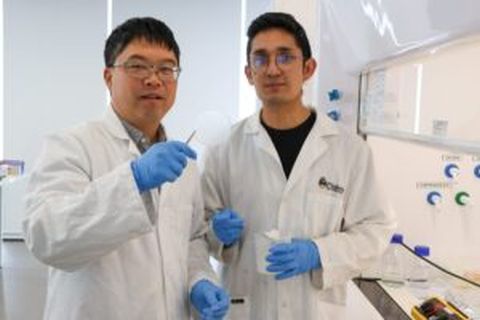
Professor Youhong Tang (left), from the Advanced Materials Laboratory at Flinders University, and Nikolay E Gomez, master of biotechnology student. (Source: Flinders University)
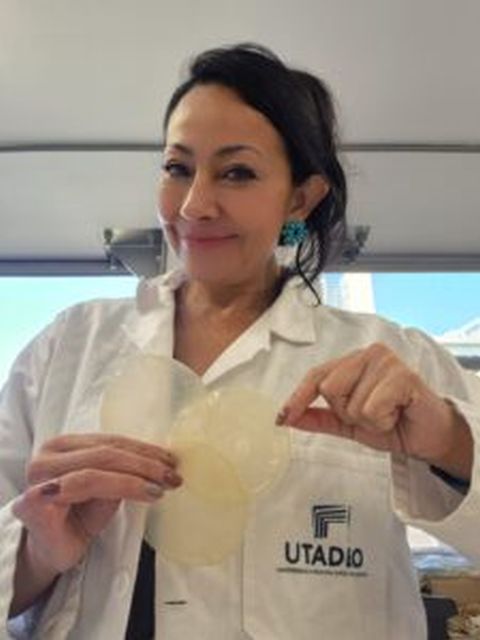
Professor Alis Pataquiva-Mateus from the Department of Engineering, Universidad de Bogotá Jorge Tadeo Lozano, Colombia. (Source: Flinders University)
The research article “Exploring Biodegradable Polymeric Nanocomposite Films for Sustainable Food Packaging Application (2025)” by Nikolay Estiven Gomez Mesa, Alis Yovana Pataquiva-Mateus and Youhong Tang has been published in the journal Polymers.
Strength and plasticity ensured, as well as biodegradability
The researchers combined calcium caseinate – the main protein in milk and a commercially available derivative of casein – with modified starch and bentonite nanoclay into thin film, adding glycerol and polyvinyl alcohol to improve its strength and plasticity.
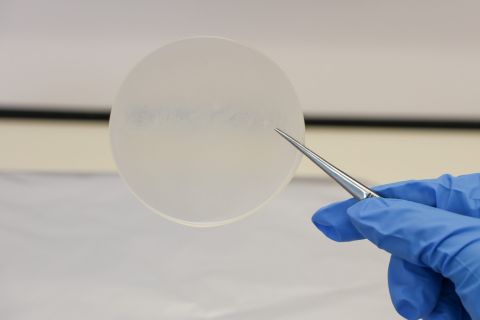
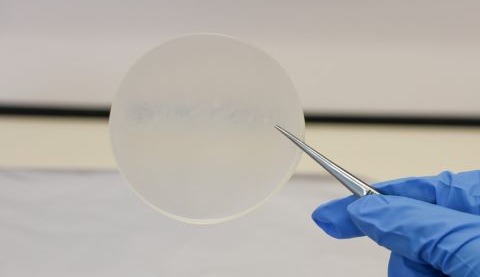
A sample of the new casein-starch polymeric film developed at Flinders University's Advanced Materials Lab at Tonsley, South Australia. (Source: Flinders University)
“The entire formulation was designed to use inexpensive ingredients that are biodegradable and environmentally friendly to create a sustainable alternative with enhanced characteristics,” said Professor Tang.
Biodegradability testing also showed a consistent degradation trend, with full disintegration estimated to occur within 13 weeks in normal soil conditions.
Sustainable food packaging applications
This study offers exploratory insight into the development of functional and biodegradable films using biopolymer blends and nanoclay suspensions, highlighting their potential in sustainable food packaging applications.
With less toxicity, a microbial analysis confirmed that the quantity of bacterial colonies remained within permissible levels for non-antimicrobial biodegradable films.