










Expanded PLA as sustainable alternative to EPS foams for premium packaging

TotalEnergies Corbion and Useon are advancing the industrial adoption of expanded PLA (EPLA) as a compostable alternative to conventional EPS foams.
The two companies signed a partnership agreement last year with a shared objective: to translate PLA foam technology from development to robust, scalable industrial solutions. Since then, the partners have worked closely to develop a Luminy PLA-based foam solution designed to meet the performance expectations of protective packaging applications.
PLA foam designed for performance and sustainability
The resulting EPLA solution demonstrates properties comparable to EPS while offering clear sustainability benefits. The material can achieve low densities around 25 g/l, a standard requirement for protective packaging, while remaining lightweight and mechanically resilient.
EPLA is:
More than 99% bio‑based, made from GMO‑free sugarcane
Industrially compostable, with no persistent microplastics
Moisture‑resistant, ensuring dimensional stability
Capable of withstanding heavy loads, offering robust protection compared to cardboard‑based solutions
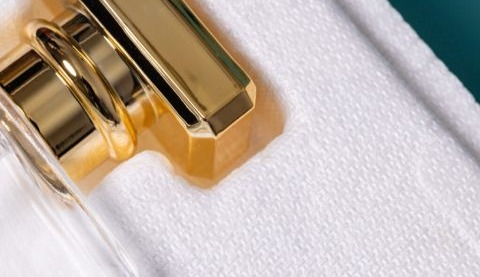
To illustrate the technology’s potential, TotalEnergies Corbion and Useon have jointly developed perfume box prototypes, demonstrating how expanded PLA can be used for both protective and premium packaging applications.
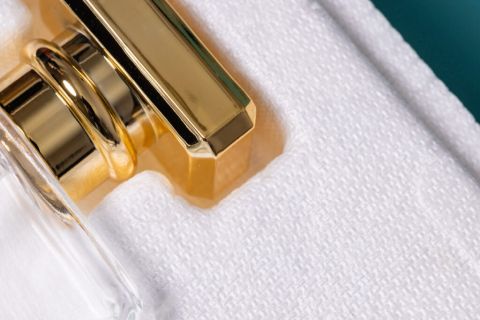
Perfume box prototypes made of EPLA.
The targeted end‑use applications extend beyond cosmetics packaging and include protective packaging for white goods, electronics, and appliances, as well as cold‑chain packaging for the food, healthcare, and pharmaceutical industries.
By combining Luminy PLA materials expertise with Useon’s leadership in foam extrusion technologies, the partnership aims to accelerate the market readiness of PLA foams and support their broader adoption at industrial scale.