



















Covestro and Genofort advance ultra-flexible haptic systems for smart automotive interiors

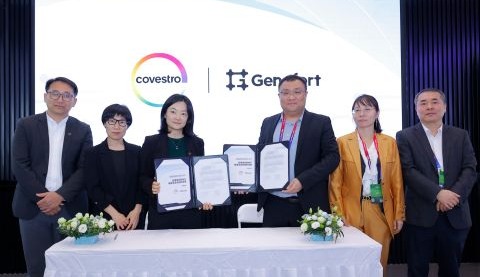
Covestro and Jiangsu Genofort have signed a Memorandum of Understanding to jointly develop and industrialize ultra-flexible printed electronics haptic interaction systems for automotive interior applications.
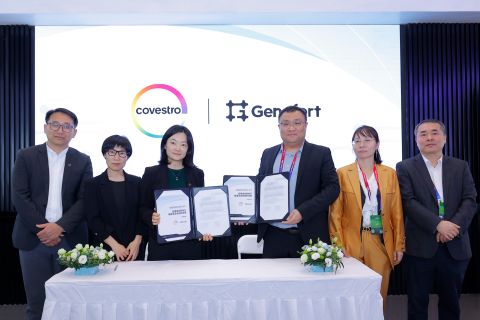
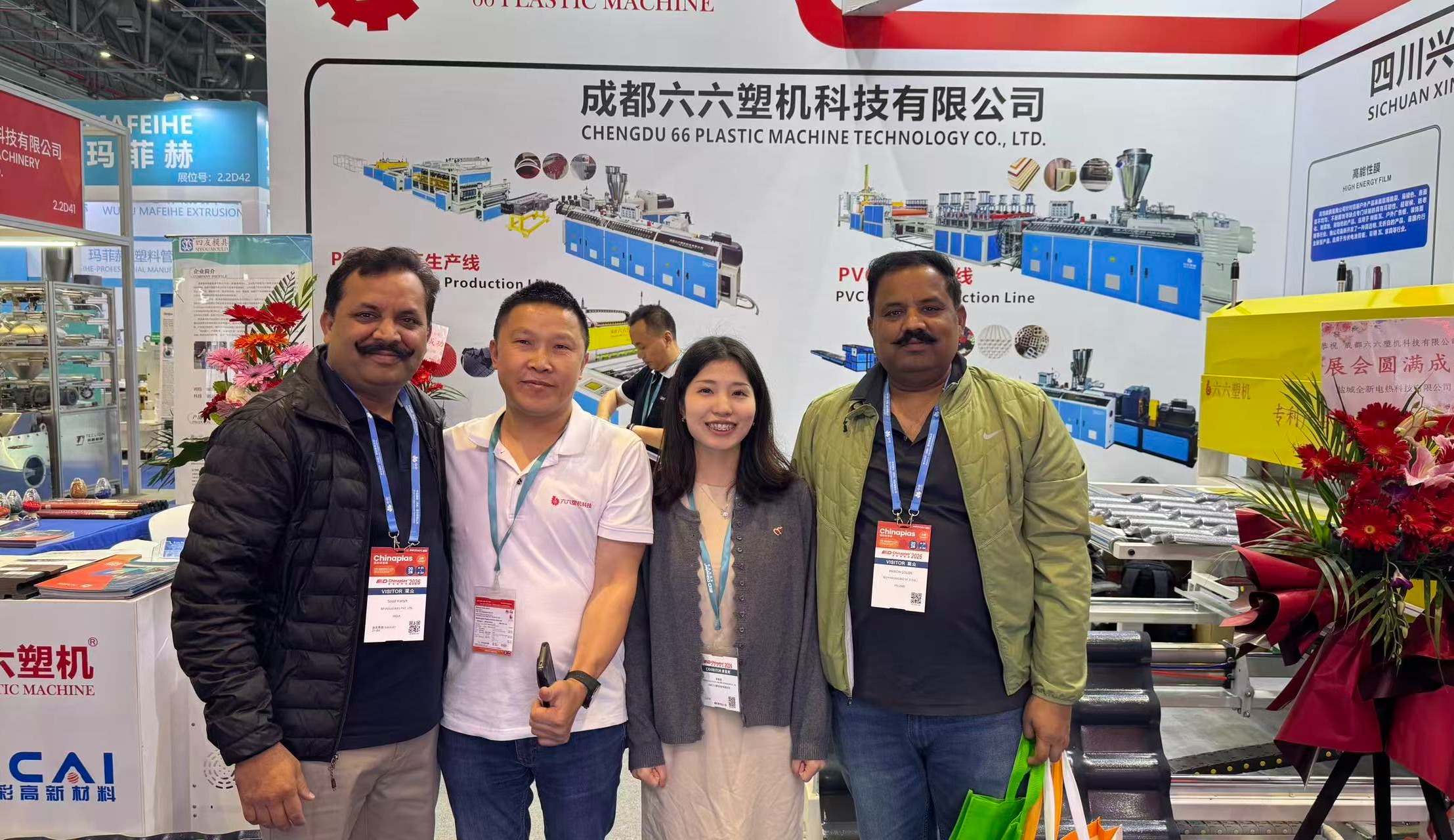
Representatives of Covestro and Jiangsu Genofort at the MoU signing ceremony.
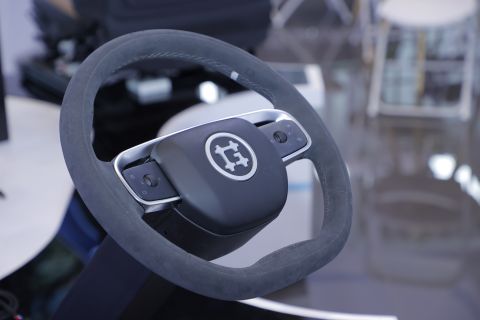
The cooperation will focus on key automotive interior applications that enhance both occupant comfort and cabin intelligence.
“Through our collaboration with Genofort, we aim to bring material innovation and system integration closely together, helping advance flexible haptic interaction technology from the laboratory to large-scale production and delivering differentiated solutions for automotive customers,” said Weihong Du, Head of Marketing and Development Asia-Pacific, Specialty Films, Covestro.
Challenges in 3D haptic systems for automotive interior
Emerging cockpit concepts include seats capable of sensing occupant body shape and adapting posture settings for enhanced comfort, as well as interior surfaces that can interpret touch inputs and deliver precise haptic feedback.
Yet delivering these functions across increasingly complex three-dimensional designs remains a challenge, as conventional rigid materials and hard circuits often lack the flexibility, durability and integration capability required.
Combining advanced TPU films and printed electronics expertise
Under the MoU, Covestro will lead the R&D and industrialization of relevant thermoplastic polyurethane (TPU) film substrates. With outstanding flexibility, durability, processing versatility, ink adhesion and long-term stability, TPU films are a critical substrate for ultra-flexible printed electronics systems.
This complements Genofort’s expertise in the development and industrialization of haptic interaction assembly systems, creating a fully integrated value chain.
Focusing on key automotive interior applications
The collaboration will focus on key automotive interior applications including center consoles, steering wheels, door panels, seats and headliners, with the ambition of integrating body-shape sensing, adaptive comfort, thermal regulation, health monitoring and responsive touch interaction into unified solutions that enhance both occupant comfort and cabin intelligence.
The two companies also plan to jointly support the development of relevant industry standards, helping accelerate commercialization and broader adoption of ultra-flexible haptic technologies across the automotive sector.
“This collaboration will accelerate the global adoption of ultra-flexible printed electronics, enable us to enter the global premium supply chain, and together open new frontiers in this arena,” said Lingyao Lu, Chairman of Genofort.