














Envalior’s new Tepex composite reduces 50% carbon footprint

Envalior has conducted a Life Cycle Assessment (LCA) for a widely used lightweight composite of its Tepex product range which has been critically reviewed by the international testing and certification company TÜV SÜD.

Envalior has conducted an LCA for Tepex dynalite 104-RG600(x)/47%, which has been critically reviewed by the international testing and certification company TÜV SÜD.
The LCA for Tepex dynalite 104-RG600(x)/47% offers composite processors and their customers transparent and consistent information on the environmental related aspects of the material.
In addition to the LCA study, Envalior has developed a variant of Tepex dynalite 104-RG600(x)/47% based only on sustainable raw materials, leading to carbon footprint reduction of approximately 50%.
Cradle-to-gate assessment details the composite’s environmental impact
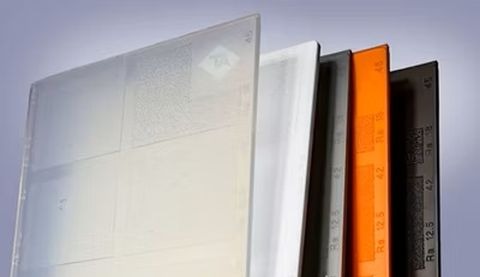
Tepex dynalite 104-RG600(x)/47% has a polypropylene matrix and is reinforced with continuous glass fiber rovings. It is primarily used in lightweight automotive construction, for example in vehicle underbodies and safety-related structural components, such as front-end carriers and seat pans.
"With this TÜV SÜD critical review, we go one step further than most of our competitors. We are responding to the trend among OEMs in the automotive and electrical/electronics industries to determine complete life cycle analyses for their products in order to optimize their sustainability,” explained Dr. Lisa Tölle, Project Manager of Material Development at Envalior.
The results of the ISO 14040/44 based LCA analysis show the environmental impact of one kilogram of semi-finished composite sheet that has not yet been customized.
All impacts that arise until the composite leaves the Envalior factory gate were considered via a cradle-to-gate assessment, such as the impact on soil, water, climate change, resources, and human health.
Sustainable Tepex variant with same properties
The new Tepex variant, made from 100% sustainable raw materials, consists of 70% continuous glass fibers produced from glass waste. The remaining 30% of the material is derived from attributed bio-circular polypropylene.
The sustainable origin of all raw materials is verified using a certified mass-balance approach, according to the International Sustainability and Carbon Certification (ISCC) Plus standard.
The composite is completely identical to its purely fossil-based counterpart. It has the same chemical, physical, and processing properties and the same quality, and therefore meets the same technical specifications and certifications with no need for requalification.
"Our customers can therefore use it directly as a drop-in solution and replace the fossil-based counterpart in the ongoing production process. The substitution does not incur much effort because the existing processing machines can be used under the same process parameters," explained Tölle.