
















Delta Tecnic designs new masterbatch formulations to reduce carbon footprint

With 2030 as a critical horizon and a target of reducing emissions by at least 30%, companies are no longer competing on cost or performance alone — carbon footprint is now part of the equation.
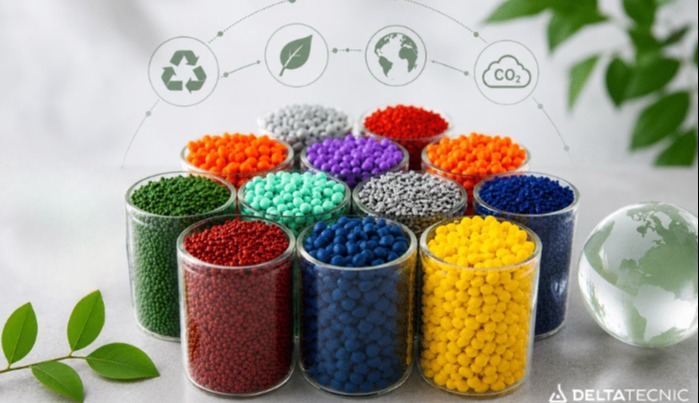
Delta Tecnic, a company specializing in masterbatch for cable and PVC, designs new formulations of its raw materials to reduce its carbon footprint at the source and stay ahead of its 2030 targets.
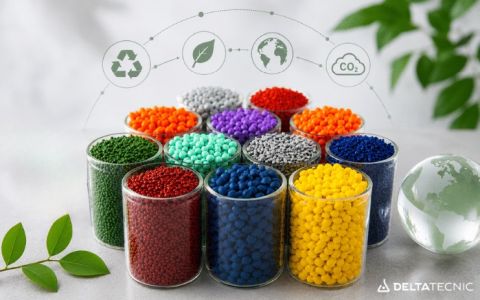
Delta Tecnic develops sustainable masterbatches to reduce carbon footprint.
Delta Tecnic has begun reviewing a range of formulations to cut emissions at the source, acting on each component of the product. The goal is to reduce offset impact structurally from the ground up: rethinking which raw materials are used, where they come from, and what footprint they leave across their entire lifecycle.
This approach involves the gradual replacement of traditional materials with recycled, renewable or lower-energy intensity alternatives that can maintain technical performance without compromising environmental impact.
New formulations for polymers
The main focus is on the polymer, which accounts for a significant share of the formulation and whose carbon footprint has historically been tied to petroleum. Delta Tecnic is committed to incorporating recycled polymers and renewable raw materials with a lower carbon footprint.
The gradual replacement of virgin raw materials with recycled or bio-based alternatives makes it possible to significantly reduce associated emissions and move towards a truly circular model, without compromising the technical performance of the product.
But the transformation does not stop there. Delta Tecnic is undertaking a thorough review of its formulations, analyzing the environmental impact of each of its components.
This approach allows the company to move towards raw materials with a lower carbon footprint and more sustainable origins, while always guaranteeing the technical performance required by end applications.
Plant-based pigments
One of the most significant developments lies in pigments, which have traditionally been associated with emission-intensive processes. Delta Tecnic has opened new innovation lines focused on pigments with a lower environmental impact, including solutions derived from recycled materials and new plant-based alternatives.
These advances have already translated into concrete solutions. Delta Tecnic has developed a black polyethylene masterbatch for the cable industry, meeting the technical requirements for inner sheath applications.
In parallel, the company has PVC masterbatch formulations with recycled content, reinforcing its commitment to circularity across different product lines.
Future focus: Plant-based resources
In parallel, Delta Tecnic is conducting a detailed analysis of the real environmental impact of each raw material it uses, studying its full lifecycle from origin to end use. This work enables better decision-making when selecting materials and accelerates emission reductions across its product range.
The next challenge will be advancing in natural-origin pigments and the use of plant-based resources, which open the door to new generations of raw materials with a lower environmental impact.