











WACKER’s ceramifying silicone supporting thermal barrier at the Battery Show

WACKER will present its innovative solutions for battery electric vehicle (BEV) safety at the Battery Show in Stuttgart, Germany, on June 9-11.
One of the main focuses will be a ceramifying silicone that significantly improves the heat and flame resistance of thermal barriers. It will also showcase thermally conductive potting compounds for effective temperature control of power electronics components.
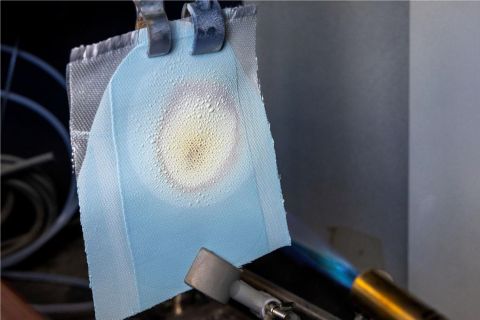
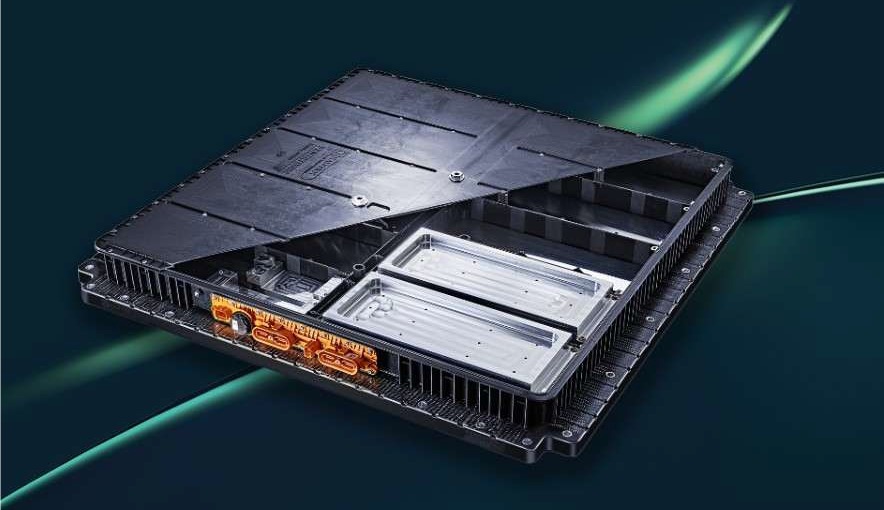
WACKER’s ceramifying silicone greatly improves the heat resistance and dielectric strength of the battery housing and of other protective systems.
New ceramifying silicone from ELADTOSIL CM line
WACKER will showcase its new silicone from the ELASTOSIL CM line that improves the heat protection and flame resistance of thermal barriers significantly.
After it is applied, the product cures to form a silicone elastomer that is suitable for coating housing components as well as flexible, fabric-like protective systems.
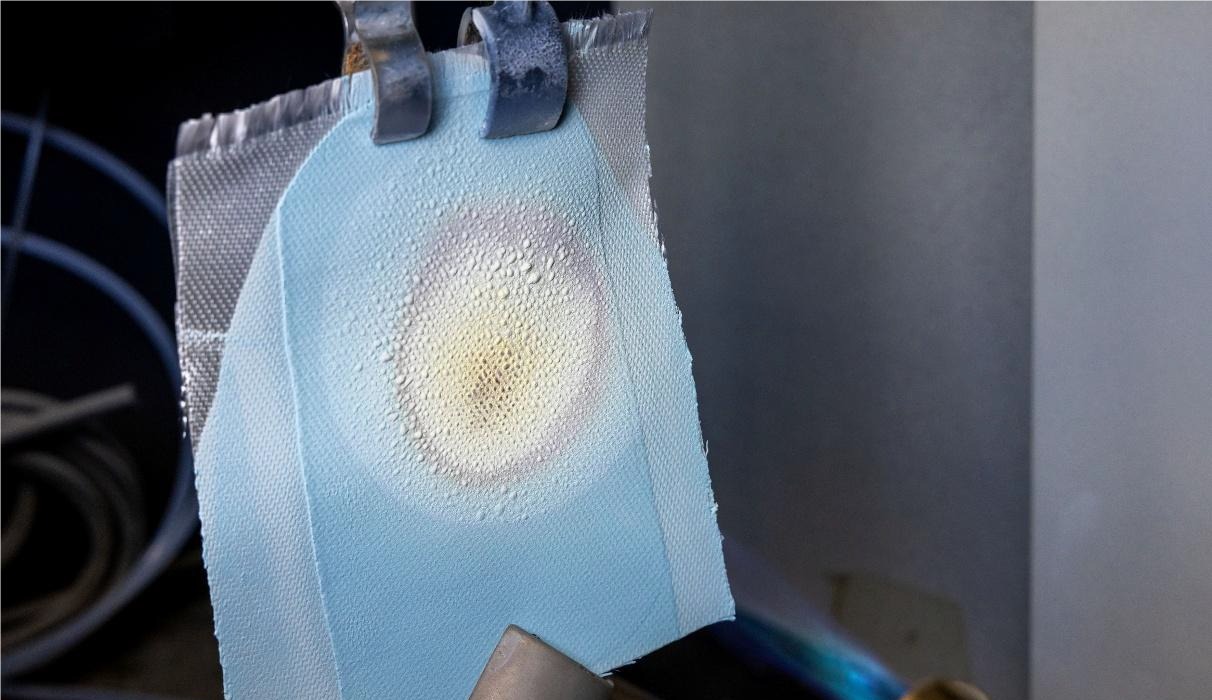
At temperatures above 600°C, this particular silicone loses its elastic properties and forms a ceramic that acts as a protective barrier, shielding the housing and adjacent components from heat and hot gases.
Thermal runaway tests with battery cells show that a protective fabric coated with ELASTOSIL CM is able to reduce the radiant heat of a flame that has a temperature of 1,300°C to below 150°C.
The product benefits not only from high flame and heat resistance, but also from another key property. Due to its intrinsic strength, the ceramified silicone acts as a barrier layer. This layer effectively traps particles that are ejected from the defective cell during thermal runaway.
New potting compounds for thermal management
Another highlight relates to potting compounds for the thermal management of power electronics components. ELASTOSIL RT 7616 TC and ELASTOSIL RT 7624 TC are filled addition-curing silicone elastomer formulations that cure at room temperature. This enables energy-saving processing of large and heavy components.
The rheological properties of both potting compounds have been optimized so that sedimentation and agglomeration effects are no longer relevant to customers. If fillers still settle after unfavourable transport and storage conditions, they can be easily redispersed using standard mixing equipment.
ELASTOSIL RT 7616 TC and ELASTOSIL RT 7624 TC have a comparatively low viscosity. This means that these products can be used to fill gaps as small as a few hundred micrometers quickly, reliably and bubble-free. They cure at room temperature, which makes oven-free processing of components of any size possible.
Both products are heat-resistant and low-emission formulations. They are mainly used in battery chargers in the field of electromobility, in DC/DC converters or in inverters for thermal management of discrete electronic components such as coils or inductors.
Silicones for electromobility
With its ELASTOSIL, SEMICOSIL, SILRES, and WACKER Silgel brands, WACKER offers a wide range of products and solutions for electromobility. At the Battery Show, WACKER will feature the following products:
SILRES MK is a condensation-curing methyl silicone resin that is readily soluble in various organic solvents. The product can be used as a binder or impregnating agent for mechanical and thermal barriers. Silicone-resin-bound laminates based on mica, glass fiber or mineral fiber withstand extreme temperatures over the long term. They retain their electrical and water-repellent properties, as well as their high mechanical strength.
ELASTOSIL CM 18x potting compounds are developed specifically for the side potting of cells and the top potting of pressure-relief vents. These compounds cure at room temperature to form an elastomer of medium hardness. Self-adhesive grades are available too.
ELASTOSIL R 531/60 is a ceramifying silicone rubber for the insulation of busbars in high-voltage batteries. It can be extruded. This silicone rubber also improves the safety of electric vehicles in extreme situations. In the event of fire, the rubber ceramifies. The busbars thus remain encased in the ceramic layer and stay electrically insulated.