




















Avient launches low loss dielectric thermoplastics for mmWave radome applications

Avient launched PREPERM Low Loss Dielectric Thermoplastics for mmWave radome (radar dome) applications – a new modified polyphenylene ether (PPE) portfolio with four grades created for the surge in 5G/6G-enabled radar sensing across automotive, intelligent transportation, and humanoid robotics.

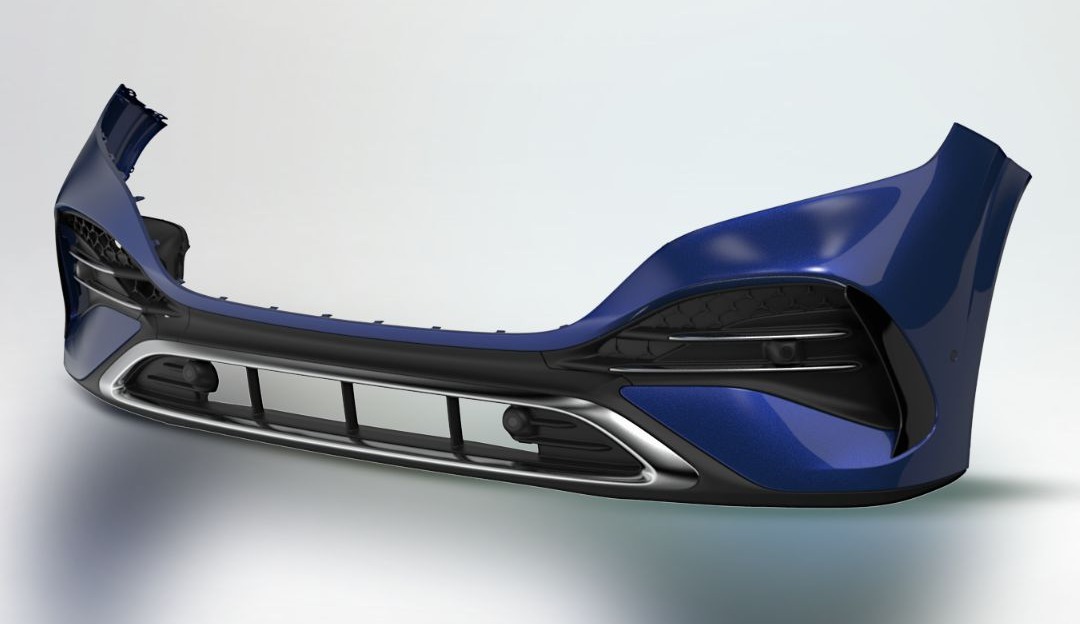
Avient’s new PREPERM Low Loss Dielectric Thermoplastics for mmWave radome applications are specially engineered for use in ADAS, traffic radar systems, and humanoid robotics.
The PREPERM portfolio provides automotive advanced driver assistance systems (ADAS) component manufacturers, traffic radar system producers, and next-generation robotics developers with a high-performance alternative to conventional glass-fiber-reinforced polybutylene terephthalate (PBT+GF) materials.
The new PREPERM Low Loss Dielectric Thermoplastic grades for mmWave radome applications are produced in Asia and available globally.
What are the material barriers for radome?
The accelerating adoption of radomes is reshaping material requirements across the automotive and robotics industries.
As Level 2 through Level 4 driver-assist features proliferate and humanoid robots move from labs into commercial service, the radome — the dielectric cover that protects the radar antenna — has become a make-or-break component for system performance.
The challenge: incumbent PBT and GF materials were not created for the higher frequencies (37.5 GHz to 79 GHz and above) now standard in advanced radar. Manufacturers are facing four recurring barriers:
Signal loss from elevated dissipation factor (Df) values that erode detection range
Narrow detection angles, especially below 60°, that limit blind-spot and corner-radar coverage
Warpage during injection molding that extends qualification timelines and adds rework cost
BSIS (Blind Spot Information System) certification hurdles that block European market entry
PREPERM as a solution
PREPERM Low Loss Dielectric Thermoplastics for mmWave radome applications can deliver a dielectric constant (Dk) of 2.53 to 2.94 and a loss tangent (Df) as low as 0.001 at 2.5 GHz.
In Avient’s in-house RF testing at 37.5 GHz, PREPERM grades demonstrated clear improvements in gain, elevation angle, and detection angle compared to PBT+GF materials.
Applications include automotive forward- and corner-facing radars, traffic-monitoring radomes, and mmWave sensor housings for industrial service robots operating in demanding environments.
“Tier 1 automotive suppliers and robotics developers in Asia were hitting real performance ceilings with PBT+GF materials,” said Flight Xu, General Manager, Specialty Engineered Materials, Asia at Avient.
“These traditional polyesters could not deliver stable dielectric values at high frequencies, and warpage was creating costly assembly rework. With our new PREPERM materials, customers are achieving meaningful gains in signal quality, detection range, and assembly consistency.”
Four grades available
The four commercially available grades are each purpose-engineered as either unfilled or glass-filled PPE, playing distinct roles across the entire radome assembly.
High-impact and reinforced laser-weldable grades address the outer radome layer’s impact and structural demands, while a dedicated laser-absorbing grade serves as the base layer — enabling fully welded assemblies compatible with laser assembly processes.
For manufacturers transitioning from PBT+GF, select grades offer a proven drop-in upgrade path with dimensional stability.