
















Teijin expands PFAS-free high-performance resin lineup

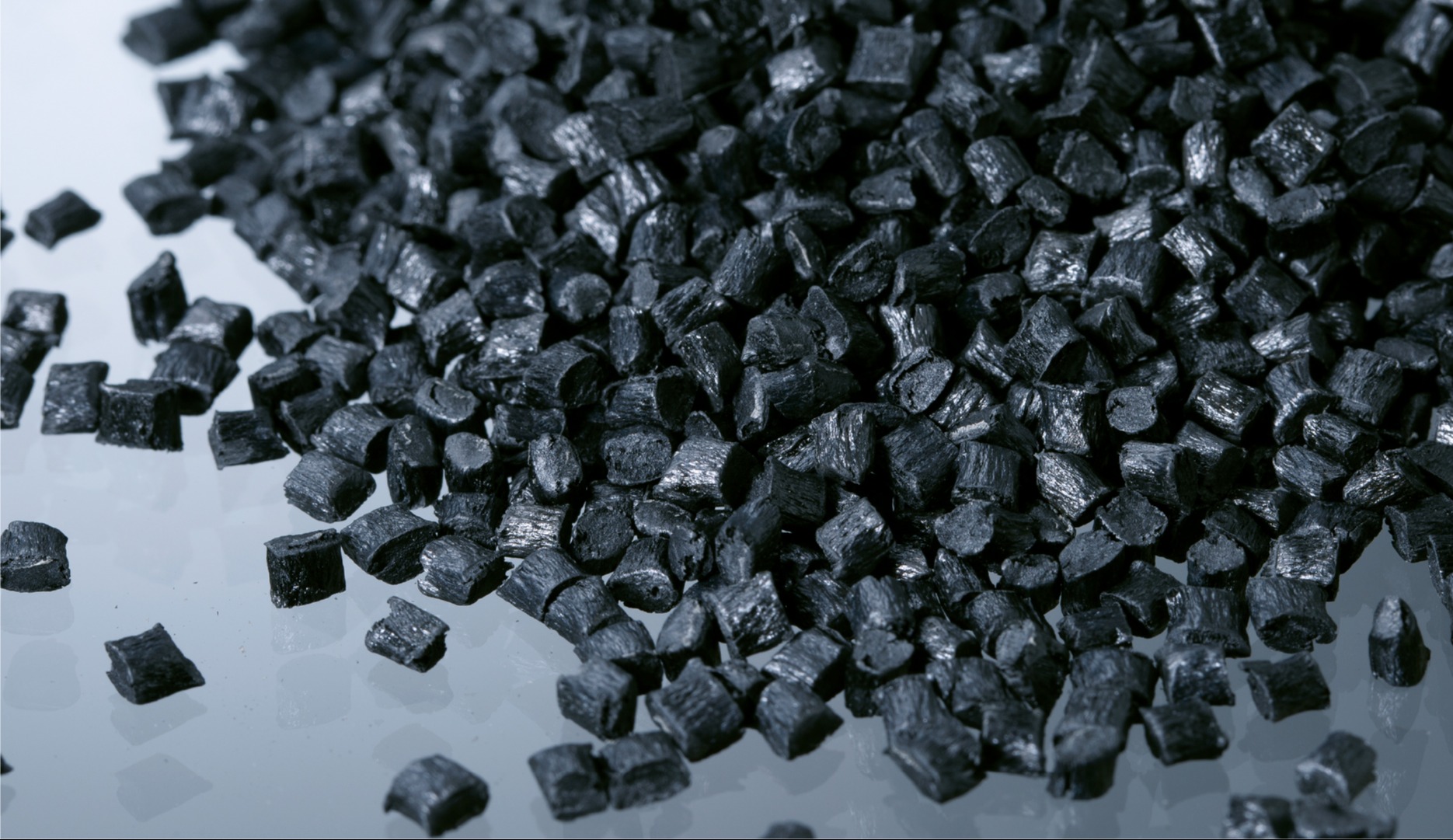
Teijin Limited introduces the new grades of SOLFIGA, its portfolio of polyphenylene sulfide (PPS) compounds which offer excellent sliding properties without intentionally added per- and polyfluoroalkyl substances (PFAS).
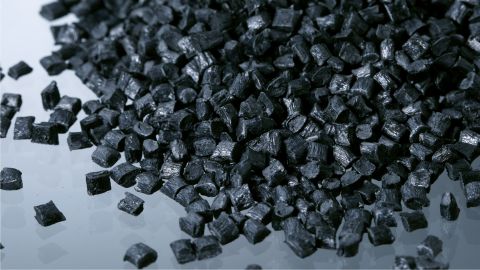
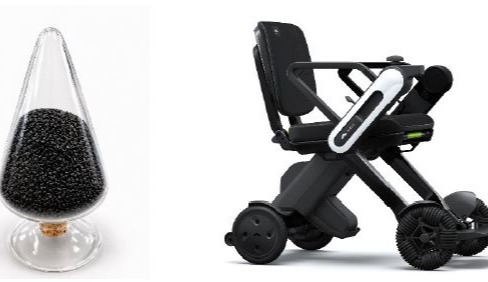
SOLFIGA PPS compound pellets.
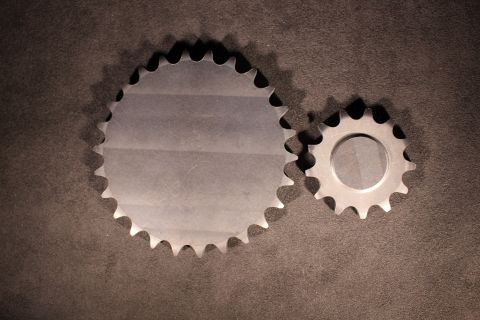
Gears using SOLFIGA PPS compound (prototype).
The new grades are also designed to help customers balance wear and friction performances with regulatory compliance.
Teijin already supplies polybutylene naphthalate (PBN) resin with good sliding properties as its PFAS-Free product. By expanding PFAS-Free high-performance resin lineup, Teijin will further enhance its ability to meet increasingly diverse customer needs.
As with existing SOLFIGA lineup, the PFAS-free SOLFIGA grades incorporate carbon fiber and aramid fiber as reinforcement. The carbon fiber-reinforced SOLFIGA sliding grade provides high strength and rigidity for components used under high-load conditions.
The aramid fiber-reinforced SOLFIGA sliding grade reduces coefficient of friction (CoF) by approximately 70 percent compared with conventional products that do not use sliding agents. Its flexibility can help reduce damage to mating materials while allowing easier adjustment during assembly.
Both types of SOLFIGA sliding compounds offer high wear resistance for longer service life. Like Teijin’s PBN resin, they are less likely to scratch metal components such as aluminum.
Also, Teijin can formulate them to produce sliding parts for a wide range of conditions by varying the amount of high-performance fibers. Applications for these new grades include components for automobiles, industrial machinery, electrical and electronic equipment, and other wear and friction applications.
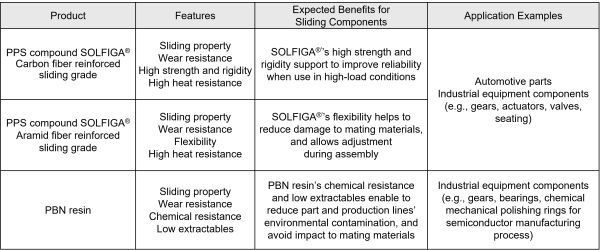
Summary of features offered by Teijin’s PFAS-free resin with sliding properties.
Traditionally, manufacturers have used materials containing PFAS, such as fluoropolymer resins, to achieve good sliding properties and wear performance. However, PFAS chemicals persist in the environment for long periods. Countries are strengthening PFAS regulations. In recent years there has been growing demand for materials that achieve sliding and wear performance without intentionally added PFAS.
Based on customer challenges, Teijin aims to help reduce environmental impact and contribute to the realization of a sustainable society by creating solutions that integrate internal and external technologies, products, and services.