









Paper-based packaging ≠ 100% paper: The role of plastics in paper-based packaging

Plastic bags, satchel, snack packages… These are the flexible plastic packaging that commonly found in our daily life. Despite their usefulness, they bring huge challenge to environment. And now, paper-based packaging is becoming a hot solution to reduce plastic consumption for fast-moving consumer goods.
Flexible plastic packaging: Convenient but a challenge to recycling
Small flexible packaging is one of the fastest growing packaging types. Due to lightweight and high performance advantages, it is widely used in fast-moving consumer products. However, regarding circularity, this type of packaging poses huge challenge.
û Low recycling rate: Flexible plastic packaging consists of multiple layers of different composite materials, making separation difficult. Additionally, their lightweight and space-consuming nature further add up the recycling costs.
û High leakage rate: Flexible plastic packaging lacks large-scale recycling system and public awareness of plastic classification and recycling is limited. With insufficient collection rates and improper waste disposal, a significant amount of plastic waste was leaked into natural environment, causing pollution.
Why is paper-based packaging favored?
As public begins to reflect on the environmental burden brought by plastic packaging, paper-based flexible packaging is rapidly becoming popular as an alternative solution.
Core advantages of paper-based flexible packaging:
ü Higher recycling rate: Paper has a more mature, efficient recycling system and network. General public also has higher knowledge and acceptance on paper recycling, which greatly improve the recycling rate of paper-based packaging.
ü Faster degradation: Pure paper-based packaging can completely degrade in natural environments within weeks to months. Even if it leaks into the environment after use, the damage to the environment is lower than that of plastic.
ü Lower carbon footprint: Due to the absorption of CO2 by trees during their growth process, paper-based packaging typically has lower carbon emissions than plastic packaging in the Life Cycle Assessment (LCA).
Underlying functions of plastic in “paper-based” packaging
Many people think that paper-based packaging means no plastic at all, but that's not the case. Although the main material is paper, plastic materials are still used to compensate for the physical shortcomings of pure paper itself, playing a key role in product protection and process assistance.
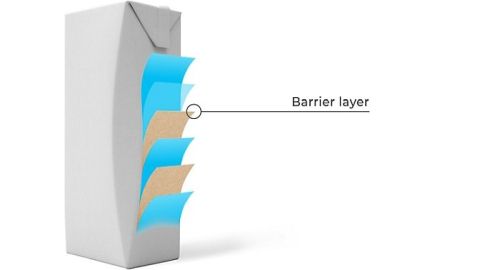
In fact, paper-based packaging is not made of 100% paper but of multiple plastic barrier layers. (Source: Tetra Pak)
Major functions of plastics in paper-based packaging:
• Anti-moisture and waterproof: Paper itself is porous and hydrophilic, and it is prone to softening and damage when exposed to moisture. After adding plastic films such as polyethylene (PE), it can effectively block water vapor.
• Oil- and grease-proof: Fast food packaging and baking paper bags rely on plastic or next-generation barrier coatings to prevent oil from seeping out, making the packaging or hands dirty.
• Barrier to gas and chemicals: Plastic layer can isolate oxygen and odors, reduce the mutual penetration of internal and external substances, and extend the shelf life of food and sensitive products.
• Heat sealing: Paper cannot be sealed by heat. By laminating a thin layer of plastic on the surface of paper packaging, it can be quickly sealed by hot pressing, achieving a tight seal of the packaging bag.
• Surface protection and printing aesthetics: Many packaging surfaces are covered with an extremely thin plastic film, which is scratch resistant, stain resistant, and can enhance the gloss and texture of printed patterns.
The industry also develops a new generation of environmentally friendly barrier layers. Replacing traditional fossil-based plastic films with plant-based alternatives that not only can achieve practical waterproof and oil resistant effects, but also retain the recyclable and biodegradable properties of paper.
Tetra Pak | Paper-based barrier layer
Tetra Pak has introduced an aseptic paper-based barrier packaging that combines paper-based barrier and plant-based polymers. Compared to traditional packaging with aluminum foil layer and fossil-based polymers, the new packaging reduces carbon footprint by up to 50%.
This packaging was first adopted in Italian dairy company Sterilgarda Alimenti’s 1L-milk carton in April 2026. By using paper-based barrier and plant-based polymer derived from sugar cane, the packaging increases renewable content to 90%.
From recycling point of view, this packaging solution simplifies the carton’s material structure, reducing it from three to two main materials: paper and polymers. The increased paper content can support recycling infrastructure, enhancing recycling efficiency and quality of recycled plastics.
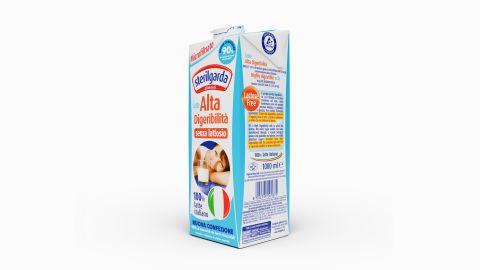
Tetra Pak’s aseptic paper-based packaging solution is applied in 1-liter milk carton in Italy.
Six CPG giants join consortium
Paper-based packaging launches are just single cases. Industry collaboration is essential to achieve a complete closed loop in paper packaging – covering material R&D, trial, scale up, and end-of-life recycling.
On September 16, Ellen MacArthur Foundation announced the launch of The PaperFlex Consortium. Six global consumer goods companies – Colgate-Palmolive, Mars, Nestlé, PepsiCo, Procter & Gamble, and Unilever – have joined hands to accelerate the development of responsibly designed paper-based alternatives to flexible plastic packaging.
Ellen MacArthur Foundation and six global consumer goods companies have joined and launch The PaperFlex Consortium.
“Responsible paper-based flexible packaging solutions don’t yet exist at the performance, scale and cost required,” Sander Defruyt, Strategy Lead for Plastics at the Ellen MacArthur Foundation, said.
Focusing on small-format flexible plastic packaging, such as sachets, wrappers, and pouches, the consortium intends to shape, fund and conduct collaborative trials covering innovations in areas such as biodegradable coatings, and other technologies that deliver product protection, shelf life, and consumer usability, and improve how paper-based materials perform on manufacturing lines.
The launch of The PaperFlex Consortium proves the huge potential of paper-based flexible packaging. However, it also reminded us that material technology development, recycling system improvement, and customer education are equally important to achieve a sustainable life cycle for packaging.
Paper-based packaging is not a universal solution
Thanks to its easy-to-recycle, biodegradable, and low-carbon nature, paper-based flexible packaging emerges as an alternative to plastic ones.
However, we have to understand a fact: so far, paper-based flexible packaging that meets product protection function, mass production capability, and environmental consideration is yet to be scaled up for commercial market.
Paper-based packaging as an alternative is not merely replace plastics with paper as a whole. Challenges – including barrier coating technology are production cost control – remain in the present development stage.
Paper-based flexible packaging is not a universal solution to solve pollution. It can only achieve true circularity and sustainability when it is adapted in different applications and matched with comprehensive end-stream recycling system.
Emergence of paper-based packaging is a big step for packaging industry to explore more sustainable alternatives. However, in order to overcome packaging pollution problem, technology R&D, suppliers, consumers, and recycling systems are not one to miss.