



















World’s first mass-produced electromechanical brake (EMB) brake-by-wire system launched

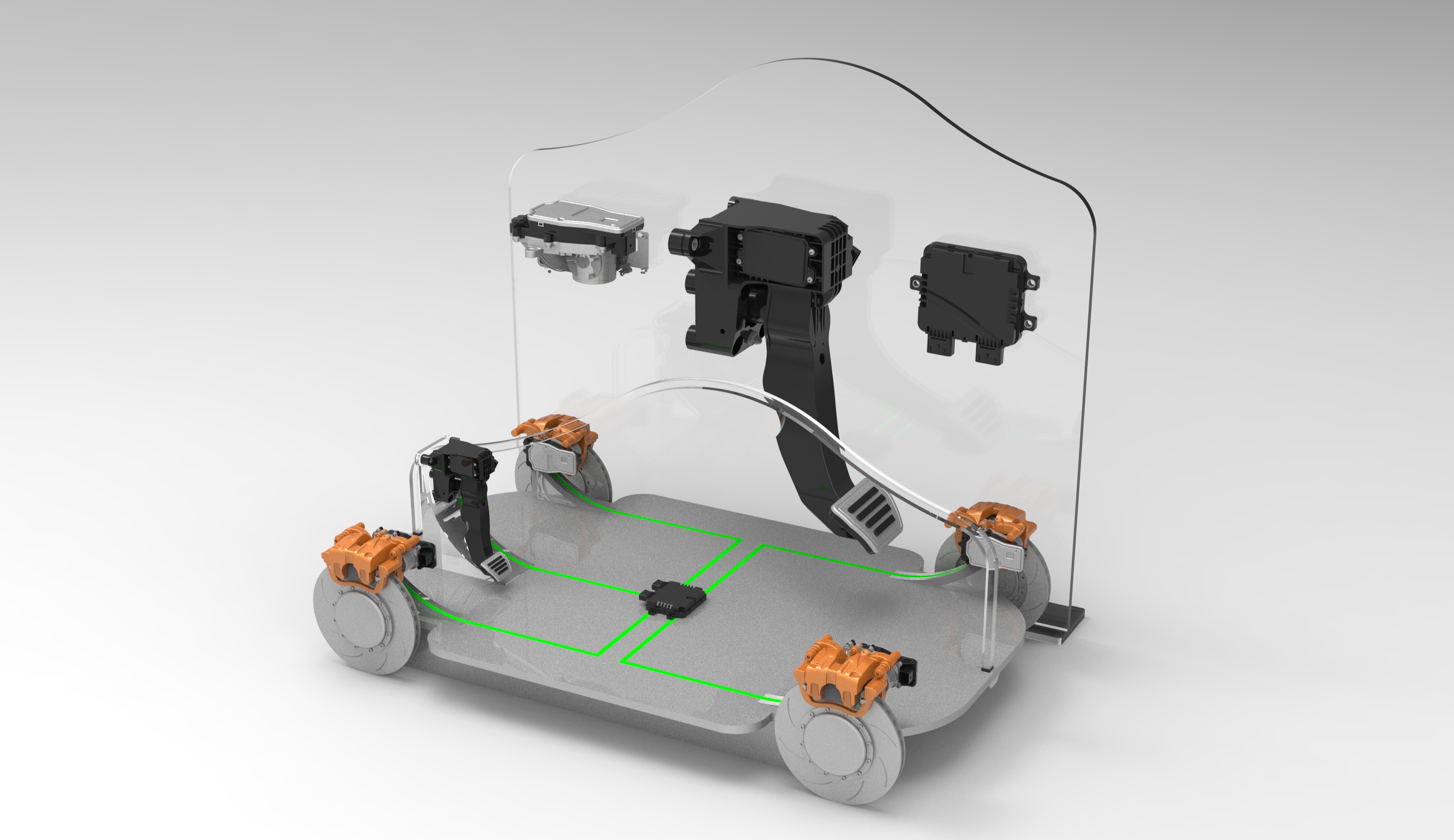
BASF, Chery Automobile, and Suzhou Orient Motion Intelligent Technology Co., Ltd. have introduced the world’s first mass-produced electromechanical brake (EMB) brake-by-wire system.
Developed and industrialized in China, the system has been deployed in Chery’s premium EXEED EX7 model.
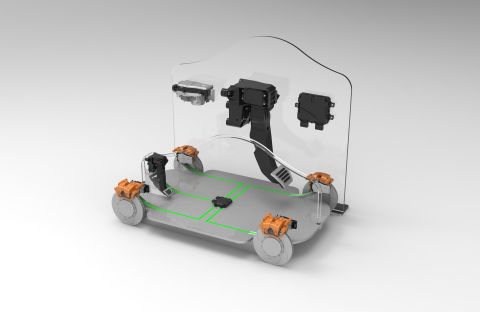
BASF engineering plastic solutions deliver high durability and reliable performance in key components of the EMB brake-by-wire system.
Brake-by-wire technology arises
As vehicle electrification and the evolution toward software-defined vehicles continue to evolve, brake-by-wire technology is emerging as a key direction for the future development of automotive braking systems.
This momentum is further reinforced by China’s national standard GB 21670-2025, which incorporates Electric Transmission Braking Systems (ETBS) and recognizes EMB as a new technical pathway, providing a clear regulatory framework for broader adoption of the technology.
By replacing conventional hydraulic transmission with electronically controlled actuators, EMB technology enables the deep integration of braking systems, vehicle dynamics control, and software platforms.
Test results from the China Automotive Technology and Research Center (CATARC) demonstrate that EMB offers significant advantages in braking response, control precision, and safety redundancy, helping to enhance active vehicle safety while supporting the evolution of automotive electrical and electronic (E/E) architectures toward higher levels of integration and centralization.
BASF engineering plastics support functional and lightweight advantages
BASF engineering plastics solutions helps meet various functional requirements within the EMB system.
BASF's Ultramid polyamide (PA) and Ultradur polybutylene terephthalate (PBT) are used in key EMB components, including full plastic brake pedal, Motor Gear Unit (MGU) and Domain Control Unit (DCU).
The materials combine mechanical strength, electrical insulation and dimensional stability for demanding operating conditions, including elevated temperatures and high humidity. In the brake pedal assembly application, the plastic-based design is approximately 25% lighter than a conventional metal pedal design.