













De Feng Yuan Machinery: Inline granulators for PET, PP, PLA and PS cup trim

In-line recycling looks like coarse work — reduce edge trim so it can go back into the extruder — but it fixes the upper limit on how much regrind a cup plant can use. Four things decide that limit: how narrow the particle-size distribution is, how much fines the machine makes, how much heat the material absorbs inside the chamber, and how much contamination is kept out. Material lost at this stage has to be replaced with virgin resin.
The four cup materials fail in different ways. PET film is tough; PP cup-body trim winds around the shaft; PLA is heat-sensitive and embrittles; PS lid stock is light and static-prone. One shear configuration applied to all four produces uneven granulation and excess fines.
Add blades that wear quickly on an integrated rotor requiring a skilled fitter to change, shear heat accumulating over a long run, dust and noise against tightening limits, cross-contamination when cup types rotate on the same line, and controls that report nothing until someone walks the floor.
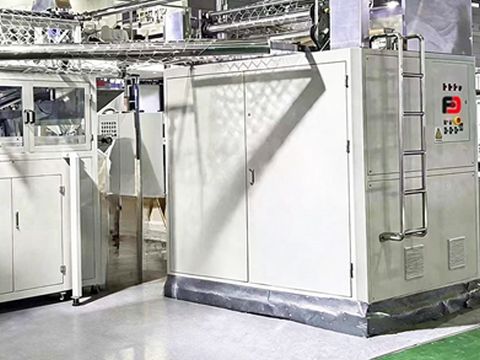
De Feng Yuan Machinery (德丰源机械) builds granulators for PET, PP, PLA, and PS sheet and cup trim, and works from the material rather than a standard model: customers send trim samples, the team tests thickness, material behavior, and forming process, then specifies against capacity, floor space, power, and how the machine connects to the extruder.

Seven changes, each tied to a mechanism
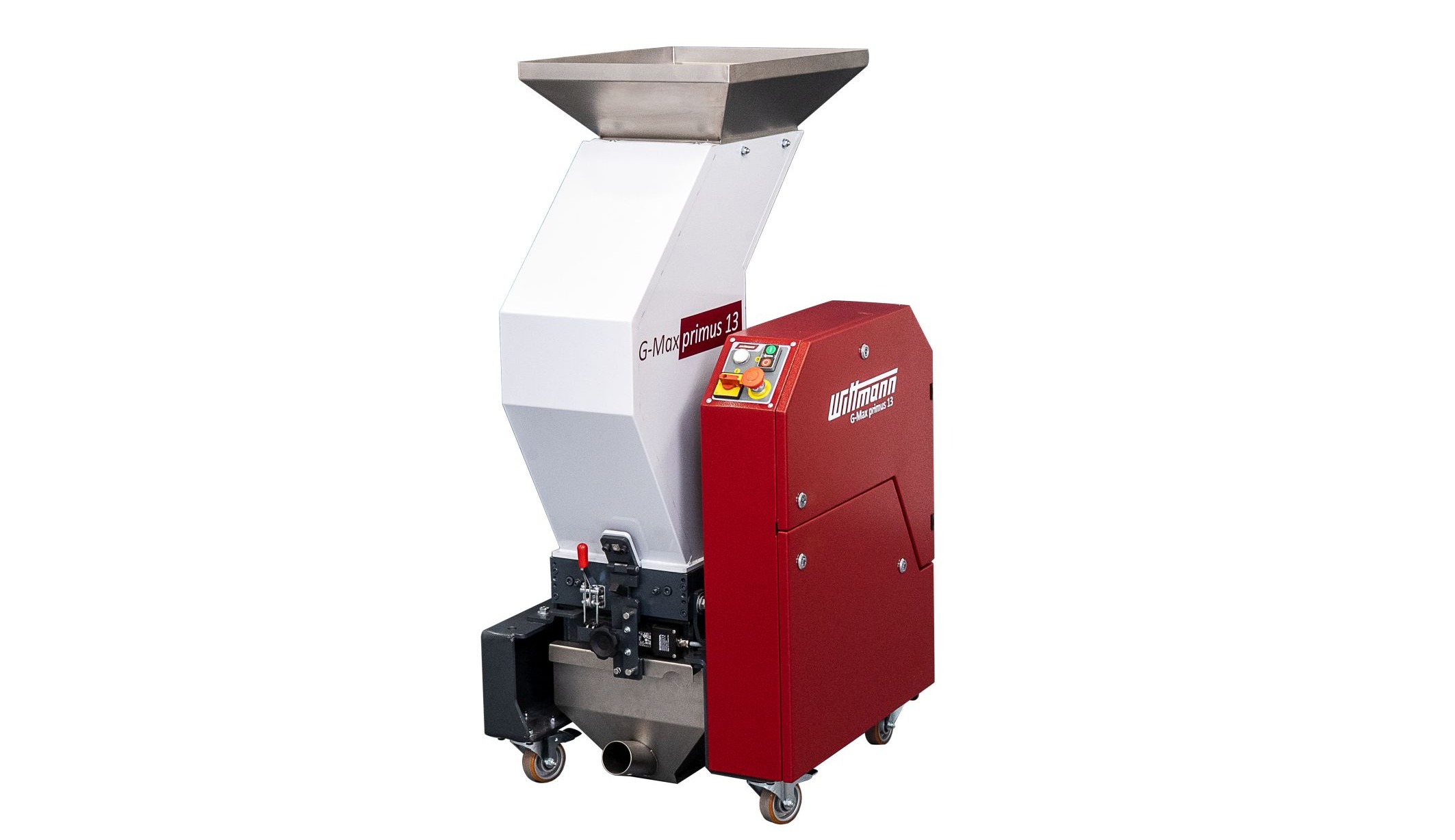
Staged crushing: A pinch-feed section reduces and loosens material first; the crushing section then controls particle size at the blade-to-screen gap, so the machine does not over-shear to reach fineness — the source of excess fines.
Custom shear system: Blade material, edge angle, rotor speed, and screen specification matched to each of the four materials, with adjustable moving-to-fixed blade clearance for feedstock variation.
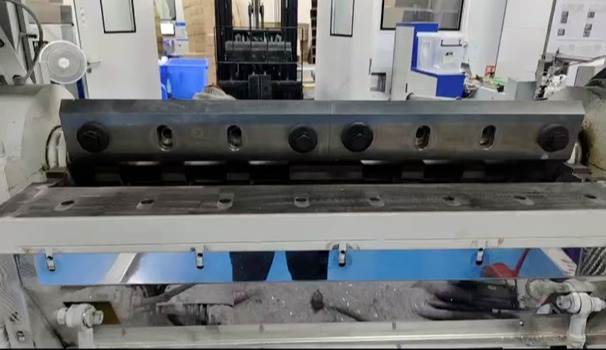
Quick-change blade sets: Blades reversible and replaceable individually with standard tooling — shorter stops, less dependence on a skilled fitter. Wear-resistant alloy bodies with an edge-refurbishment route.
Active chamber temperature control: Water-cooled structure with an anti-winding rotor and optimized internal airflow, suppressing heat build-up, solving PP cup-body winding, and holding PLA stable.
Enclosed dust and noise control: Fully enclosed chamber and acoustic structure with a dust-extraction port.
Easy-clean chamber: Wide-opening fast-access design, radiused interior, removable screen carrier — for quick cleaning between materials and colors.
Remote monitoring: PLC HMI with automatic feed interlock, metal detection, overload reversal, and one-key purging; optional IoT for energy reporting, blade-wear warnings, and remote support.
Lines
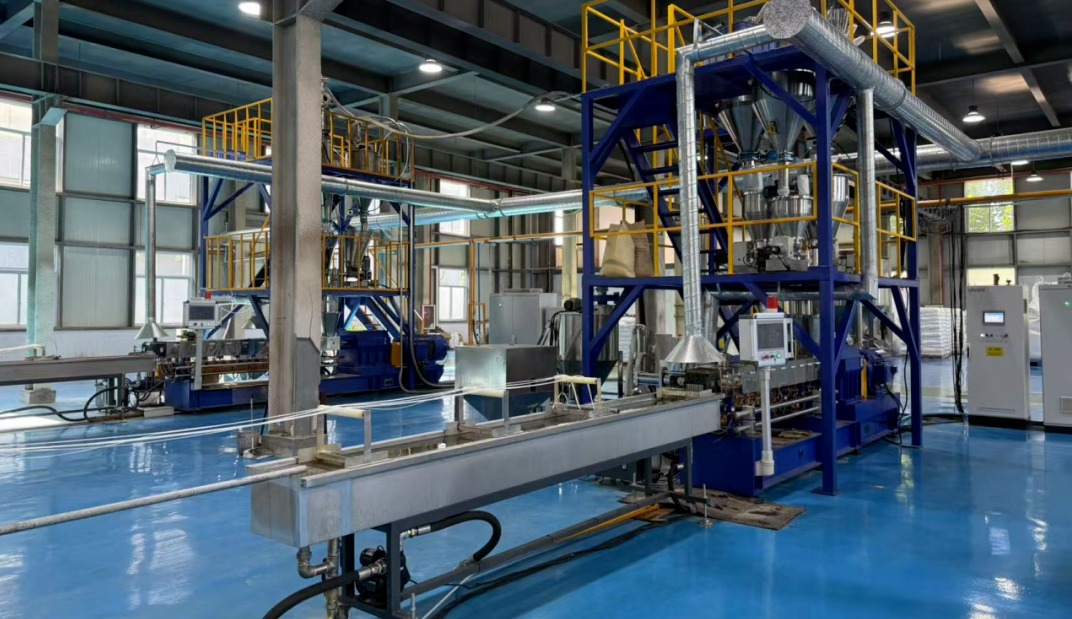
PET and PP cup and tray trim runs through pinch feed, an anti-winding crusher, temperature control, dust extraction, and size screening straight back to the extruder.
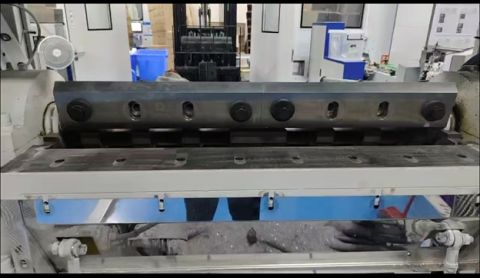
The PLA line uses low-speed shredding, low-temperature crushing, air and water cooling, and a static-dissipative return channel to protect a heat-sensitive material.
The PS lid and mixed-trim line uses a large-volume chamber and optimized airflow for light material that bridges in conventional hoppers. Throughput is set to each line's rhythm and confirmed on the specification sheet and site test.
About the CRRE exhibitor
Founded in 2016, De Feng Yuan Machinery develops and manufactures auxiliary equipment for plastic cup production — cup curling machines, flip-cup molds, leak testers, and plastic sheet granulators.
Booth: C1E19
About CRRE
CRRE is positioned as a national-level platform, with deep integration across the whole chain and broad international collaboration. It adopts a “summit forum + physical exhibition” dual-engine model. It is committed to building the first five-in-one super hub for resource-circulation in the Asia-Pacific region, covering: recycling – reprocessing – high-value applications – green finance – international rules.
Preregistration:
https://reg.crre-expo.com/CRRE/visitor-registration/eng?Regsource=RAZ23777