










WACKER showcases self-adhesive silicone rubber for medtech applications at COMPAMED

At COMPAMED, which takes place on November 16-19 in Düsseldorf, Germany, WACKER showcases the first non-postcure silicone rubber with self-adhesive properties and silicone adhesives for transdermal patches and silicones for pharmaceutical and medical applications.
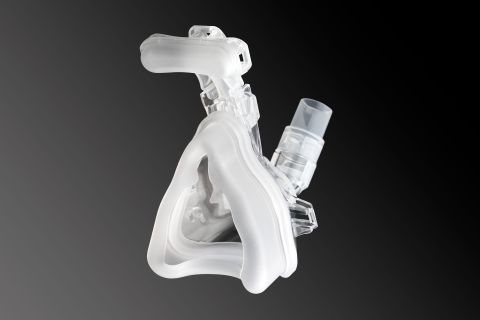
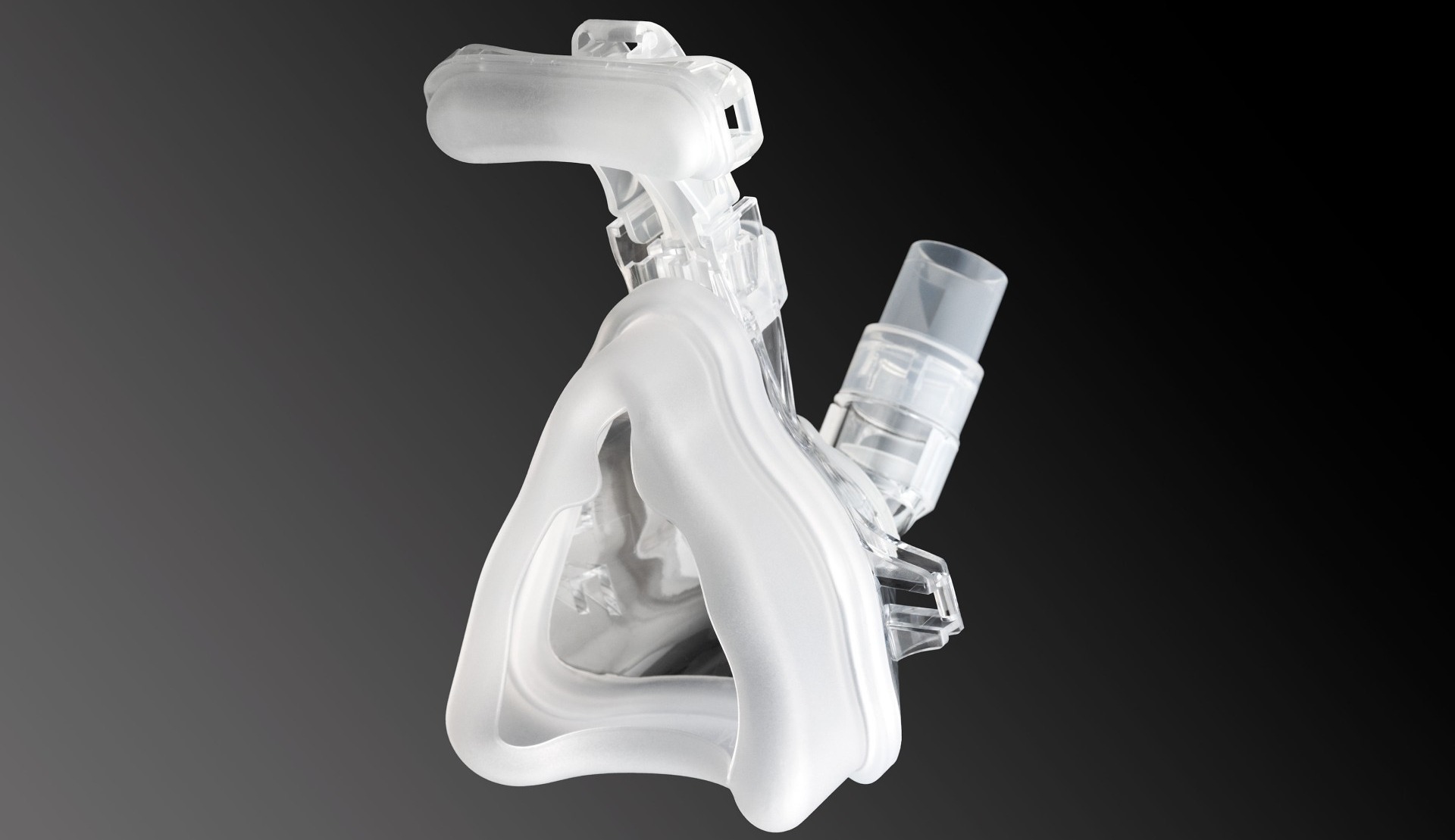
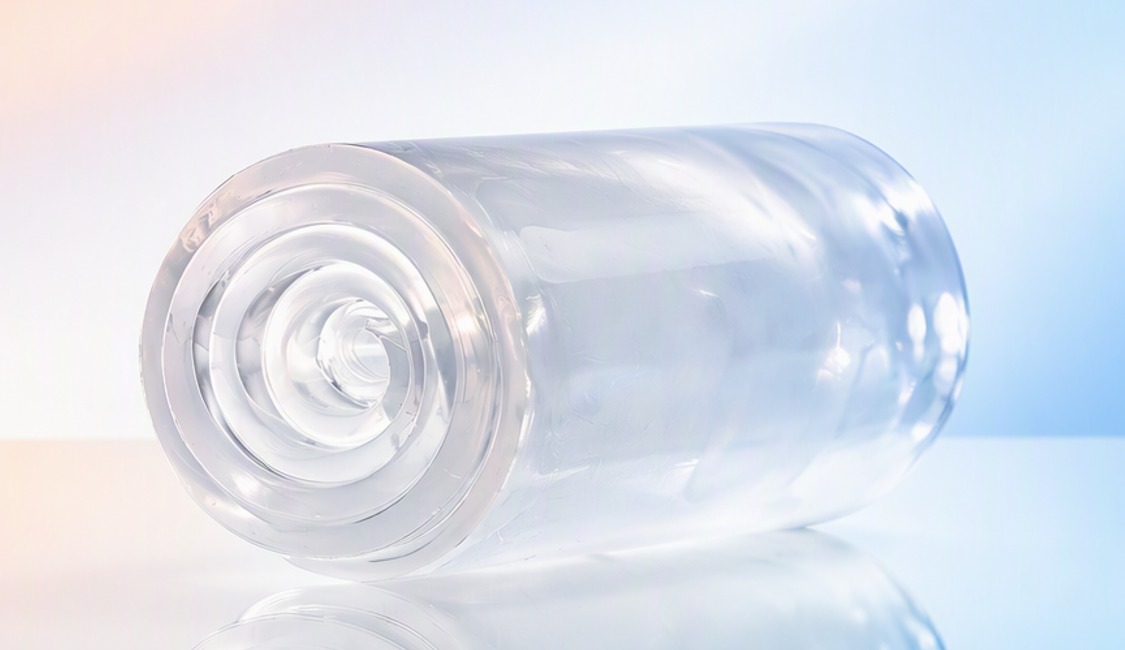
At COMPAMED, WACKER showcases ELASTOSIL LR 5471, a self-adhesive liquid silicone rubber that is ideal for respirational mask.
ELASTOSIL LR 5471 self-adhesive liquid silicone rubber
WACKER’s ELASTOSIL LR 5471 is a self-adhesive liquid silicone rubber that achieves excellent adhesion values on metals and thermoplastics. During in-house testing, an adhesion of 28 N/mm (as per ISO 813) was measured on polybutylene terephthalate (PBT). Equally good results were achieved on polyethylene terephthalate (PET).
ELASTOSIL LR 5471 does not require postcuring, which is needed for food contact or medical applications. Measurements on test plates 2 mm thick show that the cured silicone exhibits a volatile content of less than 0.4%. Molded articles made of ELASTOSIL LR 5471 therefore comply with recommendations issued by the German Federal Institute for Risk Assessment BfR even without postcuring (Recommendation XV. Silicones).
The mechanical properties of the silicone were also optimized. Non-postcured parts achieve an elongation at break of 570% and a tear strength of 38 N/mm (as per ASTM D 624 B). ELASTOSIL LR 5471 therefore provides sufficiently high elasticity and mechanical strength for demanding applications in sensitive areas.
Possible fields include seals and flexible scrapers for cookware, baking and kitchen utensils, patches for surgical masks and therapeutic devices as well as soft components for pacifiers and baby bottle teats.
ELASTOSIL LR 5471 is an addition-curing material consisting of two components that are compounded before processing. It is available in 40 and 50 Shore A hardnesses and is ideal for the large-scale production of overmolded parts (thermoplastic/elastomer).
Silicones for transdermal patches
Silicone gels have been used as atraumatic fixing aids for several years. They are highly skin-compatible and can be removed gently, despite adhering readily to the skin.
SILPURAN silicone adhesives are suitable for fixing sensors, dosing devices, ostomy bags, and other medical technology components.
As a stable, biocompatible and breathable matrix, silicone gels can store medical or cosmetic active ingredients and release them on the skin at a controlled rate over time. In a recently conducted study, WACKER examined 20 active ingredients that are suitable for such applications.
The ingredients include over-the-counter therapeutics, such as ibuprofen, anti-inflammatory drugs, herbal remedies, vitamins and dietary supplements.
An additional benefit of these silicone adhesives is that they offer customizable release profiles which control the amount, the rate and the duration of the release. Active ingredients can therefore be delivered at a constant and steady rate, via an initial burst or after a prolonged delay.
Thus, silicone gels are more than just carrier materials. They form the basis for the next generation of transdermal systems that are gentle on the skin, can be dosed with precision and are highly versatile in use.
Silicones for the pharma industry
At COMPAMED, WACKER will also showcase silicone-based solutions for pharmaceutical and medical uses. This time, specialty silicones from WACKER’s SILPURAN and ELASTOSIL product lines are in the limelight. Pure, sterilizable and chemically as well as physically resistant, these silicones are ideally suited for medical applications.