





Driving systemic change: Unilever’s evolution in the circular economy


Unilever reported significant performance milestones in 2025, including raising post-consumer recycled (PCR) content to 25% and reducing virgin plastic use by 29% through smarter design and lightweighting.
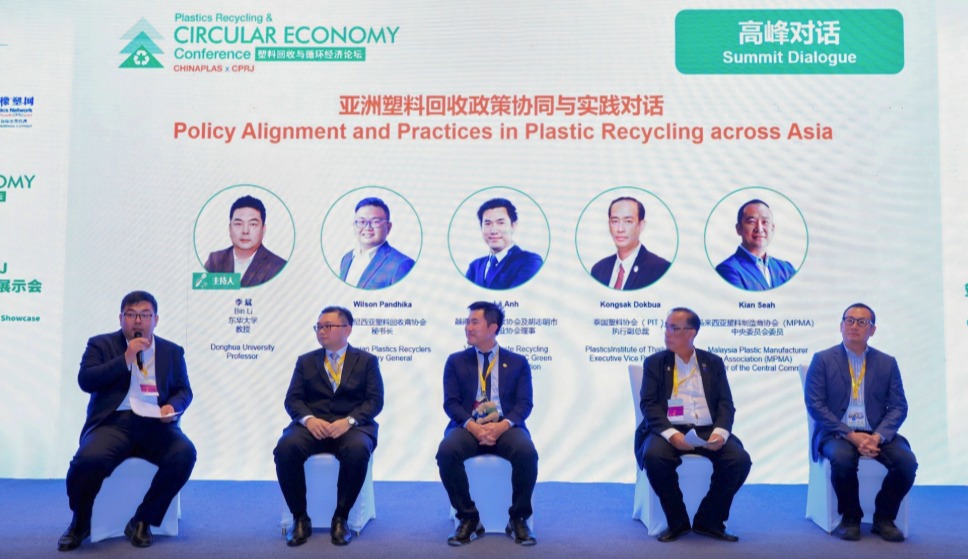
In his presentation at the 7th Edition CHINAPLAS x CPRJ Plastics Recycling and Circular Economy Conference and Showcase in Shanghai, Rupert Posner—Director Global Sustainability Advocacy at Unilever—outlined the company’s sharpened strategy for achieving a circular economy for plastics, grounded in urgency and systemic collaboration.
Unilever’s approach has evolved beyond target-setting into a focused, high-impact phase, concentrating efforts where they will make the biggest difference. In the next phase, the North Star remains the absolute reduction of virgin plastic.
This will be achieved by scaling reuse and refill models that work for everyday consumers and by tackling the technical challenges of flexible packaging through increased R&D and recyclable paper-based innovations.
Posner also called for deep industry collaboration and reaffirmed that Unilever continues to strongly support well-designed mandatory Extended Producer Responsibility (EPR) schemes.
In China, Unilever is advancing its circular economy goals through multi-stakeholder collaboration. Alongside integrating PCR materials into packaging, the company supports national recycling standards and works with plastic waste collectors and processors.