



















New studies confirm biodegradable plastics boost organic recycling and improve mechanical recycling

Biodegradable plastics offer innovative solutions to improve recycling quality by facilitating the means for more efficient separate waste collection, according to a recent research in Italy.
The study, jointly carried out by Corepla, the Italian Consortium for Collecting, Recycling, and Recovering Plastic Packaging, the Italian Composters Consortium (CIC), and Assobioplastiche, the Italian Bioplastic and Biodegradable and Compostable material Association, focused on the effects of biodegradable plastics on plastics recycling streams in Italy, where all single-use carrier bags have to be compostable (according to the European standard EN 13432) since 2011.
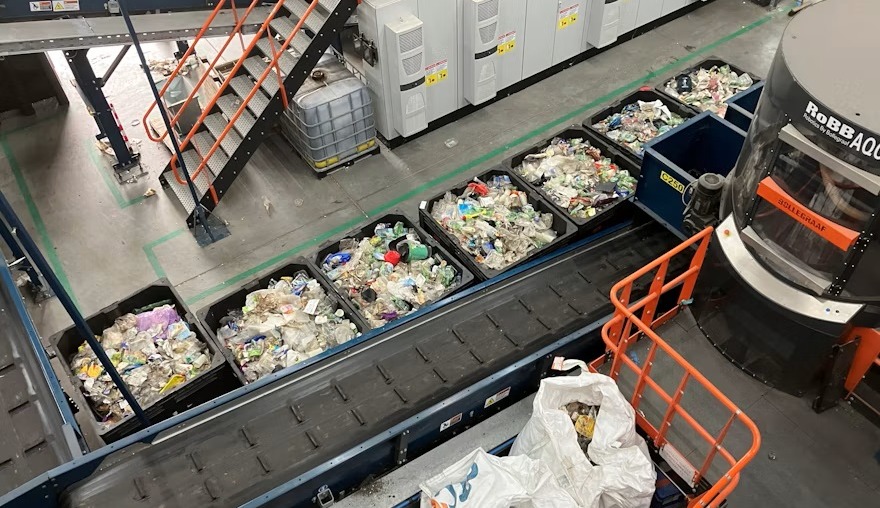
Analyzing the quality of recycled plastics from 19 waste sorting and recycling facilities around the country, Corepla found that compostable plastics only made up 0.85% of the plastic input. Similar studies by the University of Wageningen show that there are no negative effects on the properties of recycled plastics containing starch film and polylactic acid (PLA) recyclates.
Biodegradable plastics are designed to be treated in industrial composting plants. If they do enter mechanical recycling streams due to misthrows, they can easily be sorted out by available sorting technologies such as NIR (near infrared), as recent tests by the German research institute Knoten Weimar show.
Biodegradable and compostable plastics facilitate separate collection of bio-waste and help to divert organic waste from other recycling streams. Organic recycling is a well-established industrial process ensuring the circular use for biodegradable plastics while creating a strong secondary raw material market and opportunity for renewable energy generation.
Yet, the contamination of organic waste streams by misthrows of non-compostable plastics is high and constitutes a real problem for composting facilities and negatively affects the quality of compost.
CIC, in cooperation with Corepla, conducted tests in 27 composting plants in Italy and found that the contamination of organic waste by non-compostable plastics reaches up to 3.1% on average. The study also confirmed the complete biodegradation of compostable items such as bags and tableware and their ensured compatibility for industrial composting plants.
"The results of these studies carried out in real-life conditions in recycling plants confirm that mandatory separate collection of recyclable waste throughout Europe is necessary in order to improve the quality and quantity of plastics recycling. Additionally, more investments in the modernization of the waste management infrastructure are essential, including the implementation of separate mechanical and organic recycling streams," said Hasso von Pogrell, Managing Director of European Bioplastics (EUBP).