






















SABIC introduces new compounds for advanced ADAS

SABIC has expanded its specialty materials portfolio for advanced driver assistance systems (ADAS) with two new LNP STAT-KON compounds, further strengthening occupant and pedestrian safety.
The new compounds are well suited for ADAS radar absorbers and can help propel adoption of millimeter wave (mmWave) radar, which significantly improves sensor accuracy and range by providing robust and high-resolution information about remote objects.
New LNP STAT-KON WDF40RID and WDF40RI compounds address a key challenge of mmWave radar – its increased noise-to-signal ratio. To minimize noise that interferes with the transmission of the main radar signal, these compounds provide a high dissipation factor (Df) for efficient absorption.
Compared to other semi-crystalline glass filled materials, SABIC’s new glass fiber-reinforced grades deliver higher absorption and lower reflectivity. In addition, they offer ultra-high flow and very low warpage, empowering new designs for internal and external single-layer absorbers, or to optimize traditional metal-backed absorbers.

mmWave radar could enhance driving safety and support the trend towards autonomous vehicles.
Improved radar performance
The award-winning LNP STAT-KON WDF40RID compound exhibits high absorption (up to 75% at 77 GHz) and controlled reflection (as low as 25% at 77 GHz), which together can significantly reduce noise. It can surpass incumbent materials in higher absorption and lower reflection by as much as 10% on a flat design and can be further optimized with appropriate design shapes.
The compound delivers consistent performance across mmWave frequencies used for ADAS radar (76-81 GHz band). By maximizing noise dissipation, it can help minimize ghost images and sidelobe interference, resulting in greater ADAS radar resolution and accuracy.
The LNP STAT-KON WDF40RI compound is formulated for metal-backed radar absorbers. It can raise radio wave absorption to nearly 80%, while lowering reflection below 20%, and provide total shielding when working with metal backs. Both grades’ noise shielding performance is consistent across mmWave frequencies between 75 and 110GHz.
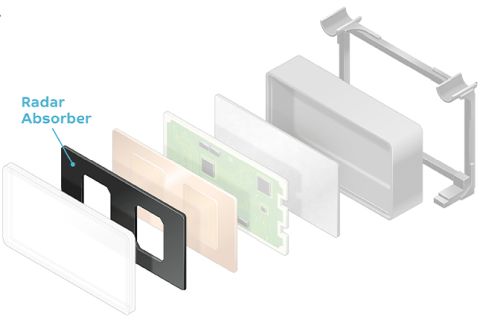
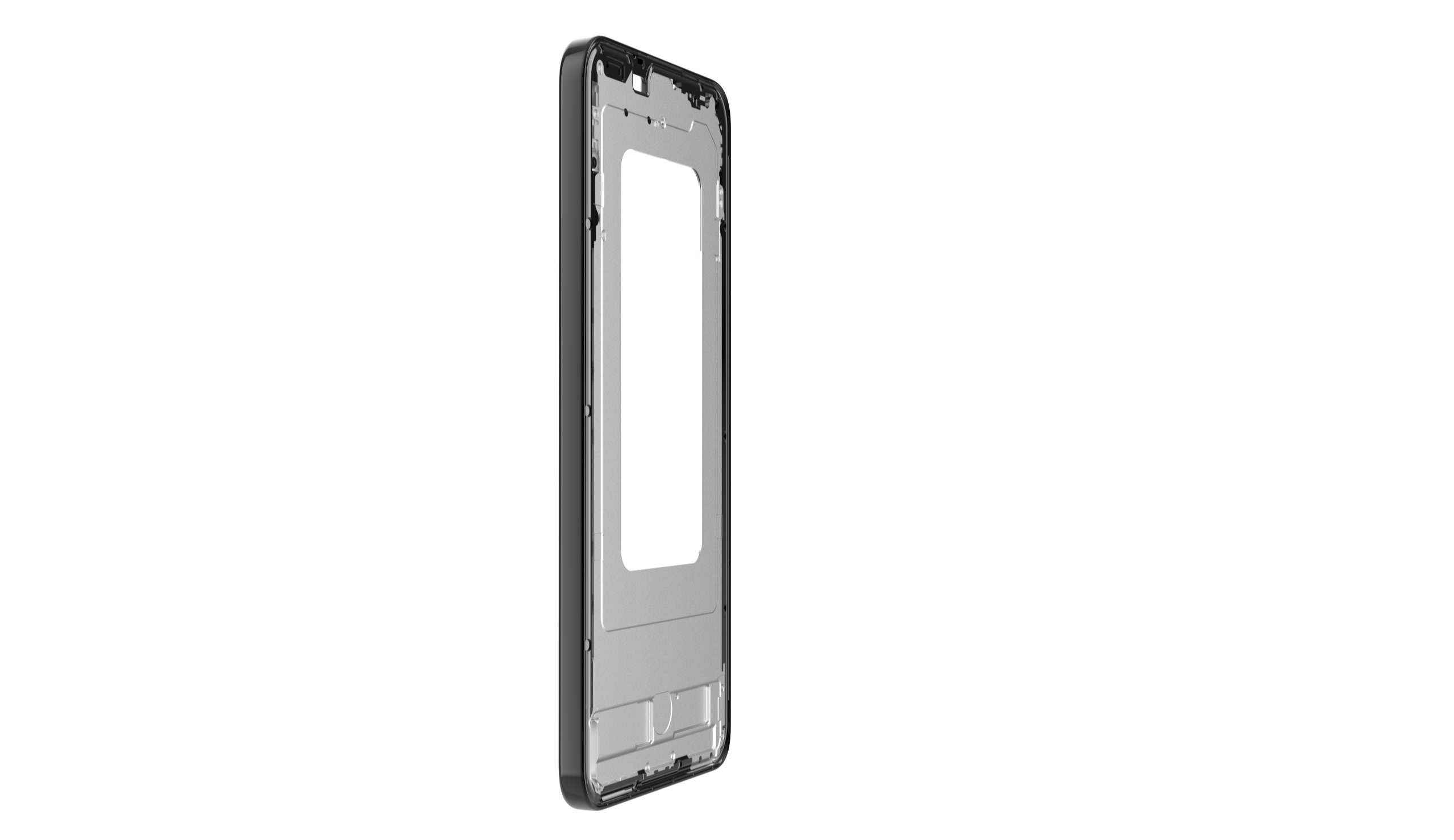
Illustration of radar absorber.
Exceptional flow properties empower new designs
Incumbent radar absorber materials typically exhibit high viscosity and reduced flow stemming from the use of conductive additives. High viscosity limits ADAS manufacturers in designing thin-wall internal absorbers or large external absorbers that surround the radar sensor.
LNP STAT-KON WDF40RID compound has an improved flow rate enabling very thin walls (down to 1mm) for interior radar absorbers that can reduce side lobe noise and free up space for additional electronics.
From a processing standpoint, high flow can sharply reduce scrap from short shots and increase yield. The new compound also delivers excellent dimensional stability at long flow lengths (up to 20cm). Its low warpage supports the design of large, curved, exterior absorbers to reduce noise from adjacent metal parts.