














Groundbreaking: TOMRA launches food-grade plastics sorting solution with deep learning

TOMRA Recycling, a global sorting solutions provider, launched three revolutionary applications to separate food-grade from non-food-grade plastics for PET, PP and HDPE, with the use of deep learning, a subset of AI.
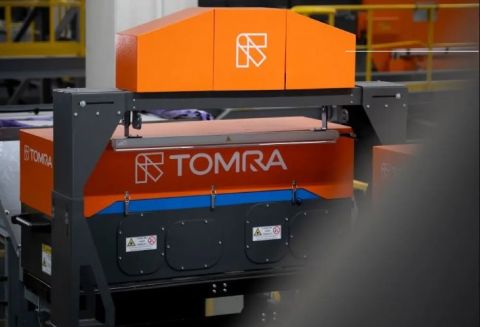
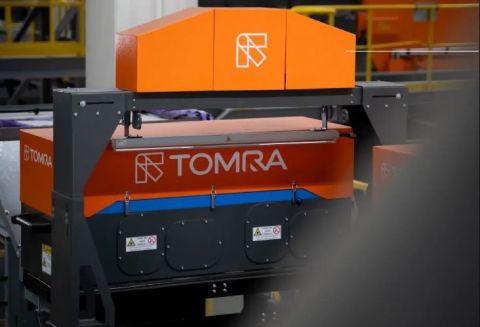
TOMRA’s AUTOSORT with GAINnext combines object recognition with traditional sensor-based sorting.
Previously, as food and non-food packaging recycling are often made of the same material and visually very similar, separation process is difficult for any present sorting system.
With TOMRA’s continuous investment in GAIN, its deep learning-based sorting add-on for its well-known AUTOSORT units, the company is able to quickly and efficiently separate food-grade from non-food-grade plastics for PET, PP and HDPE on a large scale.
The company’s GAIN technology, rebranded as GAINnext, further enhances the sorting performance of its AUTOSORT units so they can identify objects that are hard or even impossible to classify using traditional optical waste sensors.
Indrajeed Prasad, Product Manager Deep Learning at TOMRA Recycling, explained that the deep learning technology not only automates manual sorting, but also helps achieve high-quality recyclates through more granular sorting.
GAINnext can also solve complex sorting tasks with its ability to detect thousands of objects by material and shape in milliseconds.
By combining its traditional near-infrared, visual spectrometry or other sensors with deep learning technology, the groundbreaking solution achieves purity levels of over 95% for the packaging applications in customers’ plants across UK and Europe.
TOMRA is also launching two non-food applications to expand its GAINnext ecosystem – one is for deinking paper for cleaner paper streams and the other is a PET cleaner application for even higher purity PET bottle streams.