














World’s first commercialized bio-PET bottles launched

Indorama Ventures, Suntory, ENEOS Corporation, Mitsubishi Corporation, Iwatani and Neste collaborated to launch the world’s first bio-PET bottle for commercial scale, made from ISCC+ certified bio-paraxylene derived from used cooking oil.
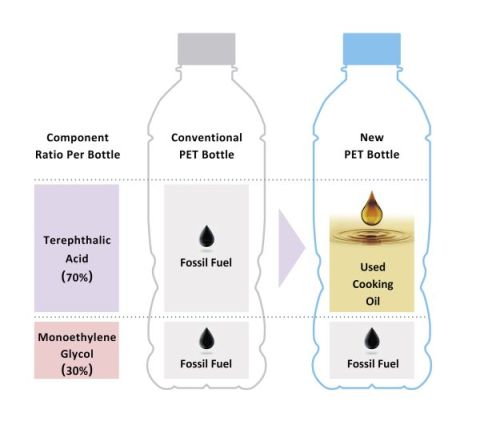
Conventional PET bottle vs new bio-PET bottle. (Source: Suntory)
Role of each partner
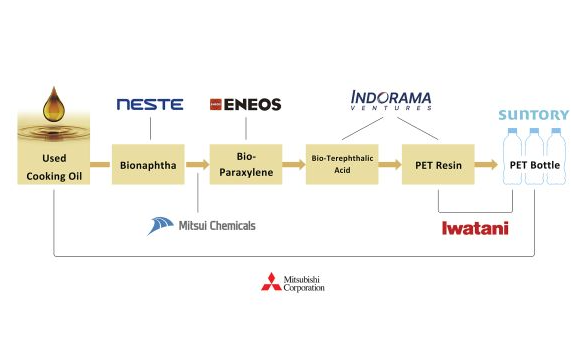
Each company brings unique capabilities to the collaboration, ensuring the success of this breakthrough initiative.
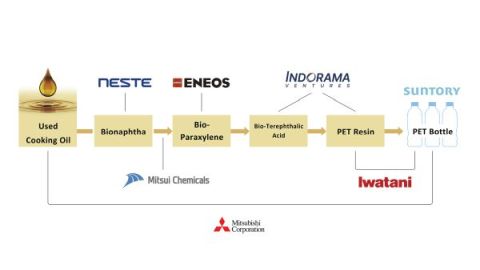
Role of each partner in the collaboration. (Source: Indorama Ventures)
Mitsubishi manages the entire supply chain. Neste produces bio-naphtha from used cooking oil in ISCC+ certified plant. Then, Mitsui Chemicals produces intermediate material of bio-paraxylene using bio-naphtha in ISCC+ certified plant.
ENEOS produces bio-paraxylene from intermediate material in ISCC+ certified plant using mass balance approach. Indorama Ventures then took Bio-Paraxylene to create Terephthalic acid, then reacted it with monoethylene glycol to produce PET Resin.
Iwatani manages the operation from production to delivery of PET resin while Suntory form PET resin into bottles for its products.
Commercial scale of bio-PET bottles
From November onwards, the Suntory Group will successively introduce these bio-PET bottles for selected products in Japan.
The collaboration will see the launch of approximately 45 million PET bottles for beverages made with this innovative material, with further introduction for Suntory products to be considered in the future.