












ELV recycling in China: Insights

China remains the world's largest automotive manufacturing country and automotive market, currently experiencing a period of increasing recycling of vehicles.
Data from the Ministry of Commerce of China indicates that from January to August 2024, the number of scrapped cars nationwide reached 4.213 million, marking a significant increase of 42.4% compared to the same period last year.
Notably, after the implementation of government rules providing subsidies for vehicle trade-ins in April, year-on-year increases in scrapped cars were observed at 55.6%, 72.9%, 93.7%, and 73.8% for May, June, July, and August, respectively.
In August 2024, the Ministry of Commerce, along with six other ministries and commissions, issued a notice to further raise the subsidy standards for vehicle trade-ins.
Meanwhile, projection from the China Association of Circular Economy (CACE) suggests that approximately 4.8 to 7 million tonnes of plastic waste will be generated from the dismantling of scrapped cars by 2025.
Read more: ELV plastics circularity: Challenges and solutions
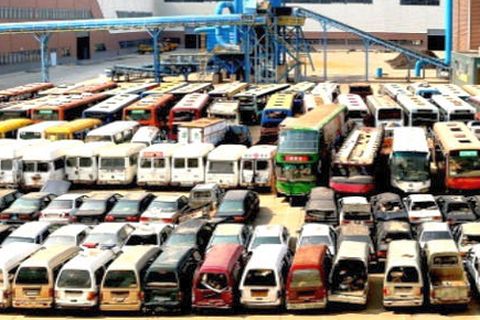
The number of scrapped cars in China continues to increase. (Source: GEM)
In 2019, China’s State Council issued the Measures for the Management of End-of-Life Vehicle Recycling, aimed at regulating End-of-Life Vehicle (ELV) recycling, protecting the environment, promoting a circular economy, and ensuring road traffic safety.
The government implements a qualification accreditation system for ELV recycling enterprises and encourages vehicle manufacturers to engage in ELV recycling. Vehicle manufacturers are also required to fulfill their responsibilities according to relevant national regulations.
The policy also allows the recycling and remanufacturing of the “five assemblies” (the engine, steering system, transmission assembly, front and rear axles, and frame), which can be sold to the enterprises with remanufacturing capability. As a result, ELV recycling enterprises have seen increased profits and are gradually recycling more plastics from ELVs.
Additionally, the 14th Five-Year Plan for the Development of Circular Economy (2021-2025), released by China's National Development and Reform Commission, emphasizes the need to promote full life cycle management of vehicles and recycling of used power batteries, while strengthening industry supervision.
China’s new measures highlight the critical need to close the loop on ELV plastics, signaling the country’s commitment to sustainable development.
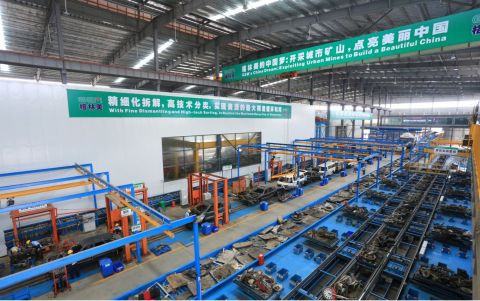
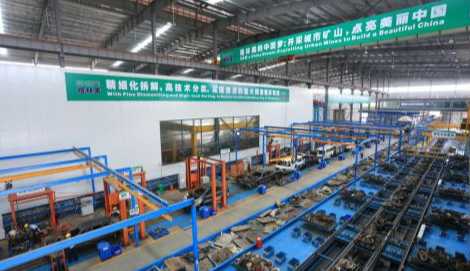
The scrapped cars dismantling and sorting line of the leading Chinese waste recycling enterprise, GEM Co., Ltd. (Source: GEM)
Despite clear advancements in vehicle recycling, ELV plastics remain challenging to collect, sort and recycle. Increasing ELV plastic recycling rates requires overcoming the challenge of dealing with a variety of polymers, including mixed polymer types, as well as separating lighter plastic components and managing cross-contamination.
Emerging technologies, such as novel mechanical and chemical recycling treatments, show potential to improve recycling rates within ELVs significantly. Ultimately, a full value-chain approach is needed to recover and valorize ELV plastic.
The Global Impact Coalition, a CEO-led coalition of leading chemical companies, is bringing together chemical companies, dismantlers, shredders, sorters, and OEMs along the value chain in a pilot project to optimize ELV plastic recycling.