















Search History
Clear History
{{item.search_key}}
Hot Searches
Change
{{item.name}}
{{item.english_name}}
Subscribe eNews
Once A Week Once Every Two Weeks
{{sum}}
Login Register

Applications

Sustainable TPE for comfort and durable smartwatch straps

WACKER’s ceramifying silicone supporting thermal barrier at the Battery Show

Clariant catalysts continue to shrink carbon footprints

Products

Americhem launches Laser Marking Solutions platform

Röhm’s LiMA technology for MMA production runs at industrial scale

Super carbon fiber lattices: Foam-like weight + aluminum-level performance

Activities

  • Fakuma 2026: Multi-faceted program for plastics industry

  • Plast 2026 expects 200 new exhibitors and strong international presence

  • 350,000+ visitors! CHINAPLAS 2026 shatters every record in the book

Pictorial

News Videos

Inside Moretto: A tour of their Italian production facilities

Top 10 Technology Trends awards presented at CHINAPLAS 2026

MAAG x SIKORA: Smart pelletizing + precise inspection - More stable, carbon-reduced

Conference Videos

Summit Dialogue: Policy alignment and practices in plastic recycling across Asia

Interview: Pathways for development of plastics recycling in Malaysia

Driving systemic change: Unilever’s evolution in the circular economy

Corporate/Product Videos

For Rubber & Plastic Extrusion Equipment, trust Hebei Zhongsen! Custom Extruders, Traction Machines & Vulcanizing Lines

Is Your Mold Supplier Really Giving You Peace of Mind?

Kurtz GmbH & Co.

Home > News > Automotive

Survey: Concerns on fully autonomous vehicles from global consumers

Source:Adsale Plastics Network Date :2024-12-13 Editor :RC
Copyright: This article was originally written/edited by Adsale Plastics Network (AdsaleCPRJ.com), republishing and excerpting are not allowed without permission. For any copyright infringement, we will pursue legal liability in accordance with the law.

Asahi Kasei published its 5th Global Automotive Consumer Survey, of which car users in the four major automotive markets about their expectations and concerns regarding fully autonomous vehicles and their perception of sustainability.


The survey includes a total of 4,158 car users across the four automotive core markets: Germany (1,074), USA (1,077), China (1,007), and Japan (1,000).


Asahi Kasei_car_480.jpg


Asahi Kasei’s annual survey reveals how car users from four major markets think about fully autonomous vehicles.


Distrust in technology


Car users are still conservative regarding the operation of a fully autonomous car and a retractable steering wheel and pedals are not considered valuable to most respondents.


This confirms the results of the last survey from 2022, which found that even in fully autonomous vehicles, a large proportion of users in Germany, the USA, and China prefer to have a steering wheel and brake pedal for optional manual control. In Japan, one in two share this outlook.


In addition, two out of three car users in Germany, the USA, and China stated they would still observe traffic while in autonomous mode—activities while in the car, such as watching movies or playing games, are at the bottom of the list.
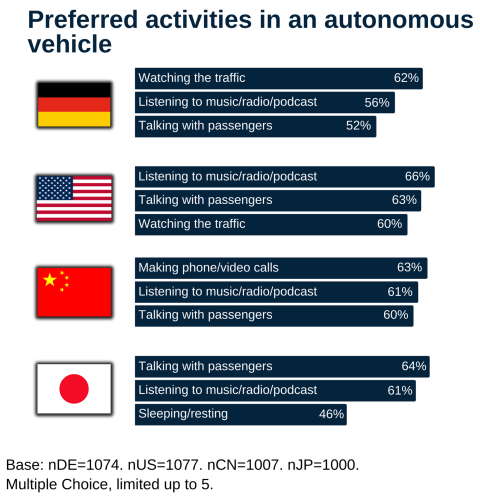

Figure 1 - Preferred activities in an autonomous car.png


This is another indication that car users today have safety and trust concerns about fully autonomous cars. These sentiments will profoundly define the interior design of the first generations of fully autonomous vehicles.


Silent cabin is key to interior


On the most valued interior aspect of an autonomous car, one out of two respondents mentioned “silent cabin”.
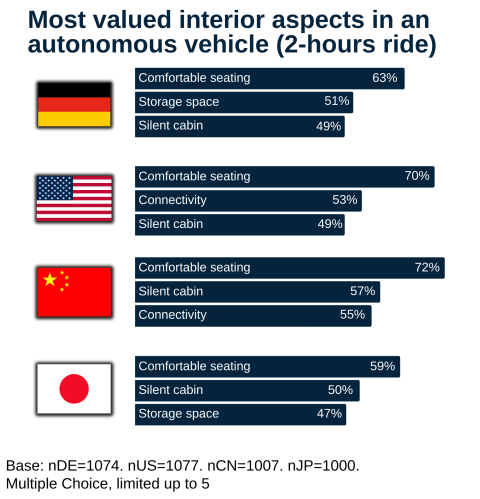

Figure 2 - Most valued interior aspects in autonomous car.png


This aligns with opinions of many battery electric vehicle (BEV) users; almost every fourth user of a BEV mentioned “too much noise while driving” as the most annoying aspect of the driving experience.


In fully autonomous electric vehicles, and with the ability to engage with other activities while commuting, silence will even become more important for customers.


Perception of sustainability differs


Car users no longer define a “sustainable vehicle” only by its drivetrain technology but also by its carbon footprint in production, easily recyclable materials, and overall sustainable production along the entire value chain.
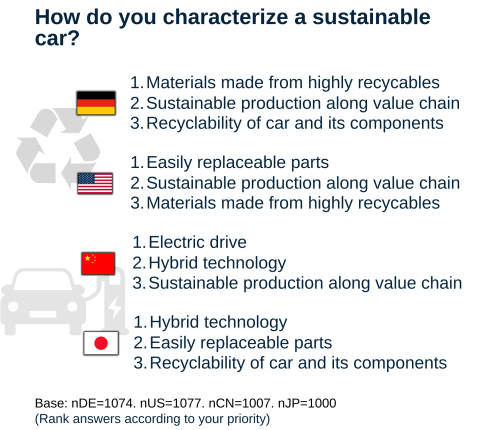

Figure 3 - How do you characterize a sustainable car.png


Respondents in the Western markets define a sustainable car by its use of recyclable materials and sustainable production along the value chain while those from China and Japan think the drivetrain technology primarily defines a sustainable car.


This topic is becoming more relevant for the purchase decision process, particularly in Western countries, with 35% of all respondents in Germany and the USA indicating they would switch their car brand to a more sustainable manufacturer to support greener mobility.



 Like 丨  {{details_info.likes_count}}
Report
ASAHI KASEI
Automotive
 Tangshan Zhonghao Chemical Co., Ltd      
 TAIZHOU TUOFANG PLASTIC MOULD CO.,LTD      
 Guang Dong Veryone Technology Co.,Ltd.      
 NINGBO YUFINE PRECISION INDUSTRY CO., LTD.      
 SHANGHAI WEIPU TESTING INTERNATIONAL GROUP CO., LTD.      
 Chongqing Woerfu Chemical Co.,Ltd      
 HUIZHOU LITUO ADVANCED MATERIALS CO.,LTD.      
 SUZHOU UNIKING NEW MATERIAL CO., LTD      
 Beijing Chemical Industry Group CO.,LTD      
 SUZHOU GELEFU M&E TECHNOLOGY CO., LTD.      
 GUANGDONG HTASO NEW MATERIALS TECHNOLOGY CO.,LTD      
 JIASHAN ITAFLON FLUORO TECHNOLOGY CO.,LTD.      
 CHUZHOU SEP MATERIAL CO,LTD.      
 BRUECKNER MASCHINENBAU GMBH      

The content you're trying to view is for members only. If you are currently a member, Please login to access this content.   Login

Source:Adsale Plastics Network Date :2024-12-13 Editor :RC
Copyright: This article was originally written/edited by Adsale Plastics Network (AdsaleCPRJ.com), republishing and excerpting are not allowed without permission. For any copyright infringement, we will pursue legal liability in accordance with the law.

Asahi Kasei published its 5th Global Automotive Consumer Survey, of which car users in the four major automotive markets about their expectations and concerns regarding fully autonomous vehicles and their perception of sustainability.


The survey includes a total of 4,158 car users across the four automotive core markets: Germany (1,074), USA (1,077), China (1,007), and Japan (1,000).


Asahi Kasei_car_480.jpg


Asahi Kasei’s annual survey reveals how car users from four major markets think about fully autonomous vehicles.


Distrust in technology


Car users are still conservative regarding the operation of a fully autonomous car and a retractable steering wheel and pedals are not considered valuable to most respondents.


This confirms the results of the last survey from 2022, which found that even in fully autonomous vehicles, a large proportion of users in Germany, the USA, and China prefer to have a steering wheel and brake pedal for optional manual control. In Japan, one in two share this outlook.


In addition, two out of three car users in Germany, the USA, and China stated they would still observe traffic while in autonomous mode—activities while in the car, such as watching movies or playing games, are at the bottom of the list.


Figure 1 - Preferred activities in an autonomous car.png


This is another indication that car users today have safety and trust concerns about fully autonomous cars. These sentiments will profoundly define the interior design of the first generations of fully autonomous vehicles.


Silent cabin is key to interior


On the most valued interior aspect of an autonomous car, one out of two respondents mentioned “silent cabin”.


Figure 2 - Most valued interior aspects in autonomous car.png


This aligns with opinions of many battery electric vehicle (BEV) users; almost every fourth user of a BEV mentioned “too much noise while driving” as the most annoying aspect of the driving experience.


In fully autonomous electric vehicles, and with the ability to engage with other activities while commuting, silence will even become more important for customers.


Perception of sustainability differs


Car users no longer define a “sustainable vehicle” only by its drivetrain technology but also by its carbon footprint in production, easily recyclable materials, and overall sustainable production along the entire value chain.


Figure 3 - How do you characterize a sustainable car.png


Respondents in the Western markets define a sustainable car by its use of recyclable materials and sustainable production along the value chain while those from China and Japan think the drivetrain technology primarily defines a sustainable car.


This topic is becoming more relevant for the purchase decision process, particularly in Western countries, with 35% of all respondents in Germany and the USA indicating they would switch their car brand to a more sustainable manufacturer to support greener mobility.


全文内容需要订阅后才能阅读哦~
立即订阅

Recommended Articles

Automotive
WACKER’s ceramifying silicone supporting thermal barrier at the Battery Show
 2026-06-09
Automotive
Envalior’s material innovations shine at Battery Show 2026
 2026-06-08
Automotive
Teknor Apex advances recycled solutions for automotive interiors
 2026-05-29
Automotive
HRC empowers first flight of DreamFly “Youlong” Hybrid Tiltrotor eVTOL
 2026-05-29
Automotive
Covestro and Genofort advance ultra-flexible haptic systems for smart automotive interiors
 2026-05-26
Automotive
ENGEL’s high-performance automotive solutions at CHINAPLAS 2026
 2026-04-14

You May Be Interested In

Change

  • People
  • Company
loading... No Content
{{[item.truename,item.truename_english][lang]}} {{[item.company_name,item.company_name_english][lang]}} {{[item.job_name,item.name_english][lang]}}
{{[item.company_name,item.company_name_english][lang]}} Company Name    {{[item.display_name,item.display_name_english][lang]}}  

Polyurethane Investment Medical Carbon neutral Reduce cost and increase efficiency CHINAPLAS Financial reports rPET INEOS Styrolution Evonik Borouge Polystyrene (PS) mono-material Sustainability Circular economy BASF SABIC Multi-component injection molding machine All-electric injection molding machine Thermoforming machine

Survey: Concerns on fully autonomous vehicles from global consumers

识别右侧二维码,进入阅读全文
下载
x 关闭
订阅
亲爱的用户,请填写一下信息
I have read and agree to the 《Terms of Use》 and 《Privacy Policy》
立即订阅
Top
Feedback
Chat
News
Market News
Applications
Products
Video
In Pictures
Specials
Activities
eBook
Front Line
Plastics Applications
Chemicals and Raw Material
Processing Technologies
Products
Injection
Extrusion
Auxiliary
Blow Molding
Mold
Hot Runner
Screw
Applications
Packaging
Automotive
Medical
Recycling
E&E
LED
Construction
Others
Events
Conference
Webinar
CHINAPLAS
CPS+ eMarketplace
Official Publications
CPS eNews
Media Kit
Social Media
Facebook
Linkedin