

















Covestro and GAC jointly drive innovation in materials for flying cars

Covestro and GOVY Technology, a newly established subsidiary of Guangzhou Automobile Group (GAC), have formed a partnership to jointly drive innovation in materials for flying cars, especially for ‘electric vertical takeoff and landing’ (eVTOL) aircraft.
This collaboration aims to accelerate the commercialization of cutting-edge material solutions that enable more efficient and sustainable urban air mobility.

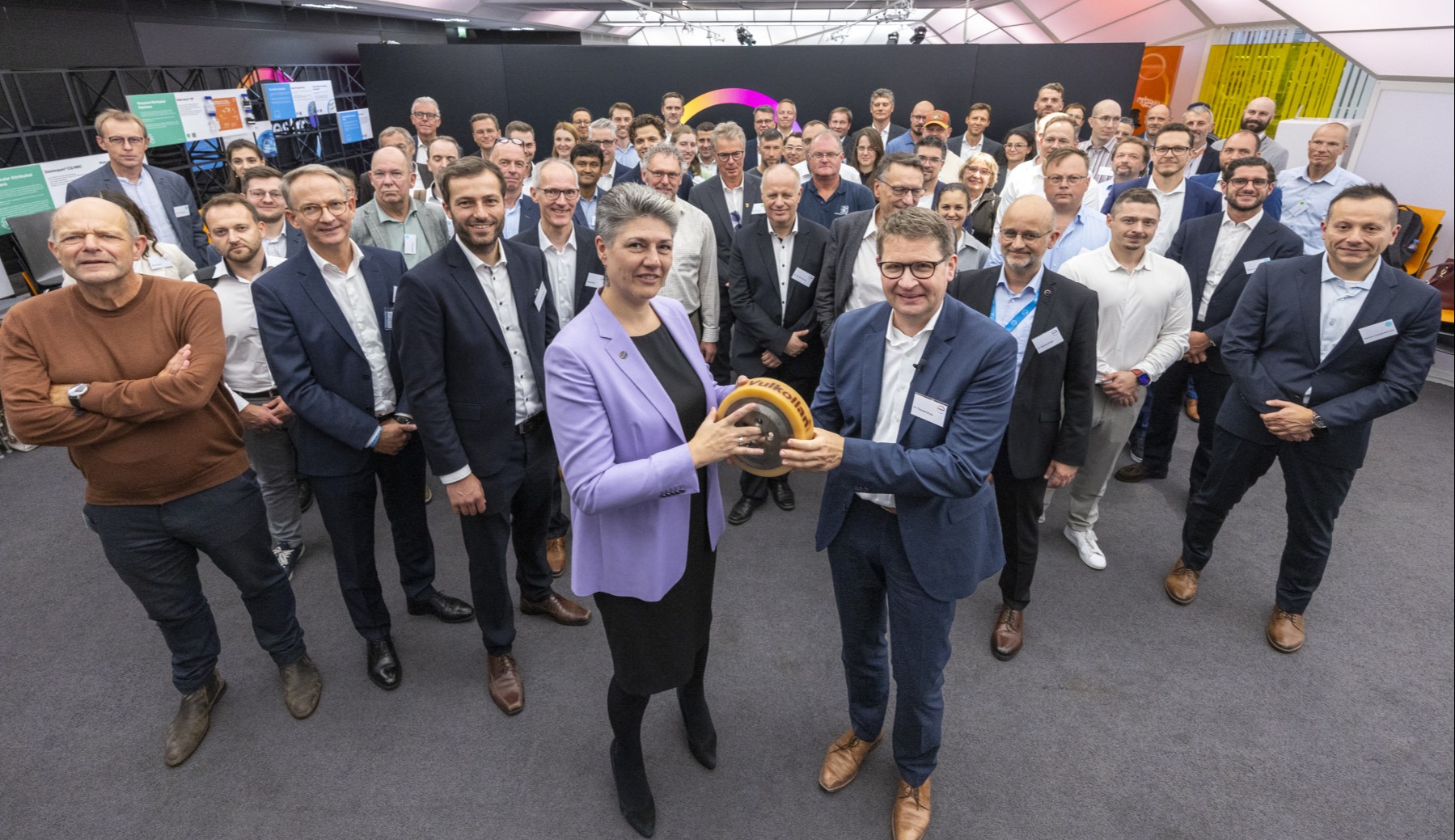
Stephen Chen (left), Chief Designer of Advanced Design from GAC R&D, Su Qingpeng (middle), General Manager of GOVY, and Lily Wang, Head of Business Entity EP at Covestro, at the launch event for the project. (Source: GAC)
Signed MOU
Covestro is one of eight companies, including partners from the fields of AI, information technology for low-altitude aviation and carbon fiber composite materials, to sign a Memorandum of Understanding (MOU) with GOVY.
“Partnering with Covestro and other industry leaders allows us to accelerate the development of our flying cars, creating safe, more sustainable, and groundbreaking transportation solutions for urban environments,” said Su Qingpeng, General Manager of GOVY.
Under the agreement, Covestro and GOVY will collaborate on several priority areas. Key initiatives will include developing innovative polycarbonate glazing solutions to reduce vehicle weight while maintaining high performance and safety standards, and exploring materials for smart and efficient lighting systems tailored to the unique requirements of eVTOL aircraft.
The collaboration will also address high-performance materials that enable seamless integration of smart systems and components. A strong emphasis will be placed on low-carbon solutions, utilizing materials with attributed bio-circular content and recycled feedstocks to reduce emissions across the vehicles’ lifecycle.
“By leveraging Covestro’s expertise in sustainable and innovative materials, and GAC’s visionary leadership in flying car development, we are poised to create solutions that redefine the possibilities of urban transport,” said Lily Wang, President of the Engineering Plastics Business Entity at Covestro.
Demo flying car
At the signing ceremony, a demo flying car was unveiled, featuring an impressive range of 200 kilometers in just 40 minutes.

The demo flying car. (Source: GAC)
This prototype showcases a hybrid design that integrates both fixed-wing and rotary-wing capabilities, combining the efficiency of conventional airplane-like forward flight with the vertical takeoff and landing versatility of helicopters.
Pre-order of such models will begin in 2025, heralding a new era in personal and urban transportation.