















GIC launches world-first automotive plastics circularity pilot

Global Impact Coalition (GIC) has joined hands with seven global leaders in chemical and recycling industries to launch the world’s first automotive plastics circularity pilot, addressing the critical challenge of recycling plastics from end-of-life vehicles (ELVs).
The partners include BASF, Covestro, LyondellBasell, Mitsubishi Chemical Group, SABIC, SUEZ, and Syensqo.
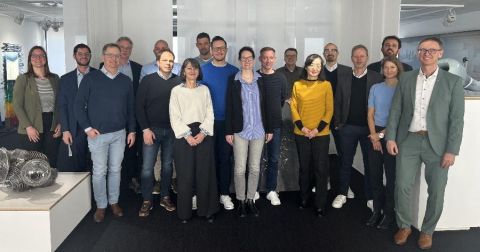
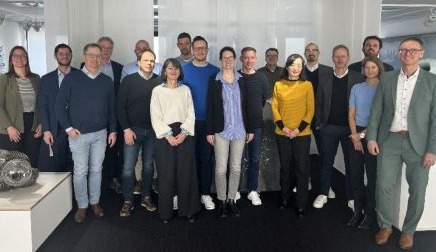
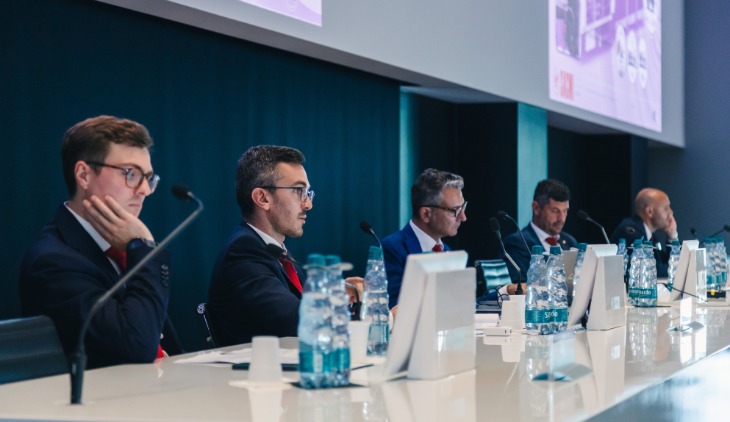
Representatives from the collaborating companies of the automotive plastics circularity pilot.
Present challenges and upcoming regulations
Each year, over 800 million metric tons of ELV plastics in the EU alone are incinerated or landfilled, resulting in significant environmental and economic losses.
“Recycling ELV plastics has long been a challenge, with less than 20% of these materials recycled today,” said Charlie Tan, CEO of the Global Impact Coalition.
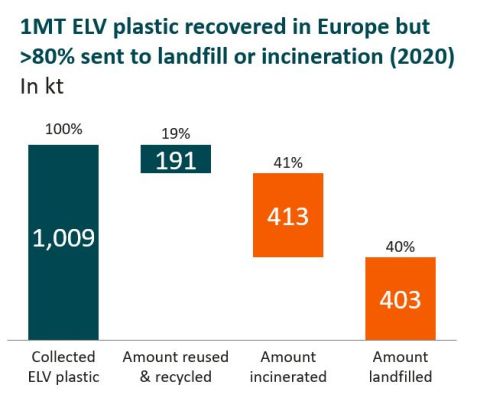
Data on processing ELV plastic in Europe.
The automotive plastics circularity pilot also aligns with evolving regulatory frameworks, including the EU’s proposed ELV regulations – currently mandate by 2030, 25% of plastics in new cars must come from recycled materials, with 25% of those derived from closed-loop recycling.
Uniting chemical and recycling partners to close loop
The pilot, taking place in the Netherlands and Germany, will dismantle, shred and sort plastic fractions, clustered into 10 types of polymers and automotive parts from 100 end-of-life vehicles. These sorted plastic fractions will then be recycled by the collaborating companies with each of their specific technologies.
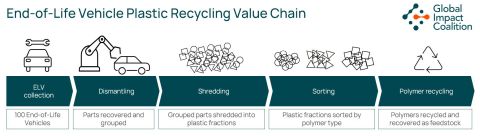
Value chain in the pilot project.
Focusing on bulk aggregation of ELV plastics, the pilot will serve to test and optimize a new approach to dismantling, sorting and recycling plastic fractions under real-world conditions.
“The goal of this pilot is to move beyond theoretical discussions and test real-world solutions for ELV plastics recycling. By focusing on advanced sorting and recycling technologies, we aim to prove that high-quality, closed-loop systems are not only possible but scalable for global impact,” said Dr Lars Kissau, President, Net Zero Accelerator, BASF.