











Circular economy: Technological innovations propel plastic recycling forward

Since the advent of plastics, their excellent performance and widespread applications have fundamentally changed industrial production and lifestyle, but they have also posed challenges for environmental protection. Therefore, from the perspective of a circular economy for plastics, how to achieve the recycling, processing, and reuse of post-consumer plastics has become a direction for global well-known brands, product manufacturers, recycling line manufacturers, and other members of the related value chain to collaborate and explore in recent years.
According to a report by Grand View Research, the global market size for recycled plastics is expected to be US$55.98 billion in 2024. The annual compound growth rate from 2024 to 2030 is projected to reach 9.5%, increasing to US$96.48 billion.
In recent years, significant achievements have been made in both mechanical and chemical recycling, technological breakthroughs in high-value recycled plastics, and the expansion of applications across multiple sectors.
Mechanical recycling: Intelligent, modular upgrades and high-value applications
Mechanical recycling remains the main method for plastic recycling, and the technological development and market application of mechanical recycling are advancing towards multidimensional innovation and large-scale expansion. Key trends include digitalization and modularization, improvement of sorting and purification efficiency, and optimization of process flows.
AI visual sorting systems
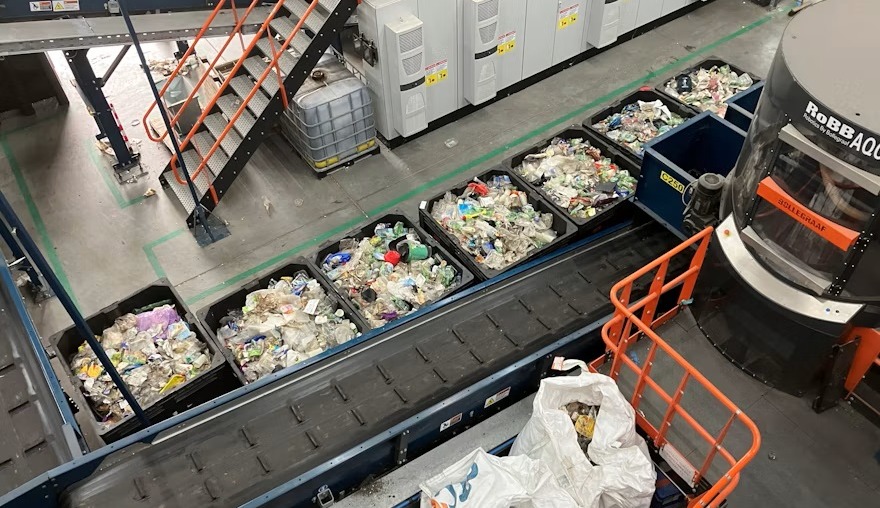
In the preprocessing stage, the application of artificial intelligence (AI) visual sorting systems can effectively enhance sorting efficiency. For example, Krones' intelligent sorting line employs multispectral imaging technology, capable of identifying batches of PET bottle flakes with color differences of less than 5%, achieving a sorting accuracy rate of 99.2%, and sorting efficiency that is three times higher than traditional manual methods.
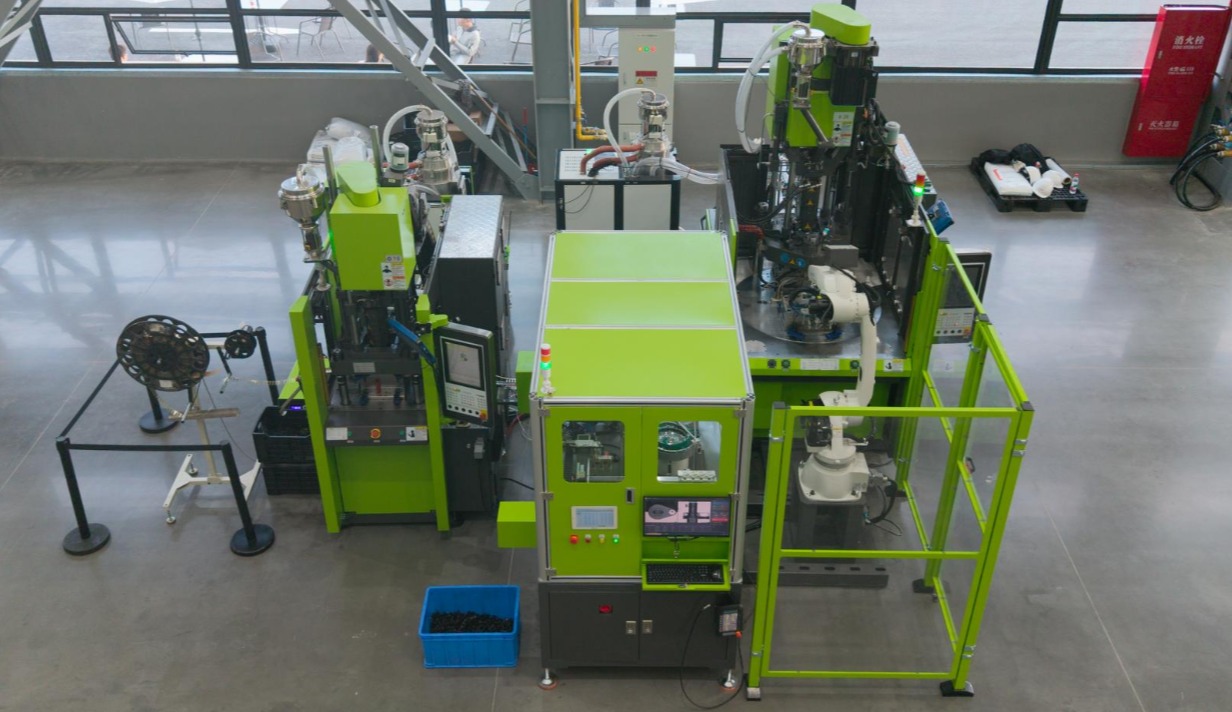
The AI-powered plastic whole bottle sorting machine from Hefei Taihe Intelligent Technology employs a deep learning algorithm to autonomously collect material characteristic information. Featuring precise multispectral recognition, it achieves a purification rate of over 98%.
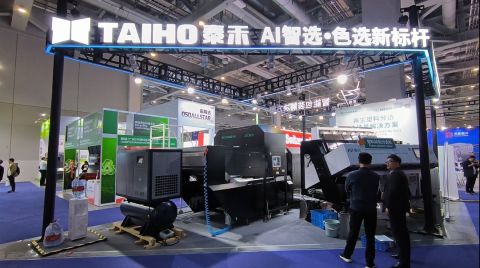
Hefei Taihe Intelligent Technology employs deep learning algorithm for its plastic whole bottle sorting machine. (Image source: Hefei Taihe Intelligent Technology)
Modular crushers and washing lines
Plastic recycling equipment is rapidly moving toward modularization and integration. The new generation of crushers and washing lines employs function modules that can be flexibly integrated, facilitating easy maintenance and upgrades. Their compact layout saves space, while the advantages of an integrated system allow for the consolidation of various stages of the recycling process into an intelligent assembly line, further reducing energy consumption and wastewater discharge.
ENMA's latest modular crusher is designed to reduce the need for different types of crushers by minimizing waste and optimizing the space of recycling facilities, thereby enhancing recycling efficiency. This is primarily due to the easy disassembly and reassembly of its modular components, which reduces production complexity and enables standardized, mass production, thus shortening delivery times for customers.
As for washing lines, Zhejiang BoReTech Environmental Engineering has introduced a new generation of PET bottle washing lines—ES process—which features integrated equipment configurations and excellent washing performance to support the recycling of high-quality PET flakes. This washing line employs a highly modular design, reducing its footprint by 25% while optimizing unit energy consumption, with a 25% improvement in downstream filtration performance.
“Bottle-to-Bottle” high-value closed-loop recycling technology
Additionally, significant progress has been made in high-value closed-loop recycling applications. The PET bottle-to-bottle process represents a scalable application in the global plastic recycling sector with high-value recovery.
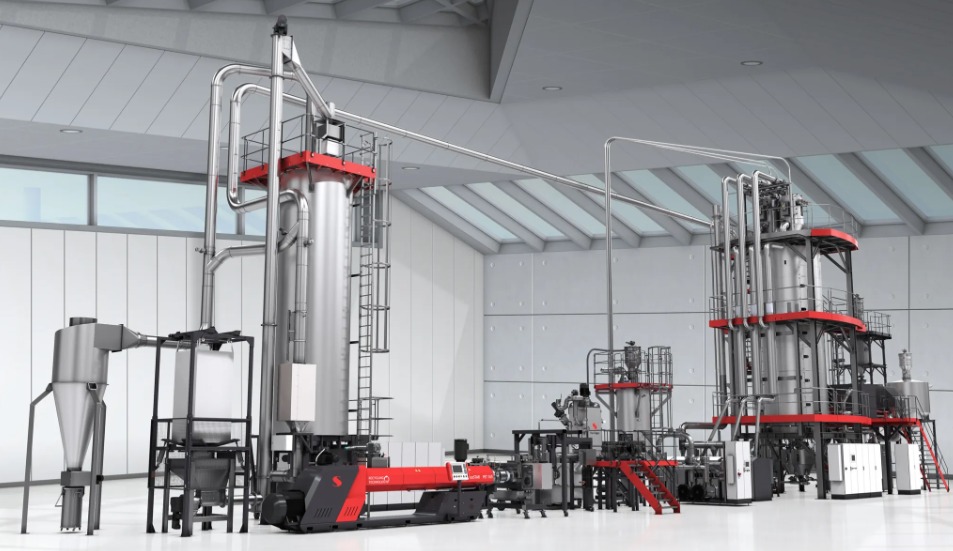
Starlinger's recoSTAR PET art PET bottle-to-bottle recycling system produces rPET materials that not only have high purity but also extremely low levels of acetaldehyde, ethylene glycol, and volatile organic compounds, while maintaining low energy consumption and a small footprint.
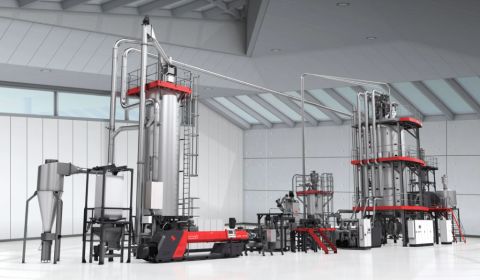
Starlinger's recoSTAR PET art PET bottle-to-bottle recycling system offers the advantages of low energy-consumption and small footprint. (Image source: Starlinger)
EREMA's VACUREMA technology has shown exceptional performance in the bottle-to-bottle recycling sector, where recycling and compounding are completed in a single processing step, making the entire process energy-efficient. Currently, there are over 400 EREMA PET systems compliant with food-grade standards in operation worldwide, with a total production capacity exceeding 4.5 million tons annually.
Chinese companies are also continuously gaining international recognition for their bottle-to-bottle recycling and pelletizing technologies. Last year, ACERETECH's safPET bottle-to-bottle pelletizing process and equipment for removing contaminants and enhancing adhesion successfully received a No Objection Letter (NOL) from the FDA.
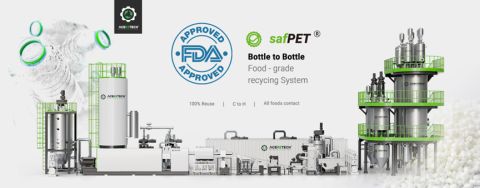
ACERETECH's safPET bottle-to-bottle pelletizing line received a NOL from the FDA. (Image source: ACERETECH)
Chemical recycling: Rapid global capacity expansion
In recent years, global capacity for chemical recycling of plastics has been steadily increasing. In Europe, tens of thousands of tons of capacity are already operational, with over 5 million tons under construction, of which about 1 million tons are in China. Leading chemical companies such as BASF, ExxonMobil, and SK Chemicals are launching new projects and facilities around the world.
BASF continues to advance its ChemCycling project, chemically recycling benzene from plastic waste for use in producing its Ccycled product line. The company utilizes pyrolysis technology to convert mixed plastic waste that has not yet been mechanical recycled into pyrolysis oil, serving as an alternative to fossil raw materials in its production networks across Europe, North America, and the Asia-Pacific region. Pyrolysis technology is also employed in ExxonMobil's Exxtend chemical recycling process, which transforms waste plastics into new plastic raw materials.

BASF's Ccycled product portfolio utilizes recyclable raw materials to replace traditional fossil resources. (Image source: BASF)
SK Chemicals' ECOTRIA CR circular copolyesters address the issue of plastic waste by utilizing its advanced chemical recycling method, Circular recycle, which increases the utilization rate of recyclable plastic waste threefold. Traditional mechanical recycling can only process high-quality plastic waste (such as clear bottles), while Circular recycle can purify and reuse a wider range of lower-quality plastic waste, including colored bottles, films, and textiles.
As mechanical and chemical recycling technologies continue to advance, costs are gradually decreasing, leading to an expansion of market applications. Beyond traditional sectors like packaging and building materials, these plastic recycling technologies are finding broader applications in high-end industries such as automotive, electronics, textiles, and healthcare, meeting the demand for high-quality, sustainable materials across various sectors.
Value chain collaboration promotes “Car-to-Car” closed-loop recycling
Driven by policies, market demand, and technological innovation, car-to-car plastic recycling collaboration has accelerated in recent years. The EU's End-of-Life Vehicle (ELV) directive requires automobile manufacturers to use a certain percentage of recycled plastics in new vehicles, with a target of at least 25% recycled plastic by 2030. This has prompted automotive companies to expedite their efforts in circular economy.
For example, Covestro is strengthening its collaboration with Chinese plastics recycling specialist Ausell through a new initiative aimed at establishing a closed-loop system for automotive plastics recycling in China. The two parties will recover plastics from discarded vehicle headlights for new interior and exterior applications, meeting the growing industry demand and regulatory requirements.
Wanhua Chemical has also launched modified rPC, rPP, and rPA12 materials with varying PCR content. These materials can be used in components such as automotive headlamp housings, dashboards, bumpers, and piping systems, achieving a closed-loop material cycle from car to car.
Expanding market for recycled fibers
Textiles are one of the primary uses for recycled plastics, with recycled PET being the most prevalent in textile applications. The global market for recycled fibers continued its steady growth in 2024. As renowned international brands like Adidas and Nike develop plans to replace virgin polyester with recycled polyester, the recycled fiber market is set to expand further.
PUMA has implemented its innovative textile recycling technology RE:FIBRE, replacing recycled polyester fibers in the production of all fan jerseys for football clubs and federations. This technology can utilize any polyester material to create new clothing, such as factory offcuts, defective products, or polyester from old garments, and it can recover the necessary materials from textiles of any color.

PUMA's RE:FIBR technology can recover the necessary materials from textiles of any color. (Image source: Business Wire)
One of Zhejiang Jiaren New Materials’ flagship products is recycled polyester fiber, which boasts advantages such as high quality, multi-functionality, traceability, and sustainability. This sustainable recycled polyester product has found widespread application in various sectors, including sports, outdoor activities, fashion, home textiles, automotive, consumer electronics, food and beverage, cosmetics, home appliances, and healthcare.
As global attention to the plastic circular economy continues to grow, along with advancements in material and processing technologies, recycling technologies will contribute significantly to achieving sustainable development goals.
CHINAPLAS
CHINAPLAS 2025, the world's leading plastics and rubber trade fair, will stage at Shenzhen World Exhibition & Convention Center (Bao’an), PR China on April 15-18, 2025. The exhibition will join hands with over 4,000 international exhibitors, featuring the latest technology and process application solutions such as intelligent interior and exterior parts, low-carbon environmental protection, and safe endurance for the automotive industry, shaping the sustainable development of the automotive industry.