







Arburg: Plastic is simply indispensable as a material

In this VDMA interview on the way to K 2025, Dr. Christoph Schumacher, Vice President Global Marketing at Arburg, discussed the topics of sustainability and intelligence in plastics processing industry.
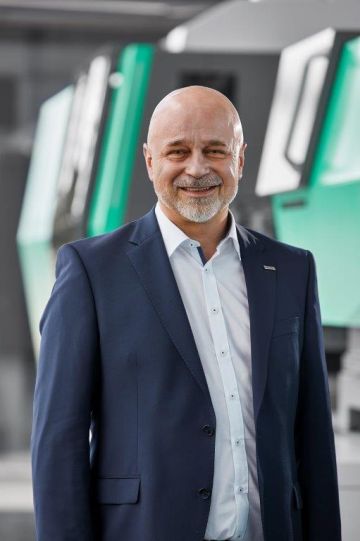
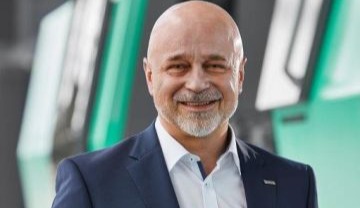
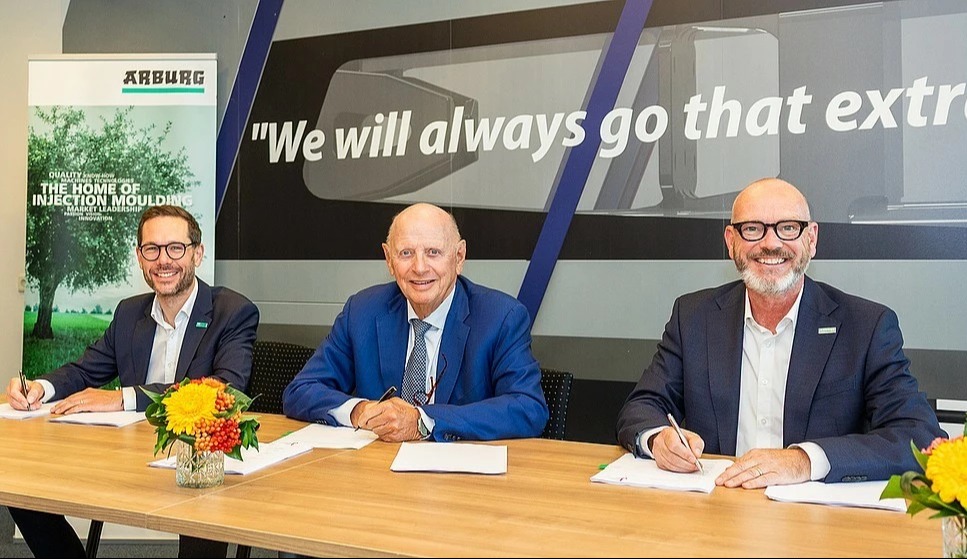
Dr. Christoph Schumacher, Vice President Global Marketing at Arburg.
Dr. Schumacher, the next K is being held under the motto ‘The Power of Plastics – Green – Smart – Responsible’. How did this motto come about?
Dr. Schumacher: The realization that solving sustainability issues is becoming increasingly important and urgent was first expressed openly while preparing for K 2019. At that time, the initial focus was on raising awareness within the industry. Keywords such as circular economy came to the fore.
At K 2022, for the first time, plastics machinery manufacturers then presented all the solutions that were available, for example in the field of recycling, on a large scale. At K 2025, we now want to emphasize the strength and ability to shape the future of both plastic materials and the industry in all its facets.
And what about ‘Green – Smart – Responsible’?
Dr. Schumacher: These three dimensions show where this power comes from. ‘Green’ stands for the paths that lead to greater sustainability. ‘Smart’ refers to the technologies that can be used, for example, within the context of digitalization. ‘Responsible’ describes social responsibility in general, but also the fact that we are tackling the quantitative and qualitative problem of recruiting skilled workers.
Our customers expect us, as a mechanical and plant engineering company, to find a solution to this task: to manufacture increasingly complex products with increasingly complex machines, with decreasingly complex staff skill set demands.
To what extent does the K motto suit Arburg?
Dr. Schumacher: It suits Arburg very well in all three dimensions, as they have long been the genetic makeup of our company, so to speak.
We bundled the issues of sustainability many years ago in our arburgGREENworld program, and the issues of digitalization in a program called arburgXworld. And we are bringing them together in the arburgSOLUTIONworld: a range of solutions for all our customers' needs. In addition, there are numerous collaborations with initiatives such as R-Cycle, or with start-ups in the field of materials.
Responsibility is in the nature of our company because, at our location in rural Lossburg, we have always relied on the responsible use of resources and good interaction with our employees.
Is a green, intelligent and responsible plastics engineering industry also a viable business model?
Dr. Schumacher: I can say for sure that solving the issues in question is a good business model for German-speaking injection molding machine manufacturers. These solutions can be exported all over the world, and we can make money from them. Many of our competitors, especially in Asia, cannot keep up.
On the other hand, the markets in Asia are the fastest growing ones. Sustainable machine technology will also be needed there; these are precisely the opportunities that the business model offers.
What does the future hold for plastics machinery manufacturing?
Dr. Schumacher: The plastics machinery industry will continue to develop very well. For almost 100 years, this industry has repeatedly proven that it is adaptable and can develop solutions for upcoming tasks. It is this enabler role that distinguishes it. Moreover, the opportunities offered by plastic as a material have not yet been fully exploited or even recognized. I strongly believe that modern life is inconceivable without plastic for increasing numbers of people all across the globe.
However, the disposal, recycling, design and styling of plastic products, as well as material savings and the most sensible use of this material, are areas within which there is still a lot to be done. I am therefore convinced that in ten years, plastics processing will no longer be feasible without a circular economy system.