















WACKER introduces new generation of silane technology for adhesives

WACKER introduces its new generation α3 silane technology, which provides the adhesive industry with solutions featuring stronger overall performance.
α3 silane technology enables rapid curing without the need for tin catalysts, giving adhesive products better environmental performance and easier storage. Additionally, it offers higher elasticity and shorter curing times compared with previous α technologies.
Two new silane-modified polymer products are developed – GENIOSIL STP-E140 and STP-E340. Both binders are based on WACKER’s state-of-the-art α3 technology.
The polymers consist of both α and γ-silyl groups. The α-silyl groups lead to greater reactivity, while the slower-reacting γ ends have a positive impact on elastic recovery. This innovative technology thus combines the advantages of both α and γ-silane-crosslinking polyethers.
The polymers in question consist of both α and γ-silyl groups. The α-silyl groups lead to greater reactivity, while the slower-reacting γ ends have a positive impact on elastic recovery. This innovative technology thus combines the advantages of both α and γ-silane-crosslinking polyethers.
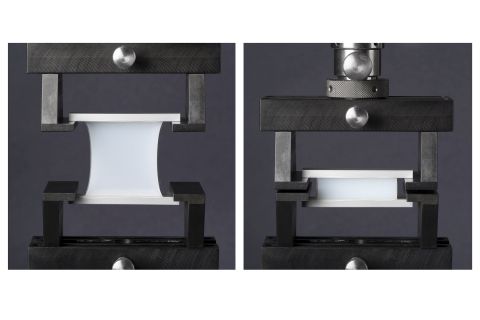
Laboratory tests show that sealants based on GENIOSIL STP-E140 and STP-E340 binders exhibit outstanding elastic recover properties.
Just like a conventional α-silane-terminated polymer, the combination of two silanes in a terminated polyether does not require a tin catalyst for curing. During crosslinking, the highly reactive α end literally pulls in the γ end into the swifter curing process, which generally displays slower reactivity.
After crosslinking, GENIOSIL STP-E 140 and GENIOSIL STP-E 340 are highly elastic. Application tests show that the silane-terminated polyethers adhere to a wide range of varying substrates. They can be applied in high-performance, multifunctional adhesives as well as high elastic recovery adhesives.