












The bio-based reusable cups can be chemically recycled

TripleW, a Belgian innovator in circular biochemistry, and Finnish Sulapac, a pioneer in sustainable plastic alternatives, have partnered in a closed-loop pilot to demonstrate that reusable cups made from Sulapac Solid – a 100% bio-based and biodegradable material – can be chemically recycled commercially.
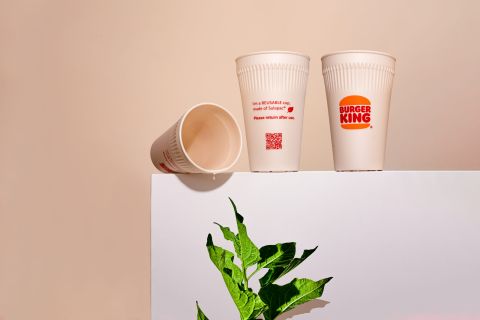
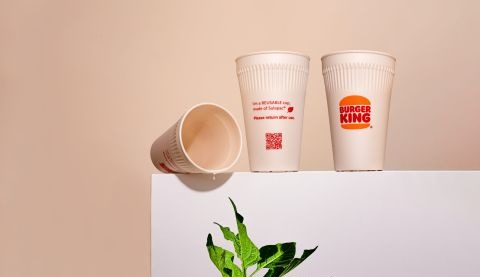
Sulapac Solid cups.
“It’s remarkable that one doesn’t have to choose between biobased or recyclable packaging – you can have both, also when it comes to reusables,” said Dr. Heidi Peltola, Chief Product Officer at Sulapac.
The innovative upcycling system eliminates the need for fossil-based materials, delivers long-term cost savings and perfectly aligns with the European Union’s circularity goals. The pilot also shows that the transition from single-use to reusable cups can be achieved in a circular manner without relying on fossil-based plastics.
“This is an important milestone for the EU’s Bioeconomy Strategy, we eliminate single use plastics, we increase resource-efficiency by using biological resources and our clients can benefit from going circular,” said Tal Shapira, CEO of TripleW.
Premium appearance, exceptional durability, available for repeated use
The 100% biobased and dishwasher-proof Sulapac Solid material combines premium ceramic-like appearance with exceptional durability.
Thanks to its compatibility with standard plastic production processes and a composition designed for repeated use in demanding environments such as airplanes, cruise ships, and quick-service restaurants, Sulapac Solid offers a sustainable alternative to oil-based plastics at scale.
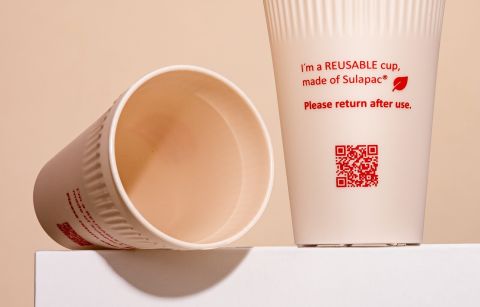
Sulapac Solid cups offers premium appearance, exceptional durability, and available for repeated use.
Closing the loop
TripleW’s state-of-the-art recycling technology further amplifies the environmental benefits of renewable materials and reuse. In the pilot, used Sulapac Solid cups were collected, grinded and broken down via hydrolysis into their building blocks, including lactic acid.
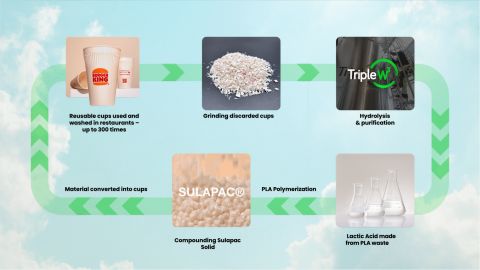
Closed-loop recycling steps of the pilot.
Lactic acid can be used, for example in personal care and pharmaceutical products, or it can be transformed back into a food-grade biopolymer. This energy-efficient polymer-to-polymer recycling process ensures the material can be reused repeatedly, eliminating waste and quality degradation.
TripleW and Sulapac welcome companies from the hospitality business, events, and passenger transport industries across Europe to take advantage of the one-of-a-kind closed-loop system. The plan is to ambitiously grow the volumes of Sulapac Solid collected and recycled through TripleW’s platform during the following years.