






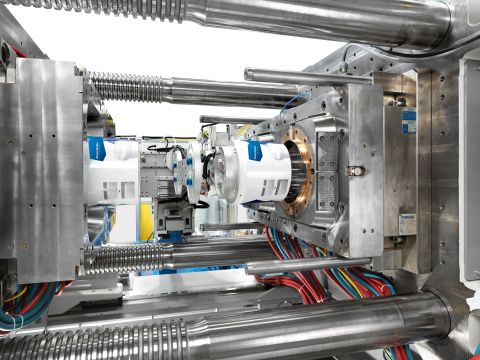













Italy pavilion at Plast Eurasia proves its rising presence in Turkish market

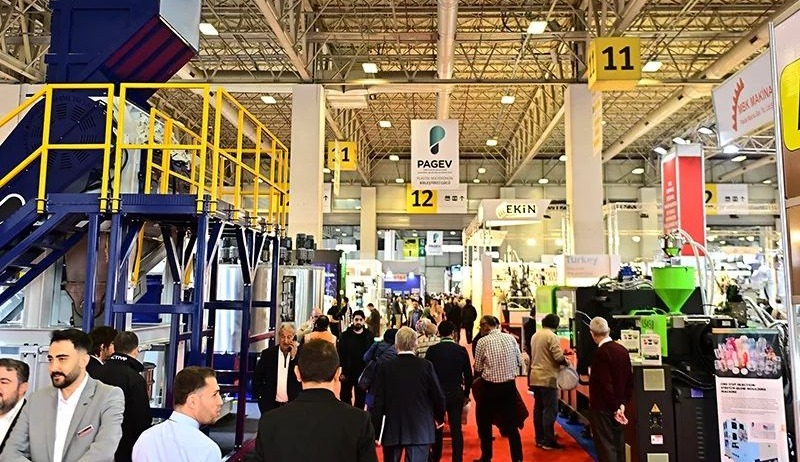
AMAPLAST announced that a list of Italian companies will participate in the national pavilion, which is coordinated for the first time by the trade association, at Plast Eurasia Istanbul in Turkey on December 3-6, 2025.

Plast Eurasia Istanbul 2025 will take place on December 3-6.
The Italy pavilion will cover an area of over 200 square meters. On display in hall 7, next to the Amaplast institutional stand, are AMAPLAST members including Bausano, Fimic, Fisa Italia, Gefit, IPM, Maris, Mixron, Omso, Plas Mec, Uniloy Italia. Many more other Italian companies will participate independently or through the stands of their local agents or branches.
Turkish plastics processing industry booms
According to estimates by Turkish trade association PAGEV, the production volume of the Turkish plastics processing industry in 2024 exceeded 10 million tons, with a value of close to US$53 billion, of which 7 billion was destined for exports. The growth rate of the sector over the last ten years has exceeded that of the national GDP.
Packaging accounts for 40% of production, with domestic demand up six points in the first half of 2025. The second largest application sector for plastics is construction, which is also expected to grow this year at a rate of around +4%.
Italian exports in Turkey
According to calculations by the Amaplast Study Center, a trade association affiliated with CONFINDUSTRIA that brings together over 170 manufacturers, based on foreign trade data published by ISTAT, in the five-year period 2020-2024, the average growth in Italian exports of machinery, equipment, and molds for plastics and rubber to Turkey was +11%.
This positive trend confirmed Turkey's position in the "top ten" destinations for Italian manufacturers' foreign sales, even though the first half of this year saw a sharp slowdown in flows compared to the same period in 2024.
Notably, the majority of Italian supplies to Turkish converters consist of extrusion lines and related downstream equipment, as well as blow molding machines, i.e., high value-added systems, often customized to specific customer requirements.
However, despite the presence of a fairly significant Turkish manufacturing industry, less than a third of local technology demand is met internally, while dependence on imports, especially for the most sophisticated machinery which is primarily from Germany and Italy, remains high.