















Search History
Clear History
{{item.search_key}}
Hot Searches
Change
{{item.name}}
{{item.english_name}}
Subscribe eNews
Once A Week Once Every Two Weeks
{{sum}}
Login Register

Applications

hubergroup expands UV offset portfolio with low tack ink grade

FDA confirms food-grade rHDPE and rPP from Coperion recycling technology

Wacoal and BASF expand “Melooop” 3D fiber molding technology to automotive interior

Products

Clariant expands flame retardant portfolio for e-mobility

ARLANXEO and Covestro advance sustainable production for synthetic rubber

Orion S.A. launches circular carbon black production in China

Activities

  • Fakuma 2026: Multi-faceted program for plastics industry

  • Plast 2026 expects 200 new exhibitors and strong international presence

  • 350,000+ visitors! CHINAPLAS 2026 shatters every record in the book

Pictorial

News Videos

A talk with Italian injection molding expert BMB

Inside Moretto: A tour of their Italian production facilities

Top 10 Technology Trends awards presented at CHINAPLAS 2026

Conference Videos

Summit Dialogue: Policy alignment and practices in plastic recycling across Asia

Interview: Pathways for development of plastics recycling in Malaysia

Driving systemic change: Unilever’s evolution in the circular economy

Corporate/Product Videos

For Rubber & Plastic Extrusion Equipment, trust Hebei Zhongsen! Custom Extruders, Traction Machines & Vulcanizing Lines

Is Your Mold Supplier Really Giving You Peace of Mind?

Kurtz GmbH & Co.

Home > News > Chemicals

New intuitive web-based tool makes your catalyst design easier

Source:Adsale Plastics Network Date :2026-02-03 Editor :RC
Copyright: This article was originally written/edited by Adsale Plastics Network (AdsaleCPRJ.com), republishing and excerpting are not allowed without permission. For any copyright infringement, we will pursue legal liability in accordance with the law.

Researchers at Hokkaido University in Japan have developed a tool for easy view and explore data about catalysts, simplifying researcher’s process to identify patterns and relationships in catalyst datasets without needing advanced programming or computational skills.


The research is published in Science and Technology of Advanced Materials: Methods.
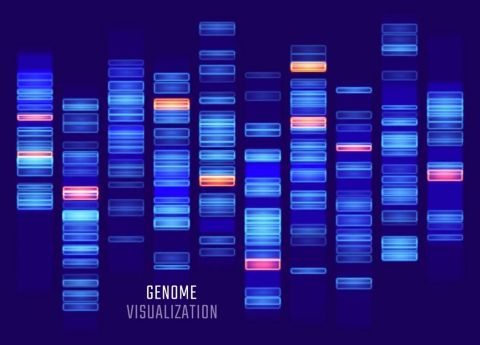
 

Hokkaido University_Web-based tool for catalyst analsis.jpg

A research team from Hokkaido University has developed a tool for easier catalyst design.


Easy-to access data for more efficient catalyst design


With the approach of catalyst gene profiling, where catalysts are represented as symbolic sequences, the tool offers web-based graphical interface with catalyst profiles, making it easier for scientists to interpret the data and apply sequence-based analysis methods to design and improve catalysts.


Users can view catalysts clustered together based on how similar their features or sequences are. The tool also includes a heat map that offers insights into how the catalyst gene sequences are calculated.


The different visualizations can be viewed side by side and are synchronized so they all update simultaneously when a user zooms in or selects a group of catalysts.


“The system enables researchers to explore complex catalyst datasets, identify global trends, and recognize local features—all without requiring advanced programming skills,” explained Professor Keisuke Takahashi, who led the study.


“By visualizing both the relationships among catalysts and the underlying gene-based features, the platform makes catalyst design more interpretable, accessible, and efficient, bridging the gap between data-driven analysis and practical experimental insight.”


Extending the application


The team plans to extend the tool to work with other material science datasets, as well as to include a predictive component. Integrating modeling and editing strategies would mean researchers could use the tool not only to explore existing catalysts but also to investigate new ideas for high-performance materials.


In addition, they want to improve the tool’s collaborative features so that several researchers can work together to explore and annotate datasets, enabling a community-oriented, data-driven approach to material design and discovery.


“Our goal is to make advanced materials research more intuitive, approachable, and impactful,” concluded Takahashi.

 Like 丨  {{details_info.likes_count}}
Catalyst
Japan
Digital systems / MES, ERP
 SHANGHAI CHIC NEW MATERIAL CO., LTD.      

The content you're trying to view is for members only. If you are currently a member, Please login to access this content.   Login

Source:Adsale Plastics Network Date :2026-02-03 Editor :RC
Copyright: This article was originally written/edited by Adsale Plastics Network (AdsaleCPRJ.com), republishing and excerpting are not allowed without permission. For any copyright infringement, we will pursue legal liability in accordance with the law.

Researchers at Hokkaido University in Japan have developed a tool for easy view and explore data about catalysts, simplifying researcher’s process to identify patterns and relationships in catalyst datasets without needing advanced programming or computational skills.


The research is published in Science and Technology of Advanced Materials: Methods.


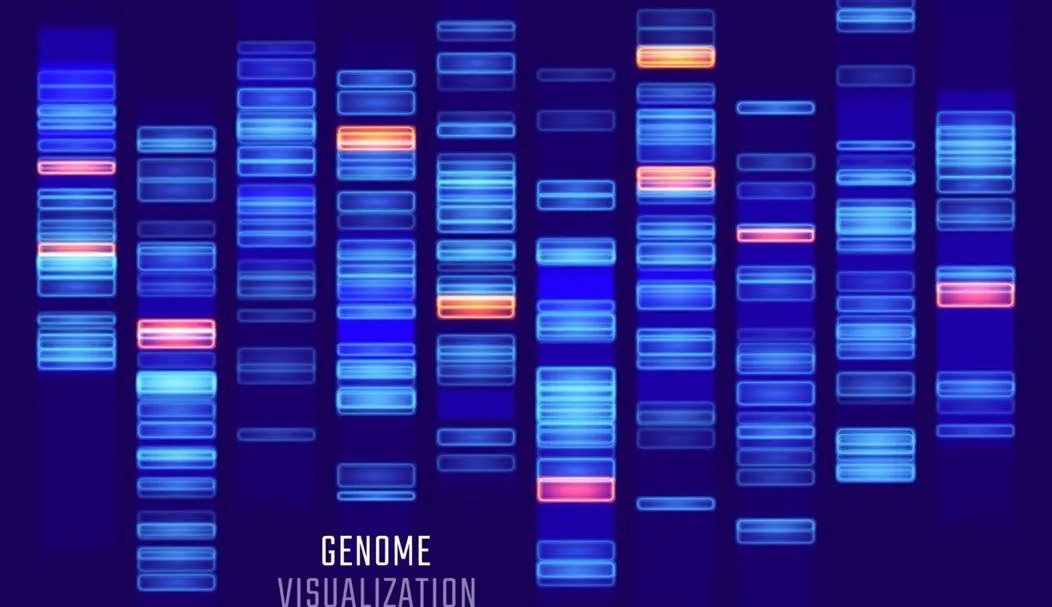
Hokkaido University_Web-based tool for catalyst analsis.jpg

A research team from Hokkaido University has developed a tool for easier catalyst design.


Easy-to access data for more efficient catalyst design


With the approach of catalyst gene profiling, where catalysts are represented as symbolic sequences, the tool offers web-based graphical interface with catalyst profiles, making it easier for scientists to interpret the data and apply sequence-based analysis methods to design and improve catalysts.


Users can view catalysts clustered together based on how similar their features or sequences are. The tool also includes a heat map that offers insights into how the catalyst gene sequences are calculated.


The different visualizations can be viewed side by side and are synchronized so they all update simultaneously when a user zooms in or selects a group of catalysts.


“The system enables researchers to explore complex catalyst datasets, identify global trends, and recognize local features—all without requiring advanced programming skills,” explained Professor Keisuke Takahashi, who led the study.


“By visualizing both the relationships among catalysts and the underlying gene-based features, the platform makes catalyst design more interpretable, accessible, and efficient, bridging the gap between data-driven analysis and practical experimental insight.”


Extending the application


The team plans to extend the tool to work with other material science datasets, as well as to include a predictive component. Integrating modeling and editing strategies would mean researchers could use the tool not only to explore existing catalysts but also to investigate new ideas for high-performance materials.


In addition, they want to improve the tool’s collaborative features so that several researchers can work together to explore and annotate datasets, enabling a community-oriented, data-driven approach to material design and discovery.


“Our goal is to make advanced materials research more intuitive, approachable, and impactful,” concluded Takahashi.


全文内容需要订阅后才能阅读哦~
立即订阅

Recommended Articles

Chemicals
Clariant expands flame retardant portfolio for e-mobility
 2026-06-22
Chemicals
ARLANXEO and Covestro advance sustainable production for synthetic rubber
 2026-06-22
Chemicals
Orion S.A. launches circular carbon black production in China
 2026-06-18
Chemicals
Americhem launches Laser Marking Solutions platform
 2026-06-12
Chemicals
Röhm’s LiMA technology for MMA production runs at industrial scale
 2026-06-12
Chemicals
Super carbon fiber lattices: Foam-like weight + aluminum-level performance
 2026-06-11

You May Be Interested In

Change

  • People
  • Company
loading... No Content
{{[item.truename,item.truename_english][lang]}} {{[item.company_name,item.company_name_english][lang]}} {{[item.job_name,item.name_english][lang]}}
{{[item.company_name,item.company_name_english][lang]}} Company Name    {{[item.display_name,item.display_name_english][lang]}}  

Polyurethane Investment Medical Carbon neutral Reduce cost and increase efficiency CHINAPLAS Financial reports rPET INEOS Styrolution Evonik Borouge Polystyrene (PS) mono-material Sustainability Circular economy BASF SABIC Multi-component injection molding machine All-electric injection molding machine Thermoforming machine

New intuitive web-based tool makes your catalyst design easier

识别右侧二维码,进入阅读全文
下载
x 关闭
订阅
亲爱的用户,请填写一下信息
I have read and agree to the 《Terms of Use》 and 《Privacy Policy》
立即订阅
Top
Feedback
Chat
News
Market News
Applications
Products
Video
In Pictures
Specials
Activities
eBook
Front Line
Plastics Applications
Chemicals and Raw Material
Processing Technologies
Products
Injection
Extrusion
Auxiliary
Blow Molding
Mold
Hot Runner
Screw
Applications
Packaging
Automotive
Medical
Recycling
E&E
LED
Construction
Others
Events
Conference
Webinar
CHINAPLAS
CPS+ eMarketplace
Official Publications
CPS eNews
Media Kit
Social Media
Facebook
Linkedin