












HRC to debut at CHINAPLAS 2026, highlighting recyclable composite material systems

HRC will make its debut at the upcoming CHINAPLAS 2026, focusing on its "Green recyclable composite material ecosystem" to showcase its technological achievements and application layout in recycled carbon fiber. The company will highlight a series of products and solutions covering automotive, construction and other sectors.
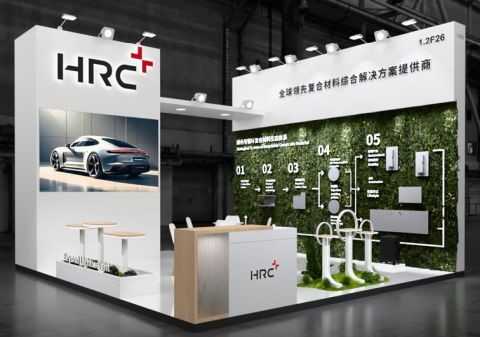
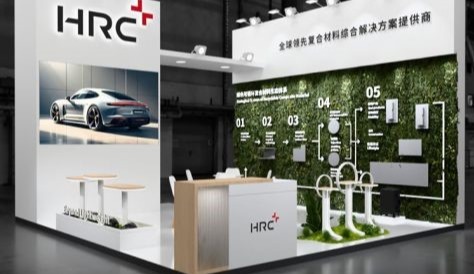
Booth rendering (Source: HRC)
Debut at CHINAPLAS to advance circular material systems
As a first-time exhibitor, HRC will center its showcase on the "Green recyclable composite material ecosystem", planning to systematically present the complete industrial path from source waste recycling and regeneration to end-product applications.
By establishing a closed-loop value chain throughout the composite material lifecycle, the company will demonstrate the feasibility and development potential of recycled carbon fiber materials in commercial applications.
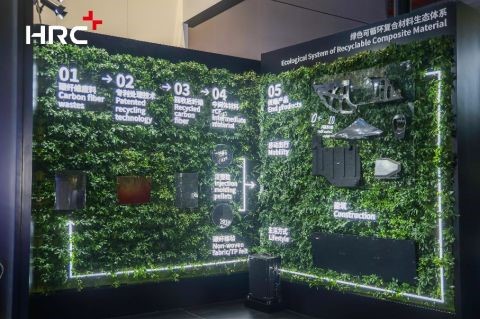
Booth rendering (Source: HRC)
During the exhibition, HRC will focus on the industrial application of composite material recycling, demonstrating how it transforms the circular potential of materials into scalable solutions. By adopting a model that balances economic viability with environmental benefits, the company aims to expand application opportunities in the mobility, construction, and industrial sectors.
Recycling technology drives carbon fiber industrialization
The showcased "Green recyclable composite material ecosystem" will display the full process of converting carbon fiber waste into high-value-added intermediates and end products.
At its core lies the company's independently developed patented recycling technology, which retains more than 95% of the material's mechanical properties while reducing carbon emissions to just 4.7% of that of virgin materials.
On this basis, HRC has further developed intermediate materials such as injection molding pellets and thermoplastic felts, and extended applications to diverse end products including automotive components, construction formwork and daily necessities, reflecting the comprehensive advantages of circular materials in performance, cost and environmental performance.
To promote large-scale applications, the company relies on a thousand-ton carbon fiber recycling and reprocessing production line to accelerate the deployment of recycled materials in industrial scenarios.
Meanwhile, HRC has partnered with ALSC, HMC and other enterprises to advance the development of a composite material recycling and reuse ecosystem.
Lightweight formwork enters construction applications
For the construction industry, HRC will display its green, low-carbon and lightweight carbon fiber construction formwork. The product is manufactured through secondary processing of recycled and decomposed carbon fiber composite materials, featuring lightweight, high strength, corrosion resistance, and long service life.
It can be recycled more than 250 times and has obtained Global Recycled Standard (GRS 4.0) and ISO 14067:2018 carbon footprint certifications.
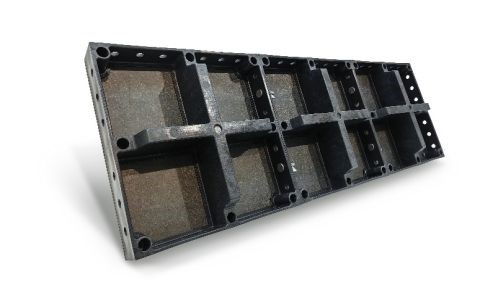
HRC green, low-carbon & lightweight carbon fiber construction formwork (Source: HRC)
Currently, such formwork has been applied in multiple projects, offering significant advantages over traditional formwork in material conservation, improved molding quality and reduced labor costs, helping drive the construction industry toward higher circularity and lower emissions.
Recycled components expand automotive applications
In automotive applications, HRC will present a range of recycled carbon fiber components including underbody shields, fender trims, mudguards, sunroof parts and armrest skeletons. These products combine environmental attributes with sound mechanical performance and support industrial mass production.
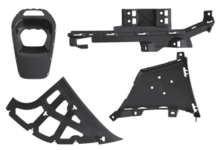
Selected HRC recycled carbon fiber automotive components (Source: HRC)
The related solutions meet the automotive industry's demand for lightweight and low-carbon materials while fulfilling large-scale delivery requirements, demonstrating the application potential of recycled carbon fiber in the automotive sector.
More on HRC
HRC is a global comprehensive composite solution provider with over 2,000 employees, operating across five countries in Asia and Europe. Focused on carbon fiber materials, the company offers full-lifecycle services spanning R&D, engineering design, industrial mass production and recycling.
At present, HRC's solutions are applied in automotive, general aviation, urban air mobility, construction, robotics and other fields, as the company continues to drive technological innovation and application expansion of composite materials toward green and low-carbon development.