










Speed is key! Denovia changes rules for PET chemical recycling

Denovia, an innovative research company focuses on plastic waste and sustainability, has developed a game-changing depolymerization technology that transforms PET plastic waste into its chemical building blocks in just minutes.
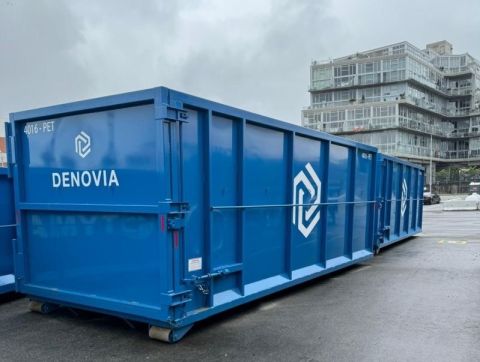
Denovia’s branded recycling bins. (Source: Denovia)
How does Denovia’s depolymerization technology works?
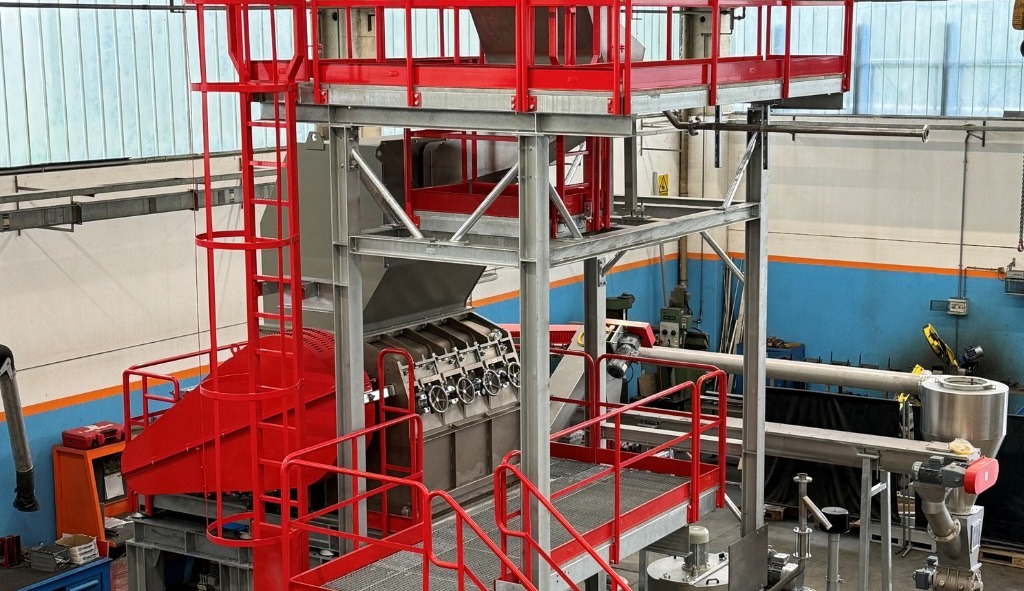
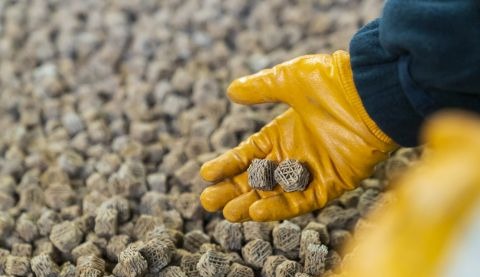
The technology first cuts PET plastics into small pieces to increase surface area for fast and more efficient reactions.
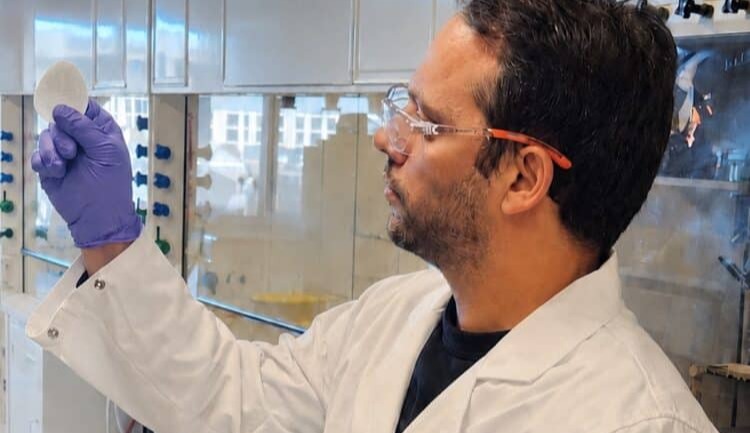
The shredded plastic is placed into a special liquid solution designed to react with the plastic at the molecular level, breaking down the long polymer chains in the plastic. Instead of melting the plastic with high heat, the process chemically splits it.
The remaining is raw chemical components of plastic that are then filtered and cleaned in a final step, removing all dyes, additives and contaminants. After this, the final output is purified base units of the plastic.
What makes Denovia’s technology so unique?
Traditional recycling melts plastic, which degrades its quality over time and struggles to handle mixed or contaminated materials. In contrast, Denovia’s process breaks plastic down to its original molecules, removes impurities, and produces output that can be reused at approaching virgin-grade quality.
Traditional chemical recycling processes take 30 to 180 minutes and require high temperatures, which limits throughput and raises costs. Compared with most chemical recycling, Denovia’s reaction operates in minutes, enabling faster breakdown and significantly higher throughput.
Does Denovia’s recycling process work in reality?
In January 2025, Denovia deployed its machine at Canada’s Tymac’s marine services facility in the Port of Vancouver, marking its first real-world industrial application.
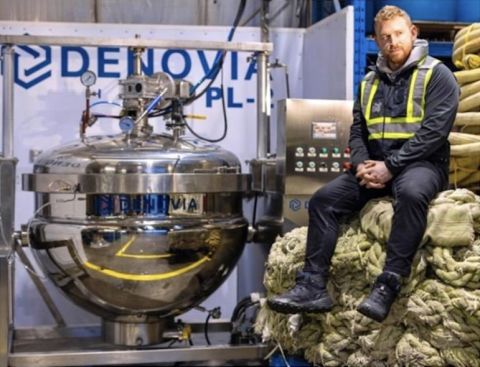
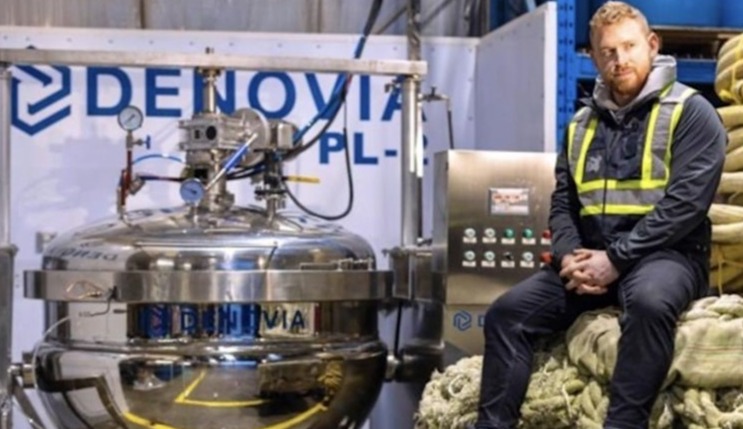
Nick Spina, Founder of Denovia, with the PL-2 Machine installed at Tymac in the Port of Vancouver. (Source: Denovia)
The system processes plastic waste from maritime sources, including major shipping operators. It converts up to 1,000 liters of shredded plastic into its base chemical monomers using its liquid process that avoids high temperatures.
The deployment demonstrates the technology’s ability to handle mixed waste streams at scale, while operating with lower energy requirements.
Denovia is also working with organizations that generate large volumes of waste, including Goodwill, where the system is being used to process unusable textile streams that would otherwise be discarded.
Today, throughput is designed to scale, with Denovia’s PL-5000 system processing roughly two tons per batch, with conservative cycle assumptions around two hours. Recovery rates are around 86% of input material as usable output, while the remainder could be converted into secondary products rather than discarded.
Next move for Denovia?
With the technology proven, Denovia is set for next leap: upgrading from batch processing into a high-output industrial system.
The company has already achieved flash depolymerization in minutes in commercial tests, demonstrating the speed of its chemistry. Over time, a much larger continuous system could potentially deliver up to 100x the output of the current platform, supporting Denovia’s move toward true industrial-scale deployment.