












CHINAPLAS 2026: LCY transforms into innovator to meet demanding applications

Despite the recent global economic slowdown, the plastics and rubber industries continue to see robust growth. Their resilience is driven by their indispensable role in global supply chains and everyday life, as well as surging demand in key markets.
A leading global chemical supplier with a strong manufacturing and R&D footprint across China, the US, and Canada, LCY CHEMICAL CORP centers its business on three strategic pillars: Performance Polymers & Circular Materials, Sustainable Technology & Decarbonization, and Semiconductor & Interconnect Materials.
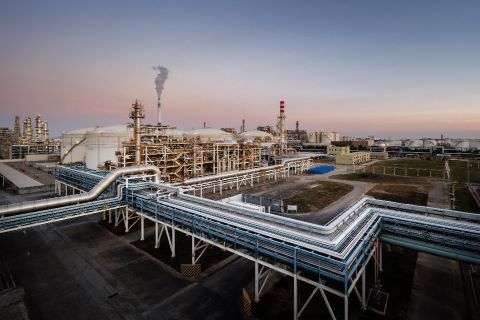
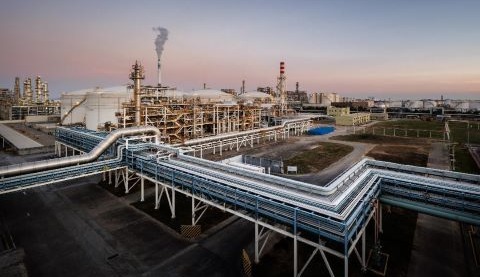
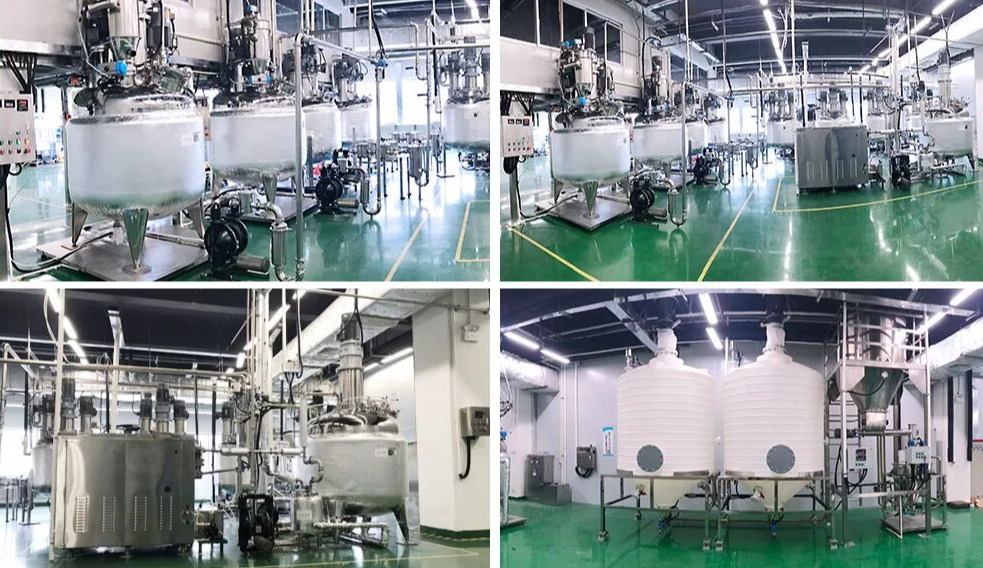
LCY's production plant in Huizhou, China.
"Across Asia, I expect a two-speed market. Southeast Asia and India continue to expand manufacturing capacity and consumer demand, which supports polymers for packaging, home appliances, infrastructure, and mobility," says TH Hong, Chairman of LCY CHEMICAL CORP.

TH Hong, Chairman of LCY CHEMICAL CORP.
The industry growth is increasingly driven more by "value and performance" rather than the traditional focus on "price and volume". Hong observed that today's customers prioritize consistent quality, shorter lead times, and robust technical support over simply seeking the low price.
High-performance solutions under CHINAPLAS spotlight
At CHINAPLAS 2026, LCY showcases its transformation from a traditional chemical producer into a science-driven innovator, presenting a suite of high-performance solutions for demanding applications.
The company unveils Globalprene 9430, a high oil-extended TPE. With excellent oil-holding capacity, these grades deliver a premium soft-touch surface with natural rebound for a more comfortable, skin-friendly feel. Beyond aesthetics, they offer enhanced elasticity and improved resistance to tearing and permanent deformation, making them ideal for children’s toys, stress-relief products, and robotic skin.
Another highlight is the Globalene 1055RC and 4055RC TPV concentrates, designed for high-performance TPV/SEBS hybrid compounds. These products support flexibility and local adaptation that allow compounders to develop customized TPV and TPV/SEBS hybrid formulations to suit different processing conditions and performance targets. This versatility enables broader adoption in applications where precise property tuning, production efficiency, and consistent quality are critical.
For medical applications, LCY features Globalene 6881, a PP homopolymer engineered for gamma sterilization. Extended to high-precision lab applications, the product combines high flowability with exceptional transparency, making it an ideal choice for injection molding.
Globalene 6881 has been successfully applied in the production of pipette tips, which are essential for accurate reagent dispensing in laboratory testing. These tips require high mechanical stability and must remain safe and reliable following sterilization. Globalene 6881 maintains its performance under high-throughput testing conditions without compromising diagnostic accuracy.
In addition to performance materials, LCY also offers a strong portfolio of wet chemicals and formulations under its Semiconductor & Interconnect Materials business.
Continuing commitment to high-performance innovations
On the future of the plastics industry, LCY maintains a cautiously optimistic view, shifting its strategic focus toward high-value applications.
"China will likely be more selective than in past up-cycles. We may see slower growth in traditional commodity segments, contrasted by stronger demand in areas tied to industrial upgrading: EVs and batteries, electronics, renewable energy, and high-specification packaging," said Hong.
"Competition will remain intense, and margins will depend on product differentiation, stable feedstock strategies, and customer proximity," he added.
Over the next few years, LCY will advance its high-performance polymer platforms across TPE and PP, prioritizing applications where material performance, qualification, and long-term reliability create tangible value.
Development priorities include medical and hygiene materials, advanced footwear systems, humanoid robotic skin, and soft-touch solutions. Additionally, the company will target AI- and 5G-related electronics applications, supported by integrated material design and close collaboration with downstream partners.
As the automotive industry drives toward lightweighting and higher safety standards, LCY will focus its advanced composite materials development on compounding and system-level solutions. These innovations support lightweight mobility, functional modification, and next-generation consumer and industrial applications.
Sustainability in mind
Across all platforms, circular materials have become a baseline industry requirement and remain a central development focus for LCY. The company will continue expanding its portfolio of PCR-based and ISCC-certified solutions, while working closely with brand owners and value-chain partners to integrate low-carbon, recyclable materials into end products and manufacturing processes.
Beyond green material innovation, sustainability is deeply embedded in LCY's corporate strategy. The company has established clear sustainable operational targets, including a 42% reduction in greenhouse gas emissions by 2030 (compared to a 2021 baseline) and achieving 15% renewable energy adoption (RE15).
Approximately 75% of LCY's thermoplastics sales volume has completed LCA and obtained ISO 14067 certification, with numerous TPE and PP products certified under ISCC PLUS. Moving forward, LCY will further expand its portfolio of PCR solutions with measurable CO₂ impact, such as PCR-PP and PCR-TPV—specifically targeting demanding applications in the automotive and sealing sectors.
"Together, these actions strengthen LCY's penetration into high-performance markets while empowering partners to meet ESG objectives and accelerating the transition toward a more sustainable plastics industry," concluded Hong.
Booth: 6.2C71