












Husky’s future-ready technologies take center stage

"Throughout Asia, accelerating policies regarding EPR, recycled content, and carbon disclosure are pivoting demand toward high-quality recycled materials and sophisticated processing technologies."
Technology is a cornerstone of the plastics industry, driving product innovation while creating a more sustainable global impact. Calvin Pang, Vice President of Systems & Tooling, East Asia, Husky Technologies™, identifies three pivotal industry trends: standardized circular economy systems, data-driven digital production, and energy-efficient, low-carbon operations.
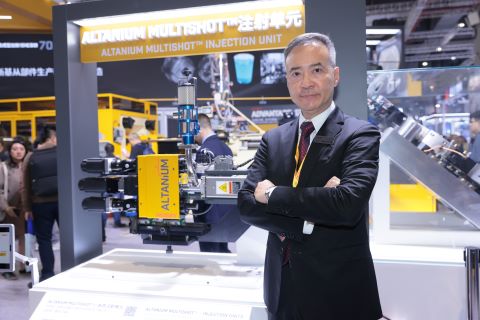
Calvin Pang, Vice President, Systems & Tooling, East Asia, Husky Technologies™
Regarding standardized sustainability systems, Pang observes that recycled content policies across Asia are becoming increasingly structured. China is introducing national recycled plastic standards in 2026, while South Korea and Japan continue to enforce strict requirements that drive demand for high-quality recycled materials.
At the same time, manufacturers are transitioning from basic automation to AI-enabled, data-driven production. This shift enhances yield, reduces scrap, and improves equipment reliability, establishing digital optimization as a core strategy.
Furthermore, energy efficiency has become a decisive investment priority. According to Pang, "Companies are adopting real-time energy monitoring and upgrading to high-efficiency technologies to reduce energy consumption, bolstering both sustainability and cost competitiveness."
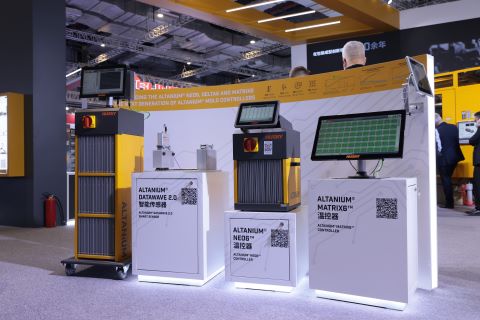
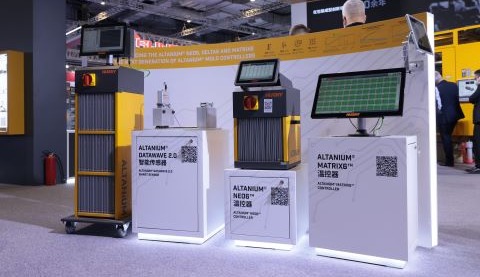
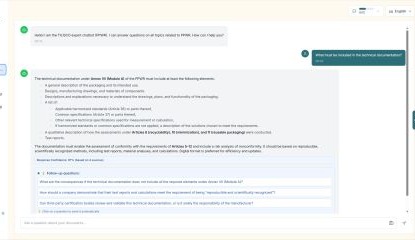
Altanium is Husky's intelligent, integrated platform, providing a single point of control for hot runner temperature, valve gate, and servo operations.
Innovations at CHINAPLAS
At CHINAPLAS 2026, Husky—a global leader in injection molding since 1953—showcases high-efficiency, circular-enabling solutions that respond to industry trends. These PET preform, packaging, and closure technologies are engineered to boost productivity, enhance rPET capabilities, and reduce conversion costs.
Key innovations for the food, beverage, consumer goods, and medical markets include:
HyPET6e and HyPET NX6 PET preform molding systems for various applications and production volumes, featuring advanced rPET processing to meet stringent packaging sustainability mandates
New Hylectric 6 and HyperSync packaging platforms designed for maximum productivity and versatility across diverse consumer-packaged goods applications
Sustainable, lightweight, tethered, and HyCAP SecuRE+ PET solutions that support mono-material package designs
Advantage+Elite real-time proactive monitoring to optimize OEE and lower conversion costs
High precision hot runner and controller technologies powering performance across industries
Medical solutions for the parenteral, diagnostics, and laboratory sectors
Pang notes that these technologies address the surging demand for sustainable, cost-effective molding in Asia's rapidly growing packaging sector. Furthermore, the integration of real-time monitoring reflects the industry's shift toward digitally optimized, high-performance production.
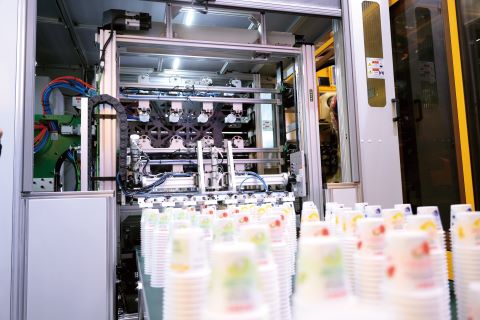
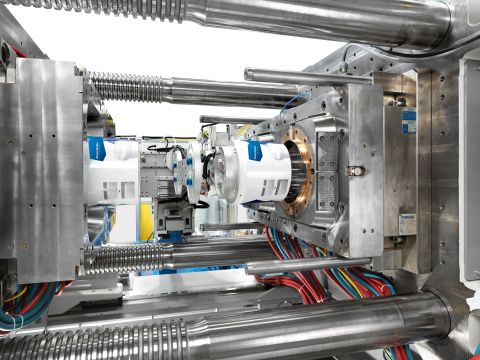
The new Hylectric 6 packaging platform is designed for maximum productivity across diverse consumer-packaged goods applications.
Rising demand for high-quality recycled materials
Regarding market development, Pang suggests that value creation and sustainability mandates—combined with technology adoption—are unlocking new opportunities within a moderate growth environment.
He explains that while global economic expansion sustains demand for packaged goods and healthcare products, China presents a complex landscape: stable consumption across major industries is offset by a structural oversupply in PET, which continues to compress margins.
Beyond China, Southeast Asia and India are gaining momentum from urbanization, a growing middle class, and manufacturing relocation. Meanwhile, Japan and South Korea remain at the forefront of high-performance polymers and sustainability advancements.
"Throughout Asia, accelerating policies regarding EPR, recycled content, and carbon disclosure are pivoting demand toward high-quality recycled materials and sophisticated processing technologies," Pang notes.
Growth opportunities in Asia
The strengthening of circular economy and sustainability policies across Asia is creating significant market potential. As countries like China, South Korea, and Japan implement stricter recycled content standards, and ASEAN markets advance their regulatory frameworks and infrastructure, new opportunities are emerging rapidly.
From an industry perspective, high-value applications are expanding in the automotive and medical device sectors, particularly for engineering plastics focused on lightweighting and safety. Concurrently, there is a rising demand for localized, high-end healthcare manufacturing.
In the consumer packaged goods sector, steady consumption of food, beverages, and home and personal care continue to anchor demand, supported by strong unit growth and the continued expansion of rigid plastic packaging formats.
Advancing technology and strengthening services
Beyond technological innovation, Husky is committed to expanding its service offerings to help customers enhance efficiency, sustainability, and market competitiveness.
"Our priorities include broadening our portfolio of circular-enabling solutions, particularly systems optimized for recycled content, lightweighting, and energy-efficient production," Pang states. "At the same time, we are accelerating investments in digitalization, predictive monitoring, and connected services to maximize customer uptime and productivity."
Husky will also continue to strengthen its presence in key growth markets across Asia through deeper regional support, application development, and strategic partnerships.
Pang concludes: "Our roadmap is designed to empower customers to meet evolving performance and sustainability expectations, ensuring Husky remains a trusted, innovation-driven partner across the global plastics value chain."
Booth: 4.1C24