














Röhm PLEXIGLAS proTerra molding compound for luminaire cover

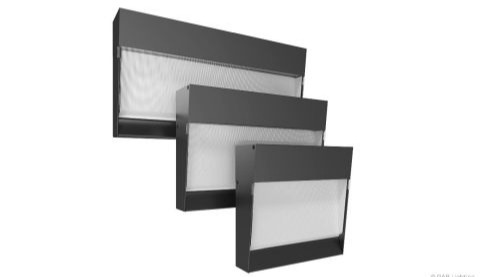
RAB Lighting, a US-based lighting manufacturer, uses Röhm’s PLEXIGLAS proTerra 8N molding compound for the cover of C-Wall luminaire.
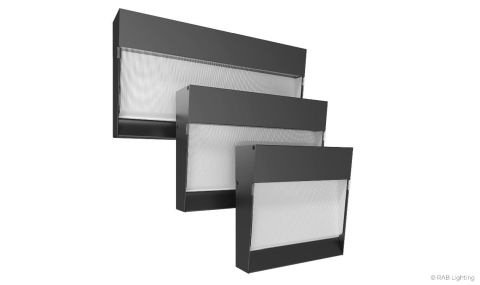
RAB Lighting’s C-Wall luminaire.
This type of polymethyl methacrylate (PMMA) contains a proportion of attributed bio-circular raw materials, lowering its greenhouse gas emissions and offering outstanding optical properties at the same time.
Consistent optical quality
PLEXIGLAS proTerra 8N is used for the transparent luminaire cover. The material contributes to a pleasant, homogeneous lighting effect. It offers 92% light transmission and exceptional light-guiding properties. It also delivers long-term UV and weather resistance.
In addition to this clear transparent material, Röhm’s PLEXIGLAS proTerra molding compounds are also available in light-diffusing and deep black colored grades.
Reducing emissions along value chain
PLEXIGLAS proTerra 8N is chemically identical with PLEXIGLAS 8N, an established material for optical applications, and has congruent product properties.
The difference is that fossil resources are proportionally replaced by ISCC PLUS-certified, sustainable raw materials and allocated via mass balancing. As a result, there is a 25% reduction in greenhouse gas emissions along the value chain, spanning from raw material extraction through transportation and processing to the factory gate (cradle-to-gate), as the life cycle analysis (LCA) proves.
Luminaire manufacturers can switch to the CO2e reduced grade PLEXIGLAS proTerra 8N without needing to modify existing designs or production processes, ensuring consistent optical quality for enhanced lighting solutions.
More proTerra products for circular economy
To meet industry-specific requirements, PLEXIGLAS proTerra products are available with varying shares of allocated sustainable feedstocks. PLEXIGLAS proTerra 8N can be produced with 25-100% bio-circular feedstock.
Another option is PLEXIGLAS proTerra M5, which contains up to 30% mechanically recycled PMMA from post-industrial sources. This method lowers the material’s cradle-to-gate footprint by 30% compared to a product made from completely new material.