










ENGEL’s high-performance automotive solutions at CHINAPLAS 2026

At CHINAPLAS 2026, ENGEL will show its injection molding solutions for a wide array of applications. Among the six applications demonstrated live, three of which will be for the automotive sector.
These include the cost-efficient implementation of lightweight concepts, the integration of functional and decorative surfaces directly in the injection molding process and the production of complex components with reduced space and investment requirements.
ENGEL clearmelt technology: Surface finishing directly in the injection molding process
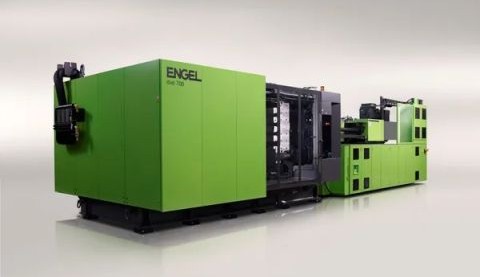
At its booth, ENGEL will present an automotive production cell with an ENGEL duo 700 two-platen injection molding machine for a B-pillar trim with an integrated transparent camera window.
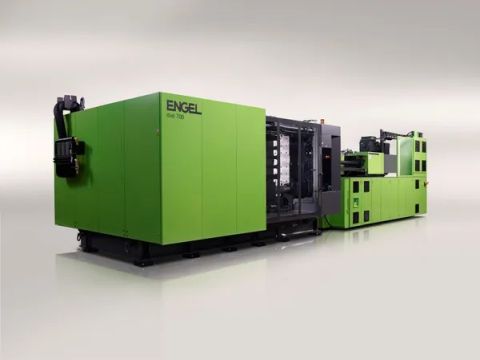
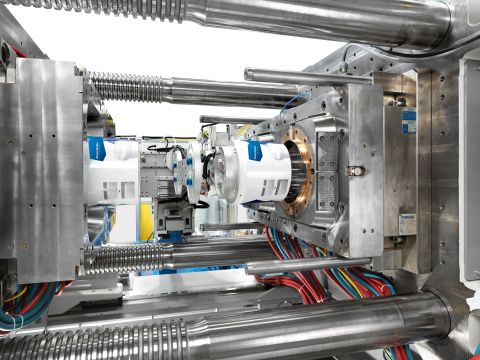
ENGEL duo 700 wide-platen version.
In the fully automated 3K injection molding cell with 7000 kN clamping force, the B-pillar trim for the interior of passenger cars is manufactured using ENGEL clearmelt technology.
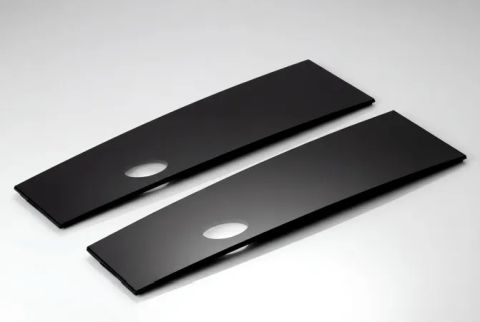
B-pillar trim produced using clearmelt.
ENGEL clearmelt stands for the coating of components directly in the mold, shortening the process chain. In addition, the coating produces a high-quality and scratch-resistant surface with self-healing effects.
The component made of transparent and black polycarbonate has a part weight of 256 g and is additionally overmolded with 90 g of polyurethane. The injection molding cell is equipped with an ENGEL easix articulated robot integrated into the CC300 control, which removes the components. The total cycle time is 90 seconds.
In addition, several digital assistance systems are used in this production cell. iQ hold control automatically sets the sealing point and thus the holding pressure time optimally. This allows cycle time and raw material usage to be reduced. iQ weight control automatically adjusts the injection volume in the event of fluctuating viscosities and within the same shot, which stabilizes component quality and reduces scrap. The iQ process observer continuously monitors all phases of the injection molding process, visualizes process stability and detects deviations at an early stage before scrap occurs.
The duo two-platen injection molding machine used is designed as a wide-platen version. This makes the production solution suitable for components that require wider platens but no greater clamping force.
ENGEL fluidmelt: Reducing weight and material use in automotive components
A second automotive exhibit shows the production of air intake ducts on a tie-bar-less ENGEL victory 120 injection molding machine with 1200 kN clamping force using fluidmelt technology.
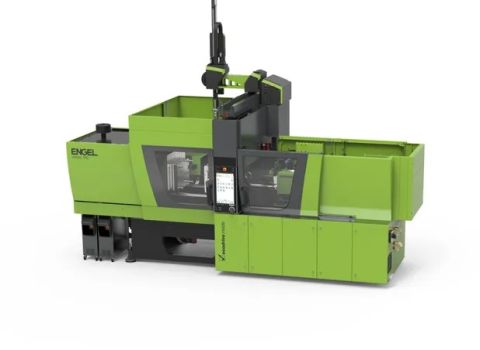
ENGEL victory 120 with integrated viper linear robot.
ENGEL fluidmelt produces hollow structures through the injection of water or gas. In this process, the molten core of the component is displaced into an overflow cavity or back into the plasticizing unit, thereby deliberately creating a cavity within the component. Such hollow structures reduce component weight and material usage.
At CHINAPLAS, the process is demonstrated using gas injection and overflow cavities. The component, with a shot weight of 70 g, is manufactured from a PA66 compound with 30% glass fiber in a cycle time of 50 seconds.
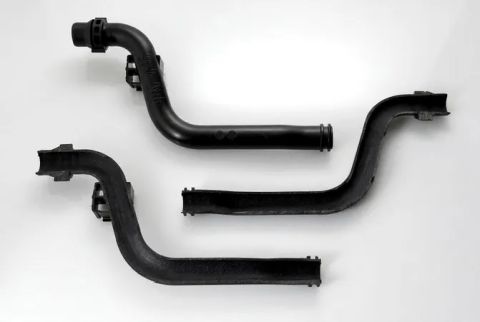
Air intake ducts produced using fluidmelt.
The production cell is automated with an ENGEL viper linear robot, which is fully integrated into the CC300 machine control. The tie-bar-less victory 120 injection molding machine used is designed for complex and large molds as well as for easy access by the automation, due to the freely accessible mold space. Thanks to the large platens and the tie-bar-less technology, a machine with only 1200 kN clamping force can be used instead of a conventional injection molding machine with 1800 kN, saving floor space.
LSR application: Automated production and post-processing in one cell
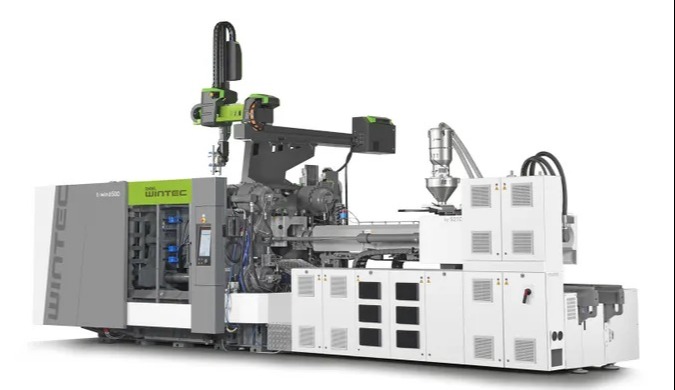
At CHINAPLAS 2026, WINTEC presents a production solution for a precise liquid silicone rubber application with 8 cavities on an all-electric e-win 1800 injection molding machine with 1800 kN clamping force. Sealing mats for waterproof electrical connectors in electromobility are produced with a shot weight of 37.8 g in a cycle time of 59 seconds.
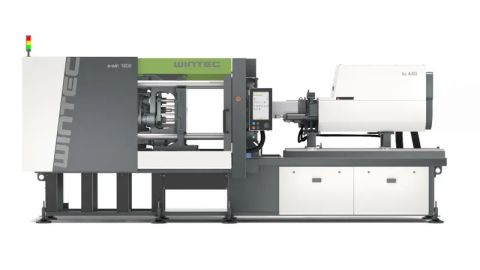
All-electric WINTEC e-win 1800.
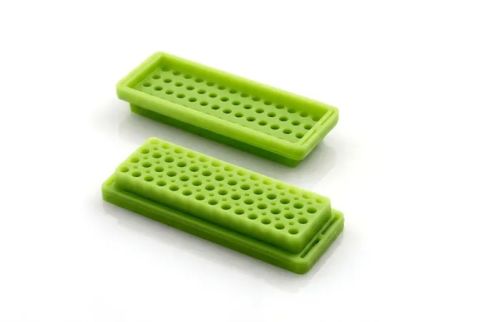
Sealing mats produced with LSR process.
The production cell is fully automated with an integrated ENGEL viper linear robot, which gently removes the components from the mold using a special brush. For processors, this provides a compact and fully automated solution for the production of precise LSR components with gentle demolding.
Process control is supported by the digital assistance system iQ weight control, which is used in this production cell to stabilize the injection process. It monitors the viscosity of the LSR in real time and automatically adjusts the injection volume within the same shot. Through the use of iQ weight control, variation in this application was reduced by 62%. This contributes to more stable process control, reproducible component quality and reduced scrap.