



















AMAPLAST: Italian plastics machinery sector navigates growth and volatility

As the global plastics and rubber industry pivots toward high-tech efficiency and sustainability, Italian manufacturers are reporting enormous engagement in Asian markets. At CHINAPLAS 2026, AMAPLAST (the Italian Plastics and Rubber Processing Machinery and Moulds Manufacturers' Association) highlighted a surge in demand driven by industrial upgrades in China and the rapid expansion of the Indian manufacturing sector.
At the trade fair in Shanghai, the Italian pavilion spanned over 1,500sqm and hosted 48 companies, who reported high levels of satisfaction during the opening days. Exhibitors in particular noted a strong presence of international buyers, with a significant influx of visitors arriving from India, Japan, Malaysia, Indonesia, and other countries.
Reflecting on the scale of CHINAPLAS 2026, Alessio Fineo, Exhibitor Manager at Promaplast Srl, described the event as a “must-attend” fixture for Italian exhibitors, serving as their largest collective participation anywhere in the world.
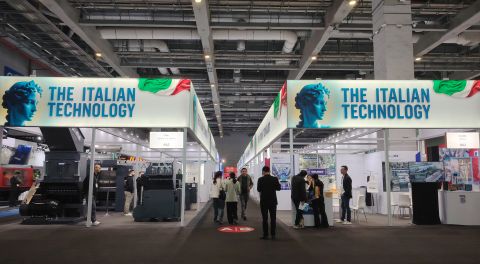
The Italian pavilion at CHINAPLAS 2026.
China: An essential market amid uncertainties
Italian exports of plastics and rubber processing machinery to China have maintained a steady upward trajectory since 2019, experiencing a significant acceleration over the past three years. Data from the AMAPLAST Study Center reveals that exports officially surpassed the €200 million mark in 2025, propelling China to third place in the sector’s global export rankings.
“China is a very important market for Italian companies," Fineo stated. "Even with all the current uncertainties, we view it as a fundamental market.”
The export data highlights a nuanced shift in machinery demand. While plants for mono-multifilaments and presses have shown consistent growth, the market for extruders saw a slowdown in 2025. Conversely, injection molding machines recorded a spike last year—a trend AMAPLAST is currently reviewing, as the figures appear unusually high.
Despite a challenging geopolitical landscape, AMAPLAST views China’s 15th Five-Year Plan (2026–2030) as a major opportunity. With a 2026 GDP growth target of 4.5% to 5%, China is intensifying its focus on manufacturing productivity and circularity. Italian manufacturers are meeting this demand by providing tailor-made, high-efficiency, and energy-saving machinery, molds, and dies.
Furthermore, as the technology gap between Chinese and "Western" processing solutions narrows, Italian manufacturers are adapting “servitization”. This approach emphasizes turnkey solutions integrated with digitization and AI to help customers reduce costs and foster innovation.
To support this strategy, Fineo added that many Italian companies have expanded their local footprint by establishing new branches and hiring additional agents and personnel across China.

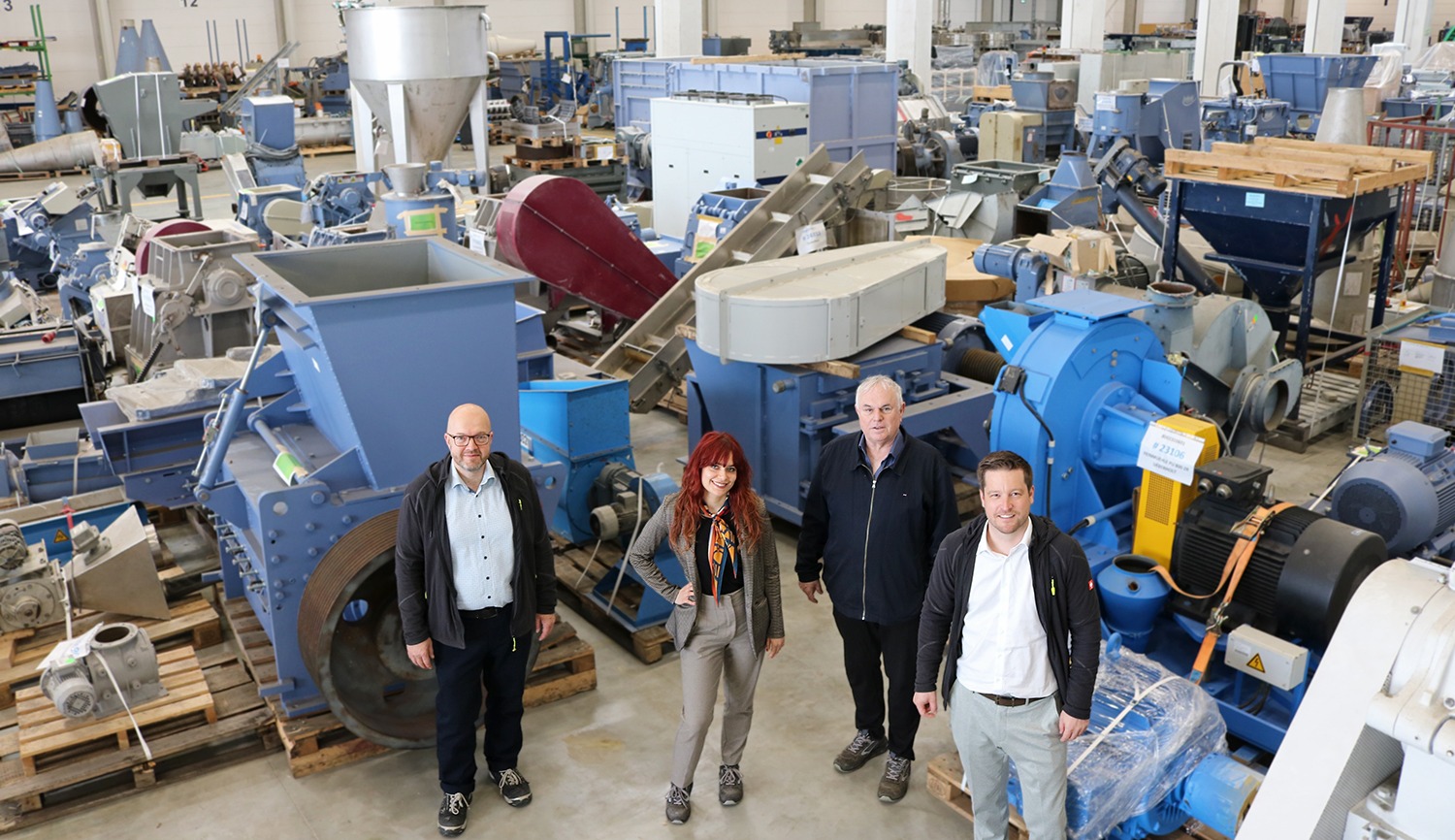
Alessio Fineo, Exhibitor Manager at Promaplast Srl (Left) and Matteo Morandi from Marketing Department at AMAPLAST.
India: The emerging growth powerhouse
The Indian market has emerged as a high-velocity growth engine, with Italian machinery sales more than tripling over the past decade. Fueled by the "Make in India" program, local manufacturers are increasingly requiring sophisticated technological systems. AMAPLAST notes that the potential in India is vast and largely untapped.
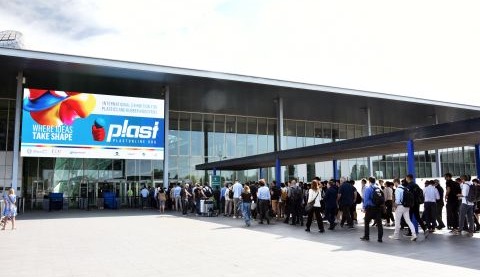
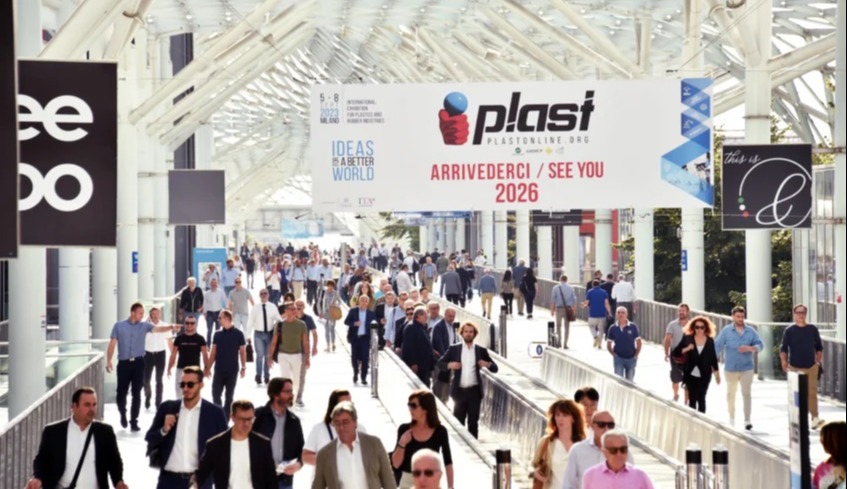
The momentum is reflected in the fact that the largest delegation of foreign buyers for the upcoming PLAST 2026 exhibition will hail from India.
“India is growing very fast. We are happy that many of Indian buyers here at CHINAPLAS will also come to PLAST,” said Matteo Morandi from Marketing Department at AMAPLAST. “The Indian market needs new technologies to improve productivity and product quality. Italian and other European manufactures are very interested in this market.”
Global supply chain: Resilience through SME innovation
The conflict in the Middle East has triggered an energy crisis, driving up costs for natural gas, petroleum, and raw materials, while fueling concerns over material availability and investment across Europe. Additionally, US tariffs on steel and aluminum, coupled with the dollar's devaluation against the euro, have further inflated costs for machinery and molds.
The prevailing climate of uncertainty has significantly impacted production and order volumes. "The year 2025 closed with a 5% decrease in production, valued at €4.4 billion, marking a slowdown compared to 2024," Fineo noted. Morandi added that these constant disruptions make strategic planning nearly impossible: "Every day we have something new. We sincerely hope these issues will be resolved soon."
To minimize risks amid rising geopolitical tensions and economic uncertainties, Italian manufacturers are leveraging their unique industrial structure—a network of small and medium-sized enterprises (SMEs) driven by widespread innovation. Strengthening this SME foundation is vital for maintaining national competitiveness as global markets shift.
Looking ahead, both Fineo and Morandi emphasized that forecasting for 2026 remains exceptionally difficult due to overlapping international unknowns. To navigate this, Italian manufacturers are actively monitoring and "scouting" international markets. This strategy allows them to strengthen their standing against global competitors and diversify their destinations to mitigate regional risks.