















Search History
Clear History
{{item.search_key}}
Hot Searches
Change
{{item.name}}
{{item.english_name}}
Subscribe eNews
Once A Week Once Every Two Weeks
{{sum}}
Login Register

Applications

Circularity paradox: Why FAO's new report is a wake-up call for food packaging

BoReTech's PET bottle washing line officially commissioned in Shandong

Teknor Apex advances recycled solutions for automotive interiors

Products

Clariant FAMAX catalysts support two Yihua formaldehyde plants in China

BOY’s compact, high-precision injection molding machines at Plast 2026

The novelties from Moretto at Plast 2026

Activities

  • Plast 2026 expects 200 new exhibitors and strong international presence

  • 350,000+ visitors! CHINAPLAS 2026 shatters every record in the book

  • CHINAPLAS 2026: 86,504 visitors explore innovations on Day 3

Pictorial

News Videos

Top 10 Technology Trends awards presented at CHINAPLAS 2026

MAAG x SIKORA: Smart pelletizing + precise inspection - More stable, carbon-reduced

CAI Machine: New visual inspection technology debut! More efficient, greener, colorful printing

Conference Videos

Summit Dialogue: Policy alignment and practices in plastic recycling across Asia

Interview: Pathways for development of plastics recycling in Malaysia

Driving systemic change: Unilever’s evolution in the circular economy

Corporate/Product Videos

For Rubber & Plastic Extrusion Equipment, trust Hebei Zhongsen! Custom Extruders, Traction Machines & Vulcanizing Lines

Is Your Mold Supplier Really Giving You Peace of Mind?

Kurtz GmbH & Co.

Home > News > Packaging

Circularity paradox: Why FAO's new report is a wake-up call for food packaging

Source:Adsale Plastics Network Date :2026-06-01 Editor :VC
Copyright: This article was originally written/edited by Adsale Plastics Network (AdsaleCPRJ.com), republishing and excerpting are not allowed without permission. For any copyright infringement, we will pursue legal liability in accordance with the law.

For the food packaging sector, the transition to a circular economy is no longer a theoretical debate—it is an operational reality dictated by strict brand mandates and aggressive legislative targets. However, a recent report by the Food and Agriculture Organization of the United Nations (FAO), titled Food Safety Implications of Recycled Plastics and Alternative Food Contact Materials, injects a harsh dose of technical reality into this green transition.


The takeaway is clear: in our rush to satisfy circularity targets, we risk compromising chemical food safety. To safely scale recycled Food Contact Materials (FCMs) and bio-based alternatives, the industry must move past sustainability rhetoric and confront a complex matrix of chemical risks, data gaps, and regulatory frameworks.

FAO_report cover_r_480.jpg

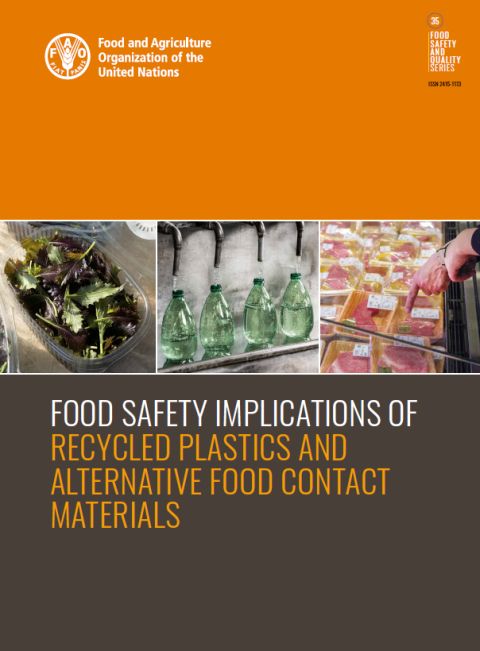
The report “Food Safety Implications of Recycled Plastics and Alternative Food Contact Materials”, released by the Food and Agriculture Organization of the United Nations (FAO).
 

FAO_480.jpg

The FAO is a specialized agency that leads international efforts to defeat hunger and achieve food security.


What are the primary chemical risks associated with recycled FCMs?


The core risk stems from the inherent volatility of post-consumer waste streams. Unlike predictable, high-purity virgin polymers, recycled plastics introduce a complex chemical matrix with migration risks posed by contaminants associated with Intentionally Added Substances (IAS) and Non-Intentionally Added Substances (NIAS).


Even within regulatory-approved recycling loops, systemic vulnerabilities lead to major contamination. These include:

- Industrial stream mixing of food-grade and non-food-grade plastics due to poor control.

- Post-consumer misuse, such as consumers using food containers to store household chemicals.

- Process degradation, which introduces new NIAS during recycling.


Furthermore, the degradation products of IAS, such as surfactants, coatings, lubricants, antioxidants, and thermal stabilizers, can also be subjected to migration from recycled plastics.


Studies cited by the FAO show that recycled FCMs can release higher quantities of harmful heavy metals, brominated flame retardants, persistent organic pollutants (POPs), and phthalates compared to virgin materials.


Recycled bottle_FAO_480.jpg

The new FAO report discusses safety considerations for recycled FCMs. (Source: FAO)


How can packaging converters mitigate these chemical migration risks?


Recycled plastics producers can no longer assume feedstock uniformity. To manage this volatility, quality assurance must move upstream. Brands must implement stringent incoming material testing protocols to profile chemical batches before they hit the production floor.


One pragmatic engineering solution highlighted by the report is functional barrier design. By sandwiching recycled polymers behind a layer of high-purity virgin plastic or a specialized barrier coating, packaging converters can physically block the chemical migration.


However, this introduces an economic and philosophical dilemma: does adding virgin layers defeat the ultimate goal of 100% recycled packaging? 
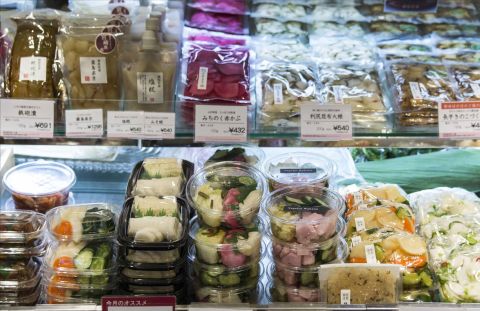

Food packaging_FAO_480.jpg

What is your take on shifting to circular food pcakaging? (Source: FAO)


Are bio-based packaging materials a safer alternative to recycled plastics?


No, renewable materials are not a silver bullet. The FAO report rightly cautions that bio-based alternatives introduce unique, highly complex chemical risks tied directly to the biological source material itself.


Natural plant fibers containing cellulose, hemicellulose, and lignin have been widely used as raw materials in the production of FCMs. In a study on plant‑based FCMs collected on the Dutch market, a gas chromatography‑mass spectrometry screening revealed the presence of plant extractable plasticizers, antioxidants, hydrocarbons and various metals, including lead and mercury.


Biomaterials bring an entirely different class of contaminants associated with NIAS to the kitchen table:

- Agricultural residues like pesticides and herbicides.

- Natural biological hazards including persistent natural toxins and allergens.


How can the industry evaluate unknown packaging contaminants?


Specific chemical migration limits, based on structural properties linked to toxicity, can help assess migrating substances when hazard data are scarce.


However, toxicological information for some FCM substances, especially NIAS, can be limited or inconsistent. To bridge this data gap, the FAO champions the Threshold of Toxicological Concern (TTC) approach as a pragmatic risk-screening tool for chemicals that may migrate from both virgin and recycled plastics.


The TTC approach assumes that reasonable assurance of safety can be achieved without chemical-specific data if dietary exposure is sufficiently low, and it is already used by regulatory agencies, including the USFDA, in evaluating FCMs.


The FAO further urges more research to clarify hazard profiles and establish migration thresholds for NIAS and contaminants in recycled FCMs. Continued development of reference databases and analytical tools for identifying IAS and NIAS in migration studies is also needed to improve acceptance of recycled plastics.


Food packaging safety_FAO_480.jpg

It is important to continously conduct research on NIAS and contaminants in recycled FCMs. (Source: FAO)


Do mechanical recycling practices contribute to the microplastic crisis?


Yes. Micro- and nanoplastics (MNPs) are not exclusive to recycled plastics but are possible byproduct of mechanical recycling practices. The physical shredding and size-reduction phase, combined with prior environmental weathering, accelerate MNP formation.


Polymers such as PET, PS, PP, and PE are highly susceptible to mechanical abrasion and thermal stress. Recent studies suggest that they can directly release MNPs from packaging materials into food and beverages.


Furthermore, nanomaterials are incorporated into packaging polymers to enhance key performance characteristics, such as strength, durability, flexibility, barrier properties, and overall service life. As IAS, these materials should undergo a premarket safety assessment before use.
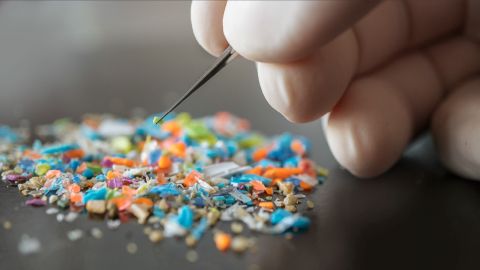

Microplastics_USFDA_480.jpg

Some evidence suggests that MNPs are entering the food supply, primarily through the environment. (Source: USFDA)


The Verdict: We need harmonization, not Isolation


The circular economy cannot succeed in a regulatory vacuum. To prevent regional market fragmentation, global standards are non-negotiable.


The FAO’s confirmation that the Codex Alimentarius Commission (CAC) is actively developing global food safety guidelines for recycled plastics is an important step toward realizing the full potential of recycled and alternative FCMs while safeguarding consumer health.


From an industry perspective, one key direction toward true progress is to standardize global testing metrics and build a global reference database of approved FCM chemicals organized by resin codes.


Download the full report “Food Safety Implications of Recycled Plastics and Alternative Food Contact Materials”: https://openknowledge.fao.org/items/61e5777f-b3fc-40df-b18b-5799fe37585b


 Like 丨  {{details_info.likes_count}}
Bioplastic
Food Packaging
Food
Recycled plastics
 DONGGUAN DEHUA PRECISION MOLD CO., LTD      
 HENAN TENGYUE MACHINERY TECHNOLOGY CO.,LTD.      
 ZHANGJIAGANG XINRONG MACHINERY CO.,LTD      
 NANJING SAGE ADVANCED MATERIALS CO.,LTD      
 HEFEI TAIHE INTELLIGENT TECHNOLOGY GROUP CO.,LTD.      
 TIANJIN PENGFEI PACKAGING PRODUCTS CO., LTD      
 WUHAN CHANGXIN PLASTIC MACHINERY CO.,LTD.      
 QINGZHOU MACRO SECCO PACKAGING MATERIALS CO., LTD.      
 GUANGDONG GUOHENG YOUHE ADVANCED MATERIALS CO., LTD.      
 KADIDE      
 Shantou Bond Machinery Co., Ltd.      
 HUIZHOU LITUO ADVANCED MATERIALS CO.,LTD.      
 XIAMEN XINWANCAI POLYMER TECHNOLOGY CO.,LTD      
 ANHUI ZHONGXIN HONGWEI TECHNOLOGY CO.,LTD      
 WENZHOU DETAI PLASTICS CO., LTD      

The content you're trying to view is for members only. If you are currently a member, Please login to access this content.   Login

Source:Adsale Plastics Network Date :2026-06-01 Editor :VC
Copyright: This article was originally written/edited by Adsale Plastics Network (AdsaleCPRJ.com), republishing and excerpting are not allowed without permission. For any copyright infringement, we will pursue legal liability in accordance with the law.

For the food packaging sector, the transition to a circular economy is no longer a theoretical debate—it is an operational reality dictated by strict brand mandates and aggressive legislative targets. However, a recent report by the Food and Agriculture Organization of the United Nations (FAO), titled Food Safety Implications of Recycled Plastics and Alternative Food Contact Materials, injects a harsh dose of technical reality into this green transition.


The takeaway is clear: in our rush to satisfy circularity targets, we risk compromising chemical food safety. To safely scale recycled Food Contact Materials (FCMs) and bio-based alternatives, the industry must move past sustainability rhetoric and confront a complex matrix of chemical risks, data gaps, and regulatory frameworks.


FAO_report cover_r_480.jpg

The report “Food Safety Implications of Recycled Plastics and Alternative Food Contact Materials”, released by the Food and Agriculture Organization of the United Nations (FAO).


FAO_480.jpg

The FAO is a specialized agency that leads international efforts to defeat hunger and achieve food security.


What are the primary chemical risks associated with recycled FCMs?


The core risk stems from the inherent volatility of post-consumer waste streams. Unlike predictable, high-purity virgin polymers, recycled plastics introduce a complex chemical matrix with migration risks posed by contaminants associated with Intentionally Added Substances (IAS) and Non-Intentionally Added Substances (NIAS).


Even within regulatory-approved recycling loops, systemic vulnerabilities lead to major contamination. These include:

- Industrial stream mixing of food-grade and non-food-grade plastics due to poor control.

- Post-consumer misuse, such as consumers using food containers to store household chemicals.

- Process degradation, which introduces new NIAS during recycling.


Furthermore, the degradation products of IAS, such as surfactants, coatings, lubricants, antioxidants, and thermal stabilizers, can also be subjected to migration from recycled plastics.


Studies cited by the FAO show that recycled FCMs can release higher quantities of harmful heavy metals, brominated flame retardants, persistent organic pollutants (POPs), and phthalates compared to virgin materials.


Recycled bottle_FAO_480.jpg

The new FAO report discusses safety considerations for recycled FCMs. (Source: FAO)


How can packaging converters mitigate these chemical migration risks?


Recycled plastics producers can no longer assume feedstock uniformity. To manage this volatility, quality assurance must move upstream. Brands must implement stringent incoming material testing protocols to profile chemical batches before they hit the production floor.


One pragmatic engineering solution highlighted by the report is functional barrier design. By sandwiching recycled polymers behind a layer of high-purity virgin plastic or a specialized barrier coating, packaging converters can physically block the chemical migration.


However, this introduces an economic and philosophical dilemma: does adding virgin layers defeat the ultimate goal of 100% recycled packaging? 


Food packaging_FAO_480.jpg

What is your take on shifting to circular food pcakaging? (Source: FAO)


Are bio-based packaging materials a safer alternative to recycled plastics?


No, renewable materials are not a silver bullet. The FAO report rightly cautions that bio-based alternatives introduce unique, highly complex chemical risks tied directly to the biological source material itself.


Natural plant fibers containing cellulose, hemicellulose, and lignin have been widely used as raw materials in the production of FCMs. In a study on plant‑based FCMs collected on the Dutch market, a gas chromatography‑mass spectrometry screening revealed the presence of plant extractable plasticizers, antioxidants, hydrocarbons and various metals, including lead and mercury.


Biomaterials bring an entirely different class of contaminants associated with NIAS to the kitchen table:

- Agricultural residues like pesticides and herbicides.

- Natural biological hazards including persistent natural toxins and allergens.


How can the industry evaluate unknown packaging contaminants?


Specific chemical migration limits, based on structural properties linked to toxicity, can help assess migrating substances when hazard data are scarce.


However, toxicological information for some FCM substances, especially NIAS, can be limited or inconsistent. To bridge this data gap, the FAO champions the Threshold of Toxicological Concern (TTC) approach as a pragmatic risk-screening tool for chemicals that may migrate from both virgin and recycled plastics.


The TTC approach assumes that reasonable assurance of safety can be achieved without chemical-specific data if dietary exposure is sufficiently low, and it is already used by regulatory agencies, including the USFDA, in evaluating FCMs.


The FAO further urges more research to clarify hazard profiles and establish migration thresholds for NIAS and contaminants in recycled FCMs. Continued development of reference databases and analytical tools for identifying IAS and NIAS in migration studies is also needed to improve acceptance of recycled plastics.


Food packaging safety_FAO_480.jpg

It is important to continously conduct research on NIAS and contaminants in recycled FCMs. (Source: FAO)


Do mechanical recycling practices contribute to the microplastic crisis?


Yes. Micro- and nanoplastics (MNPs) are not exclusive to recycled plastics but are possible byproduct of mechanical recycling practices. The physical shredding and size-reduction phase, combined with prior environmental weathering, accelerate MNP formation.


Polymers such as PET, PS, PP, and PE are highly susceptible to mechanical abrasion and thermal stress. Recent studies suggest that they can directly release MNPs from packaging materials into food and beverages.


Furthermore, nanomaterials are incorporated into packaging polymers to enhance key performance characteristics, such as strength, durability, flexibility, barrier properties, and overall service life. As IAS, these materials should undergo a premarket safety assessment before use.


Microplastics_USFDA_480.jpg

Some evidence suggests that MNPs are entering the food supply, primarily through the environment. (Source: USFDA)


The Verdict: We need harmonization, not Isolation


The circular economy cannot succeed in a regulatory vacuum. To prevent regional market fragmentation, global standards are non-negotiable.


The FAO’s confirmation that the Codex Alimentarius Commission (CAC) is actively developing global food safety guidelines for recycled plastics is an important step toward realizing the full potential of recycled and alternative FCMs while safeguarding consumer health.


From an industry perspective, one key direction toward true progress is to standardize global testing metrics and build a global reference database of approved FCM chemicals organized by resin codes.


Download the full report “Food Safety Implications of Recycled Plastics and Alternative Food Contact Materials”: https://openknowledge.fao.org/items/61e5777f-b3fc-40df-b18b-5799fe37585b


全文内容需要订阅后才能阅读哦~
立即订阅

Recommended Articles

Packaging
Circularity paradox: Why FAO's new report is a wake-up call for food packaging
 2026-06-01
Packaging
Asahi Kasei develops photosensitive PI film for advanced semiconductor packaging
 2026-05-22
Packaging
ExxonMobil develops high-performance vacuum skin packaging formulations
 2026-05-20
Packaging
Tetra Pak launches industry-first 1-litre aseptic carton with paper-based barrier
 2026-05-19
Packaging
Sustainable powder detergent packaging with 50% PCR content
 2026-05-19
Packaging
Amcor launches 38 mm carry handle for PET containers
 2026-05-15

You May Be Interested In

Change

  • People
  • Company
loading... No Content
{{[item.truename,item.truename_english][lang]}} {{[item.company_name,item.company_name_english][lang]}} {{[item.job_name,item.name_english][lang]}}
{{[item.company_name,item.company_name_english][lang]}} Company Name    {{[item.display_name,item.display_name_english][lang]}}  

Polyurethane Investment Medical Carbon neutral Reduce cost and increase efficiency CHINAPLAS Financial reports rPET INEOS Styrolution Evonik Borouge Polystyrene (PS) mono-material Sustainability Circular economy BASF SABIC Multi-component injection molding machine All-electric injection molding machine Thermoforming machine

Circularity paradox: Why FAO's new report is a wake-up call for food packaging

识别右侧二维码,进入阅读全文
下载
x 关闭
订阅
亲爱的用户,请填写一下信息
I have read and agree to the 《Terms of Use》 and 《Privacy Policy》
立即订阅
Top
Feedback
Chat
News
Market News
Applications
Products
Video
In Pictures
Specials
Activities
eBook
Front Line
Plastics Applications
Chemicals and Raw Material
Processing Technologies
Products
Injection
Extrusion
Auxiliary
Blow Molding
Mold
Hot Runner
Screw
Applications
Packaging
Automotive
Medical
Recycling
E&E
LED
Construction
Others
Events
Conference
Webinar
CHINAPLAS
CPS+ eMarketplace
Official Publications
CPS eNews
Media Kit
Social Media
Facebook
Linkedin