











Wickert cleanroom presses empowers pharmaceutical & medical packaging

Wickert Maschinenbau is experiencing a significant increase in demand for specialized hydraulic presses for elastomer processing in cleanrooms.
These systems are primarily used for producing closure systems for pharmaceutical packaging, in the manufacturing of bipolar plates for fuel cells, and for seals and machine components in semiconductor production.
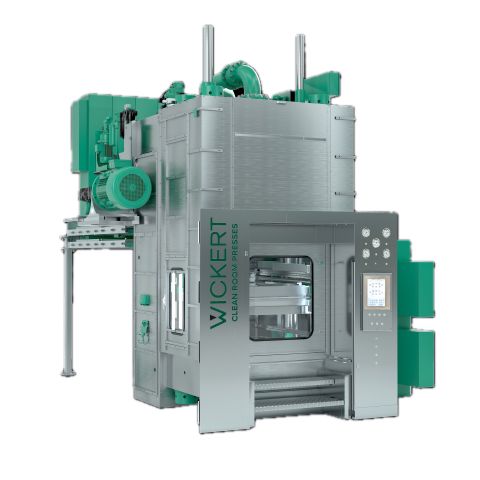
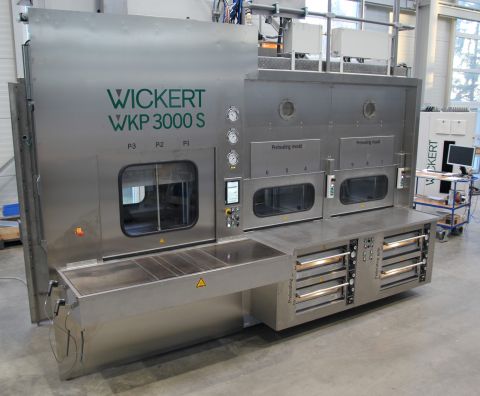
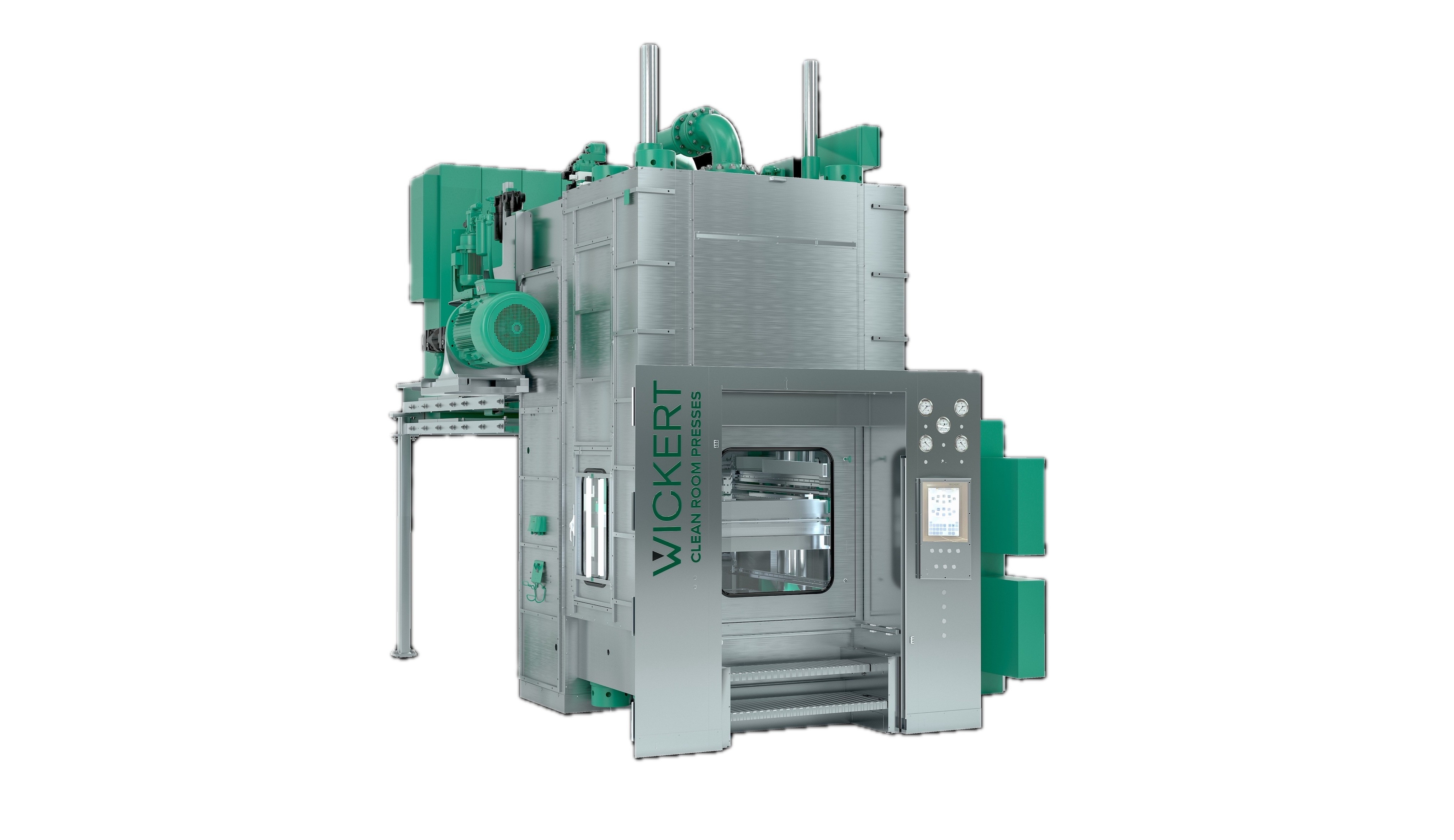
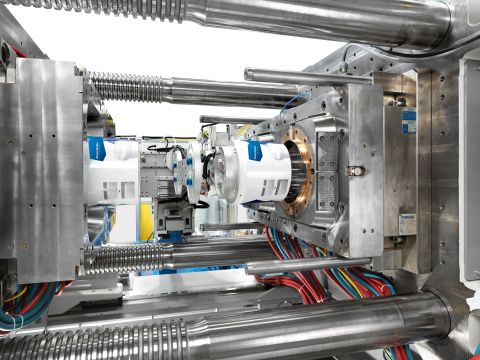
Wickert’s hydraulic presses for cleanrooms.
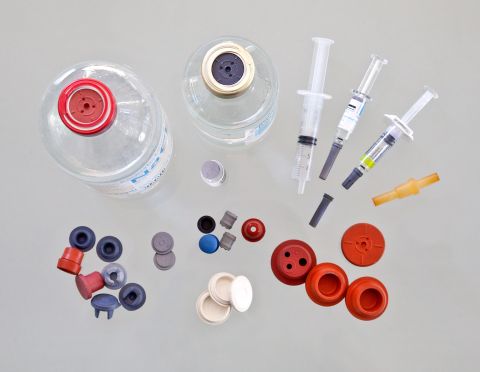
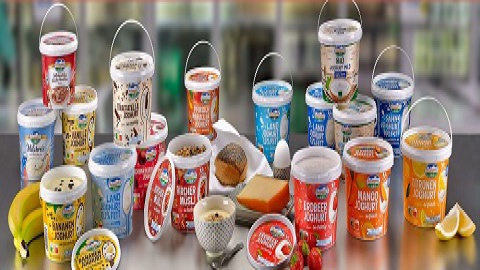
Wickert’s cleanroom presses are primarily used for producing closure systems for pharmaceutical packaging.
Customized solutions from Wickert
Wickert’s hydraulic presses for cleanroom presses meet the most stringent demands for accuracy, temperature homogeneity, and process reliability in sensitive applications. In addition, they are designed to enable precise elastomer processing in cleanrooms up to air cleanliness class 6 according to ISO 14644-1.
Wickert designs and manufactures its systems predominantly as customized machines or in very small series according to customer requirements. Thanks to their modular design, they can be configured in a wide variety of ways.
They achieve processing temperatures up to 500°C, press forces up to 100,000 kN, and parallelism tolerances of 0.025 mm/m. For the vulcanization of sensitive compounds, vacuum chambers with up to 990 mbar vacuum are used. This prevents air inclusions even with complex geometries and optimizes material utilization of costly compounds.
A central criterion is uniform temperature distribution in the mold. Modern multi-zone controls and closed-loop systems ensure that temperature deviations greater than ±1 K are avoided.
At typical processing temperatures up to 230°C, exceeding these tight tolerances can negatively affect vulcanization and lead to rejects. Absolute control of these key performance indicators guarantees consistently reliable quality.
Fully enclosed systems
The completely enclosed presses, clad in stainless steel, integrate seamlessly into cleanroom concepts. The use of auxiliary and lubricating agents is avoided wherever possible. Moving parts of the machines are designed so that no lubricants or auxiliary agents can escape, achieved with high-quality sealing and wiper systems.
The maintenance area, known as the grayroom, and the production area inside the cleanroom are strictly separated to prevent contamination. Hydraulic pumps, control cabinets, and electronic systems are located at the rear of the press, while the cleanroom side, where the compounds are processed, is reserved exclusively for production.
The interior design of the press meets all requirements for easy cleaning, avoiding undercuts and dead corners where potential contaminants could accumulate.
Automation reduces particle load
Half of new systems from Wickert process partially or fully automated. Magnetic clamping plates enable rapid tool changes of ferromagnetic molds within minutes. Systems for automated release agent application ensure reproducible and consistent processes. This step takes place in the closed press area, and integrated aerosol extraction reliably prevents spray mist from contaminating the production space.
Mirrored human-machine interfaces (HMIs) on both the grayroom and cleanroom sides further reduce particle entry. This allows setup personnel to perform all necessary tasks during mold changes from the grayroom.
Monitoring according to GMP standards
Modern systems use KPIs and quality gates to detect faulty process parameters at an early stage. All relevant data is securely documented in accordance with Good Manufacturing Practice (GMP).
An access-level matrix ensures that only authorized personnel can make changes to machine or recipe data. The “audit trail” function additionally records and logs all operator actions.
More automation in the future
Wickert expects major advances in AI-assisted process monitoring and energy efficiency in the coming years. Thanks to smart setup concepts, automation is becoming increasingly economical even for small batch sizes.
With continuous innovations and numerous retrofit options for existing systems, Wickert expects that hydraulic presses for elastomer processing under cleanroom conditions will continue to play a key role in the future.