











Wacoal and BASF expand “Melooop” 3D fiber molding technology to automotive interior

Wacoal and BASF extends their collaboration into automotive interior applications with an armrest concept model that highlights the potential of Wacoal’s “Melooop” 3D fiber molding technology and BASF’s Elastollan TPU for lightweight, comfort-focused interior components with enhanced design freedom.
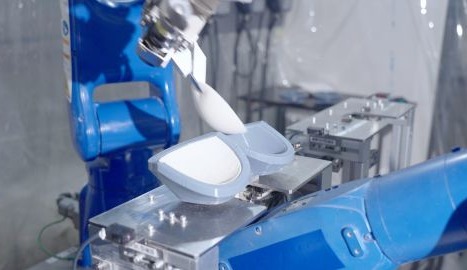
The two companies demonstrate the 3D fiber-based manufacturing for automotive components through an armrest concept model, highlighting mono-material design and adhesive-free structure enabled by Wacoal’s “Melooop” technology.
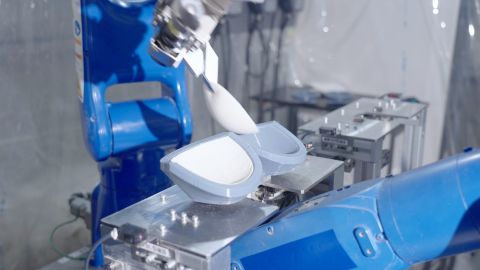
Mono-material design and adhesive-free structure enabled by Wacoal’s Melooop technology.
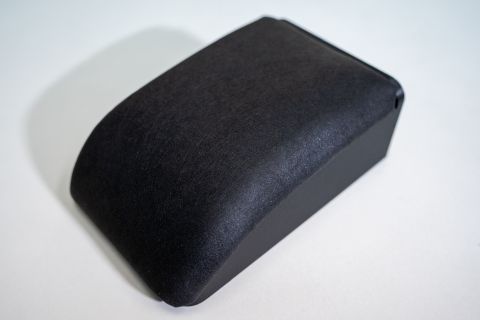
The armrest concept model developed with Wacoal’s Melooop technology and BASF’s Elastollan TPU.
“Together with BASF, we are excited to extend the potential of our ‘Melooop’ technology beyond apparel into automotive interior applications,” said Tsuyoshi Kumura, Corporate Officer, Head of Melooop Project Office, New Business Development Office and New Business Development Division at Wacoal.
Melooop: 3D fiber molding for simpler production and higher design freedom
Melooop is a proprietary three-dimensional fiber molding technology developed by Wacoal. Using a melt-blown nonwoven process, it forms and layers fibers simultaneously, enabling complex 3D structures to be created in a single step without adhesives or multi-layer assembly.
This integrated approach reduces manufacturing steps, simplifies production, and minimizes material usage and waste, supporting lower environmental impact. It also enables mono-material design for improved recyclability.
In addition, Melooop allows designers to adjust thickness and material properties early in development, helping to optimize the balance between weight, performance, and durability for automotive applications.
Elastollan TPU: Mono-material designs with flexibility and structural integrity
Elastollan TPU enables the Melooop process by combining thermoplastic processability with elastomeric performance, allowing the formation of 3D-fiber structures that deliver both flexibility and structural integrity while supporting the mono-material designs that can simplify product design and manufacturing.
For occupant-contact surfaces such as armrests, this approach combines elastic recovery under repeated loading – ensuring long-term dimensional stability – with soft-touch performance and a robust processing window for fiber formation and bonding.
“With our expertise in material innovation and extensive experiences in automotive applications, we are pleased to partner Wacoal in exploring new concepts and bringing innovation into new industries,” said Rohit Roop Ghosh, Vice President, Business Management TPU, Performance Materials Asia Pacific, BASF.