
















5 insights: How Chinese chemical companies unlock surging profits

Five Chinese chemical companies have reported very positive financial results in H1 2026. Are these surging profit results a reflection of the overall recovery of the chemical industry, or just rare cases of several leading companies?
Systematic recovery of the chemical industry
To answer this question, it is important to clarify one thing – in H1 2026, the overall chemical industry is in recovery stage:
The China Chemical Products Price Index (CCPI) showed a rise from 3903 points in January 2026 to 4916 points in end of May 2026, which growth rate reaches 25.09%.
China’s chemical raw material and product manufacturers also reported a 73.4% growth compared to same period last year.
These prove that the whole industry is undergoing a systematic recovery rather than just a structural growth in specific areas.
The recovery is mainly based on two aspects:
Production capacity clearance from supply end: With investments in expanding production capacity during 2022-2025, the chemical industry sees the end of expansion in the second half of 2025. China’s “Dual Carbon” regulations and the industry’s actions to go against internal destructive competition have led to reduced production expansion in PTA and silicone, resulting in the industry’s improved bargaining power.
Price transmission from cost end: Since March 2026, US-Iran conflict has pushed the international crude oil price. Average price of Brent crude oil in Q2 2026 reached US$99/Bbl, a 48.4% QoQ rise. With such limited supply background, the increased cost is transmitted. Growth rate of product price exceeds growth of cost, widening the price difference.
While these two reasons form the shared base of the overall recovery in China’s chemical industry, the profit growth of individual companies are accelerated by some of their business strategies. Let’s take a closer look into these strategies.
Hengyi Petrochemical: Overseas refining project
Hengyi Petrochemical has an estimated profit of RMB 5.5-6.0 billion in H1 2026, a 2326-2547% HoH increase. This is mainly led by the company’s refinery project in Brunei.
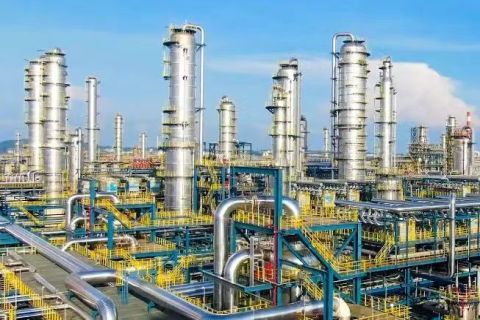
Hengyi Petrochemical
Hengyi Petrochemical is the only synthetic fiber company in China with refinery overseas. Its refinery in Brunei enjoys tax incentive, market-oriented pricing, and low transportation insurance fee.
Furthermore, the company’s 1.2 million-tons nylon 6 integrated project (first phase) is equipped with multiple in house-developed technologies, pushing its productivity and sales.
When the capacity of local refineries goes towards saturation and profit is limited, chemical companies should consider expanding to overseas countries with less capacity to gain profit from regional price difference.
Satellite Chemical: A different raw material routing
Satellite Chemical’s net profit of H1 2026 is estimated to be RMB 6-7 billion, a 118.68%-155.13% HoH growth. The company’s core advantage is a different choice on raw material routing.
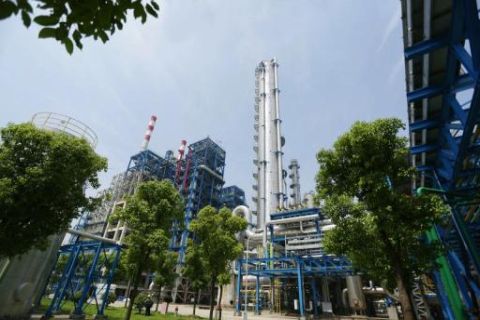
Satellite Chemical
The company adopts ethane cracking routing. The advantage: Ethylene yield is up to 80% with energy consumption only one-third of naphtha cracking. Most importantly, the company’s ethane purchase price is pegged with natural gas price in the US, instead of pegging with crude oil price.
Since crude oil price surges in H1 2026, the cost of traditional naphtha routing significantly rises. This serves as a cost advantage for Satellite Chemical. The company also targets on key export facilities in the US and self-built VLEC team to secure raw material supply and transportation cost.
This case provides an inspiration for chemical industry to make different choices on raw material routing, which guards the company through cyclical fluctuations. Building a structural cost advantage in raw material end is key for company to overcome industry fluctuation.
Eastern Shenghong: Integrated refining for scaling effect
Eastern Shenghong earned an estimated net profit of RMB 4.2-5 billion in H1 2026, a 987-1195% HoH increase.
With integrated refining operation, Eastern Shengdong flexibly adjusts its downstream product portfolio. The company is also one of the very few Chinese companies equipped with Alkene production, Methanol-to-Olefins (MTO) technology, and Propane Dehydrogenation (PDH) technology.
This implies that Eastern Shenghong has more flexible cost decision on raw material routing if there is fluctuation in price of crude oil, coal, and natural gas.
The company’s advanced material business also contributes to its growth. The company’s 900,000 tons/yr EVA capacity and 100,000 tons/year POE capacity will bring business growth as demands from photovoltaic industry continuously increase.
Huafon Chemical: Expanding capacity pushes both quantity and price
Huafon Chemical has an estimated net profit of RMB 1.68-2.08 billion in H1 2026, a HoH growth of 71-112%. Even though the data is not the most impressive ones, the company proves that one of the growth causes that is often underestimated – the deployment time of new capacity.
The company’s 25,000-tons engineered spandex project has started operation. As the industry recovers, the new production capacity meets full production and sale in high-price period, bringing increased profit and scalable expansion.
Dongyue Silicone Material: Reducing cost + less internal destructive competition
Dongyue Silicone Material reported an estimated net profit of RMB 424-444 million in H1 2026, a 905-952% HoH growth. Since 2022, the silicone industry has been in a downturn, some companies even face deficit.
In 2025, the industry started actions to go against internal destructive competition with stricter implementation, which promotes the stable price rise of silicone DMC. At the same time, the purchase price of silicone raw material decreases. With reduced cost and increased product price, Dongyue Silicone Material has gained profit.
Conclusion
The profit surge of leading Chinese chemical companies in H1 2026 is a result from improved industry supply & demand, geopolitical issues, and company’s strategical planning.
This is not merely caused by price cycle, but a reformed structure of industry competition – covering overseas business, different raw material routing, integrated scaling effect, and niche segments.
Therefore, instead of only focusing on price change, companies have to consider more on differentiating own sourcing, technology, and production from others to push its sales and profit.