















Liqcreate launches biocompatible flexible resin for medical 3D printing

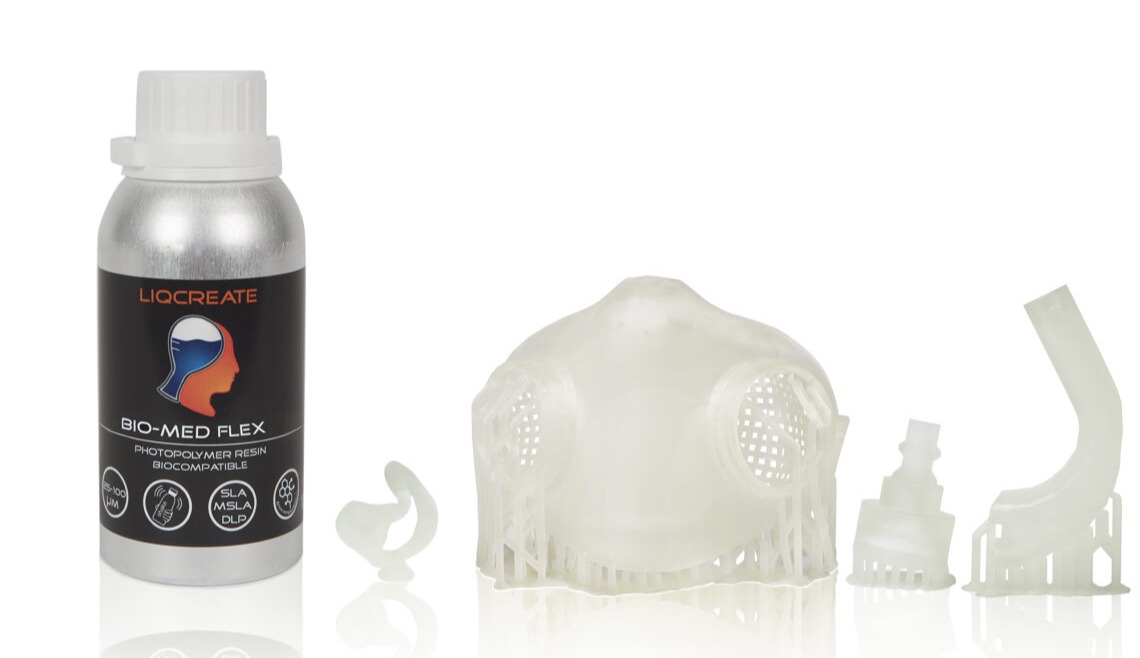
Liqcreate, an independent Dutch manufacturer of photopolymer materials, has released Liqcreate Bio-Med Flex, a clear flexible resin designed for medical and biomedical use on DLP, LCD, and laser‑based 3D printers.
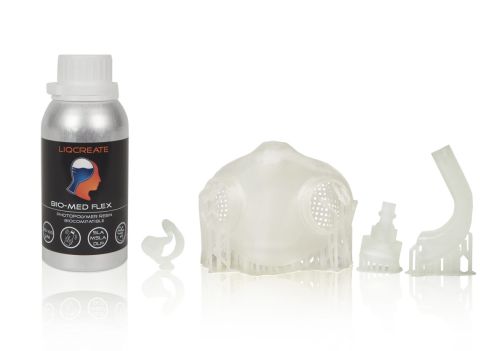
Liqcreate Bio-Med Flex for medical and biomedical 3D printing.
The material is formulated for applications that require softness, durability, and biocompatibility, making it suitable for components that come into contact with skin.
Liqcreate Bio-Med Flex follows the successful launch of Liqcreate Bio‑Med Clear, the rigid biocompatible variant that has been established in the market for several years.
Combining elasticity with mechanical stability
With a tensile strength of 5.0 MPa and an elongation at break between 180 and 250 percent, the material can stretch significantly while maintaining shape. Its Shore A hardness of 73 provides a balance between softness and structural integrity, allowing parts to bend repeatedly without cracking or tearing.
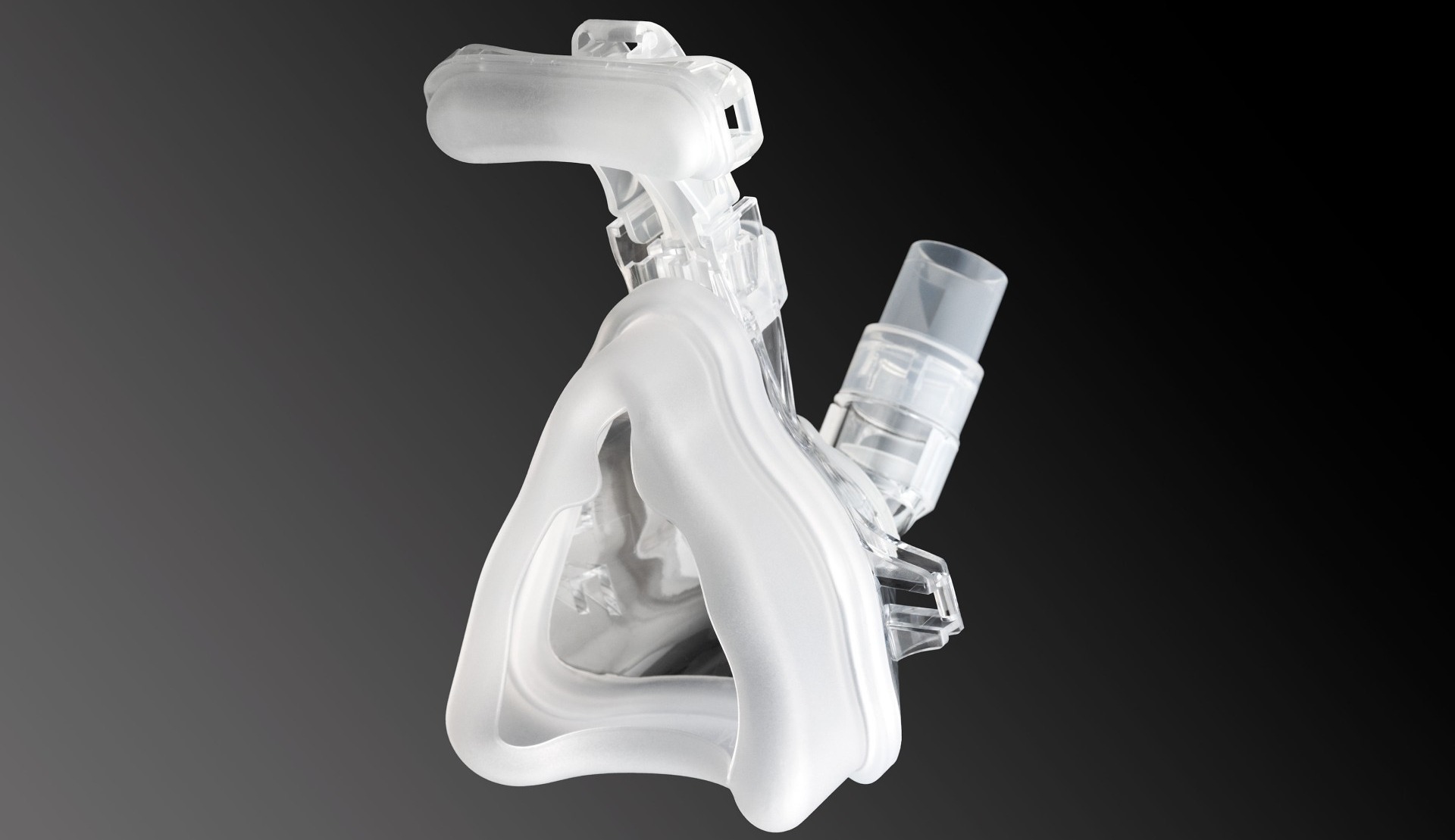
Tear strength values between 20 and 28 kN/m further support applications where resistance to ripping is essential. These characteristics make the resin suitable for flexible connectors, soft‑touch anatomical models, biomedical test components, and other parts that must retain form while remaining pliable.
The resin’s clear appearance and stable polymer network support applications ranging from soft biomedical prototypes, wearables, flexible anatomical models, sterilizable lab tools and soft fixtures.
Meeting stringent requirement for biomedical applications
Bio‑Med Flex was developed to meet the growing demand for flexible medical components that can be disinfected, sterilized, and handled safely in clinical workflows.
The resin has been externally validated according to ISO 10993‑5:2009, ISO 10993‑10:2021, and ISO 10993‑23:2021, confirming that printed parts can pass cytotoxicity, sensitization, and irritation testing when processed through the validated workflow.
Compatible with broad open-material 3D printers
Bio‑Med Flex works on a wide range of open‑material 3D printers, including systems from Asiga, Elegoo, Anycubic, and Phrozen, as well as other DLP, LCD, and SLA platforms within the 385–405 nm range. Its viscosity of 850 mPa·s and consistent cure parameters support layer formation and predictable print behaviour.
Liqcreate continues to validate additional print profiles and publishes them on its website as new systems are qualified.