








TIANLI MAGNET: From magnetic separation to dry flotation for mixed metal recycling

After scrap steel is crushed, magnetically separated, and eddy-current separated, sorting is not finished. The remaining residue often contains metals of different particle sizes and densities. Fine particles and mixed metals exceed the capability of conventional sorting equipment.
The question becomes: can material that has already been sorted once be sorted further?
TIANLI MAGNET has focused on magnetic separation, iron removal, non-ferrous metal sorting, and intelligent sorting equipment since 2006. Its product range covers magnetic separation, iron removal, eddy current, sensor recognition, AI, X-ray, fluorescence, and laser-induced sorting.
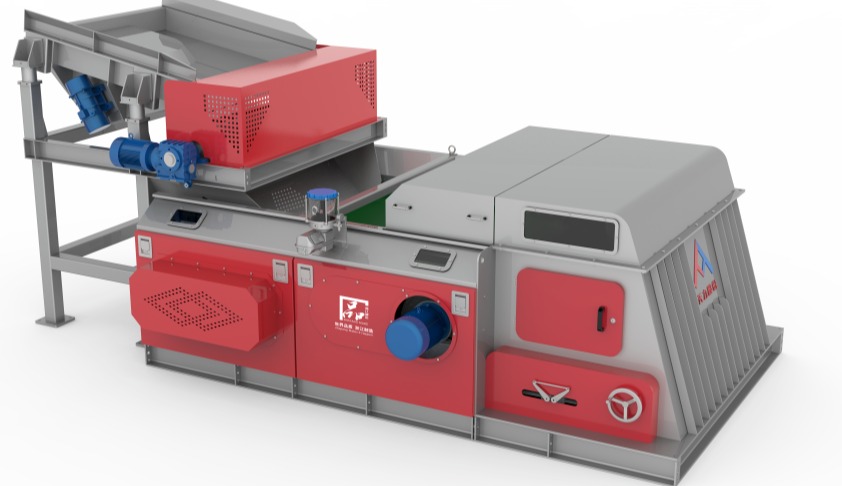
Eccentric eddy current separator
In shredder residue, bottom ash, and recycled aluminum, ferromagnetic metals can be recovered by magnetic separation, but aluminum and copper remain.
TIANLI's eccentric eddy current separator uses an eccentric magnetic roller design with a large magnetic wrap angle, vibrating feeder, and baffle adjustment, integrating multiple structures into one machine. Compared with concentric structures, the eccentric roller aligns the magnetic field action zone with the material flow more effectively. Non-ferrous metals generate repulsive force under eddy current, creating trajectory differences from non-metallic material and enabling separation.
Applications: scrap steel shredder residue, bottom ash, recycled aluminum, and other non-ferrous-containing mixed materials. For recycling companies, eddy current separation's value is not just separating aluminum but raising non-ferrous recovery rate and material purity after front-end iron removal.
Fine particle separator
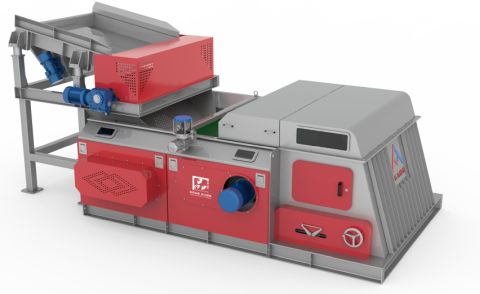
After crushing and front-end sorting, material particle size decreases. Fine material is difficult: small particles, high mixing, and increasing separation difficulty between different metals.
TIANLI's TLXF fine particle separator targets fine material after crushing, mixed metal residue, and small-particle recovery in profile aluminum and housing aluminum production lines. The equipment addresses material after crushing and sorting rather than large front-end material. For recycling companies, residue after front-end sorting still contains recoverable metals. Processing small-particle material allows additional purification and recovery.
Electromagnetic sensor separator
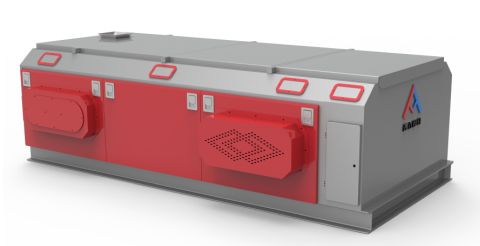
As material becomes more complex, conventional mechanical sorting is not always sufficient. Mixed waste may contain metals and non-metals, metal particles vary in size, and some materials cannot be distinguished by magnetic or conductive properties alone.
TIANLI's TLCG electromagnetic sensor separator uses high-sensitivity sensors to detect material. After identifying metal particles, compressed air nozzles separate target material from the flow. Unlike mechanical sorting, the equipment performs detection, judgment, and separation continuously in an automated system.
TIANLI's intelligent sorting range also covers AI sorting, X-ray sorting, fluorescence sorting, and laser-induced sorting. Different technologies correspond to different recognition methods, allowing the equipment to handle more varied material. When one method cannot solve a problem, technology routes can be changed or combined.
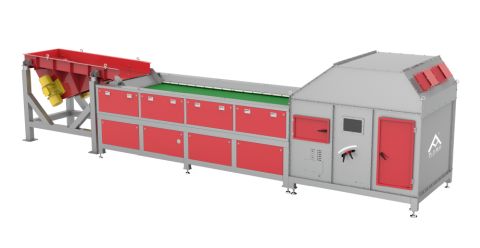
Dry flotation
Conventional flotation uses water and density differences. For scrap steel eddy current residue and Zorba mixed metals, wet processes add water use and wastewater treatment.
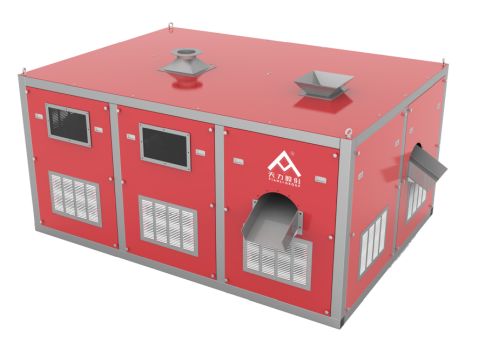
TIANLI's TLFS(D) dry flotation machine uses air-flow fluidized density layering. Material density differences form the separation basis. The process uses no water and produces no conventional wet flotation wastewater. Metal particles of different densities stratify under airflow, and density differences complete separation.
For recycling companies, less water means fewer water and wastewater treatment steps, and simpler downstream material handling.
About the CRRE exhibitor
TIANLI is a national high-tech enterprise and Zhejiang Province specialized and sophisticated enterprise. It has long-term cooperation with Chinese universities and research institutes, holds multiple invention patents and dozens of utility model patents, and holds self-operated import and export rights. Products are sold across China and exported to over 30 countries and regions.
Booth: B1A33
About CRRE
CRRE is positioned as a national-level platform, with deep integration across the whole chain and broad international collaboration. It adopts a “summit forum + physical exhibition” dual-engine model. It is committed to building the first five-in-one super hub for resource-circulation in the Asia-Pacific region, covering: recycling – reprocessing – high-value applications – green finance – international rules.
Preregistration:
https://reg.crre-expo.com/CRRE/visitor-registration/eng?Regsource=RAZ23777