





















LiDAR systems for automobiles: Latest market trends and production

LiDAR (Light Detection and Ranging) sensors are one of the key technologies for highly automated, fully automated and autonomous driving. With camera and radar sensors, the LiDAR sensors perceive the surroundings, detect obstacles, measure distances and thus ensure safety in road traffic.
A major advantage of LiDAR sensor technology is it provides real-time image understanding and environmental sensing capabilities – it offers more comprehensive and detailed image of the entire vehicle environment and essential information for object detection and collision avoidance, even in adverse weather conditions.
Yole Intelligence: China drives the market growth
Although LiDAR market is comparatively small compared to the booming camera market, forecasts show that production volume for LiDAR systems starts to grow.
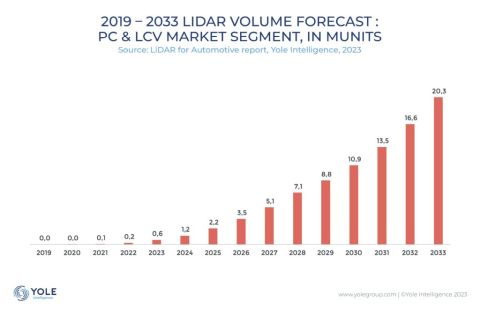
Yole Intelligence report on LiDAR forecasts an increasing trend on production volume.
According to Yole Intelligence, 600,000 vehicles are expected to be equipped with LiDAR by 2023. The products mainly come from manufacturers such as Valeo, Innovusion, Hesai, RoboSense or Huawei, which are already producing LiDAR systems in initial series.
In 2024, the one million mark is likely to be exceeded by far due to the rapid development in China. By Q3 2023, 36 Chinese OEMs will launch vehicles with one or more LiDAR systems.
As a result of the rapid development and increase in production volumes, manufacturers are faced with the challenge of developing and implementing new automated production and testing solutions for LiDAR modules.
TRIOPTICS: From lab to mass production
TRIOPTICS’ equipment achieves maximum output and production speed, allowing production of over one million sensors per year. The optical metrology specialist has recently worked on a lighthouse project for a global automotive supplier of driver assistance systems. The project involves the construction of an automated line for the production of solid-state LiDAR modules that work according to the time-of-flight principle.
At the project’s beginning, the customer brought a developed prototype and a manual laboratory set-up to produce the LiDAR system. With help from TRIOPTICS, the prototyping process has to be transferred to automated series production with the highest precision and production speed.
The production line, which was then developed based on the specifications, includes the following innovative processes and stations:
Loading with trays: emitter & receiver printed circuit board (PCB) with housing, as well as objective lenses,
Barcode scanning for traceability,
Plasma cleaning,
Glue dispensing,
Optical alignment,
UV curing of the glue,
Oven curing.
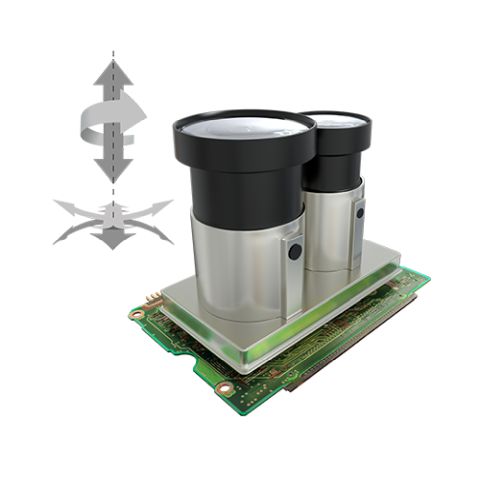
Optical alignment of optic and sensor.
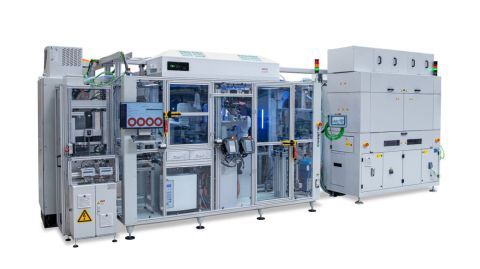
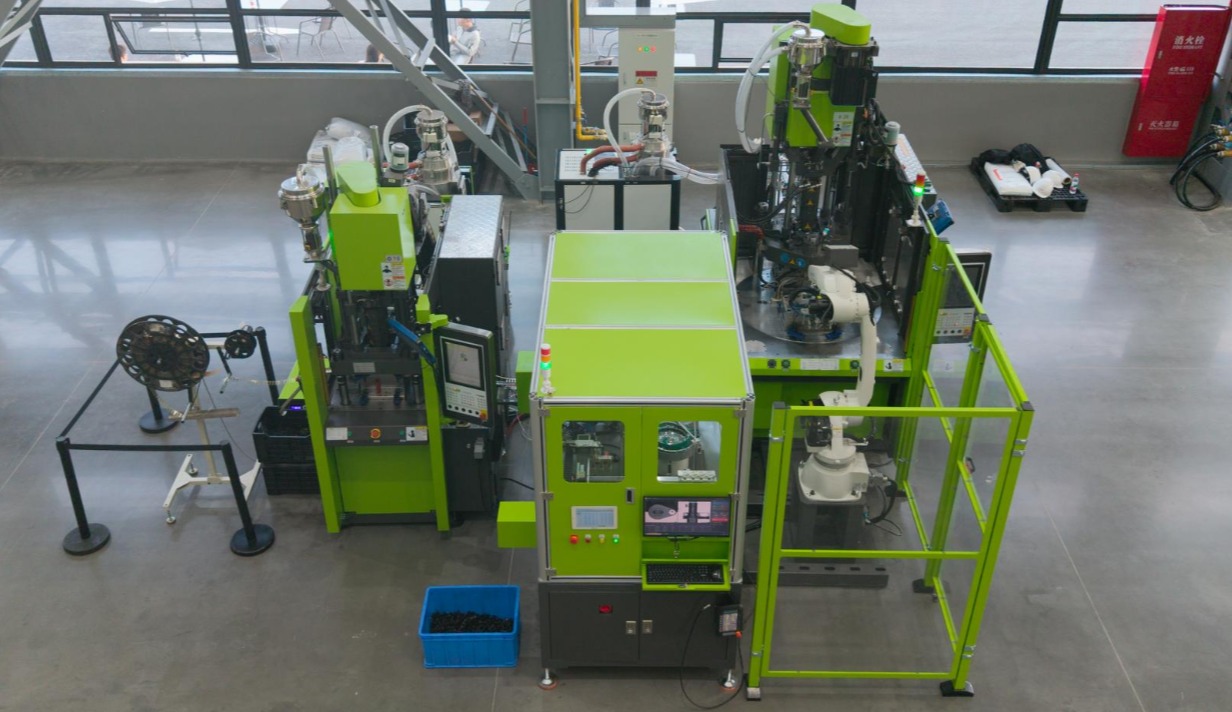
Alignment station for automotive LiDAR sensors.
Besides the assembly processes, the production system also covers necessary end-of-line tests that check the performance and quality of the manufactured LiDAR components:
Testing of lens position,
Simulation of an object distance at 100 meters to check the accuracy of the beam path from emitter to receiver,
Lens positioning test to the emitter and receiver chip respectively,
Walk error check by means of a test chart showing three different levels of reflectivity.