














Indonesia’s packaging and automotive sectors boost demand for plastics

Triggered by the expansion of industrial sector, Indonesia’s demand for plastics spurred in recent years. According to the Growth Market Reports, Indonesia’s plastics market size was valued at US$8.63 billion in 2022 and is likely to reach US$14.58 billion by 2031, expanding at a CAGR of 6% during the forecast period 2023-2031.
Among several important industries which are crucial to Indonesia’s plastics industry, packaging, automotive and medical sectors are experiencing rapid development.
Circularity commitment driving packaging sector
Indonesia’s packaging industry remains the major application of plastics. A report of Global Data stated that the country’s packaging market size, valued at 151.3 billion units in 2022, is expected to achieve a CAGR of more than 3% during the period 2022-2027, with flexible packaging segment dominating the market share until 2027.
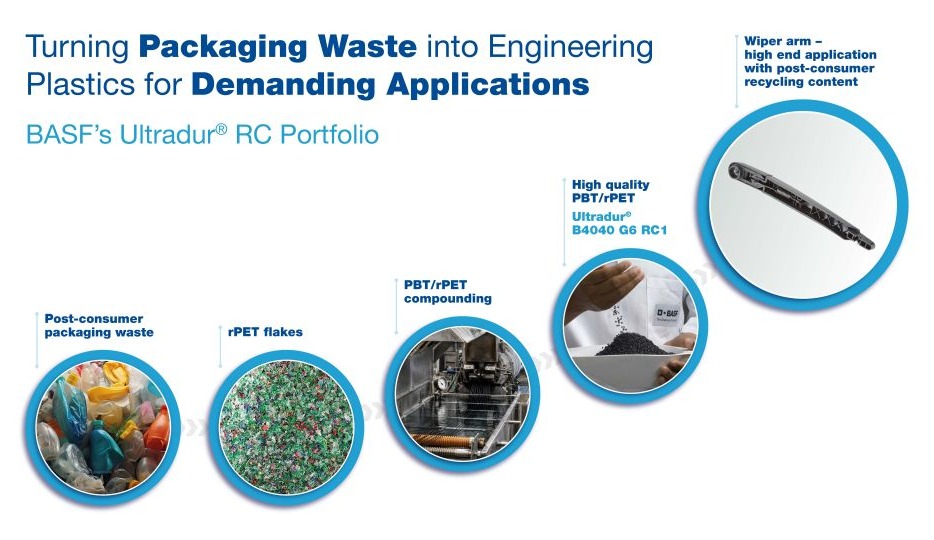
Due to the Indonesia’s government placing circular economy as the main focus for the long-term national development plan, companies have greater incentive to supply advanced recycling solutions and sustainable materials.
Coca-Cola in Indonesia launched new packaging made by 100% recycled PET (rPET), excluding caps and labels. It also operates a recycling plant in Cikarang.
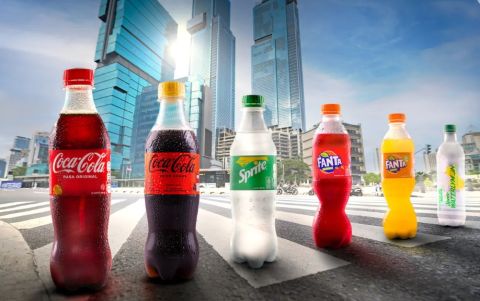
Coca-Cola in Indonesia launched new packaging made by 100% rPET. (Source: Coca-Cola Indonesia)
Indonesia plastic recycler, Pan Era Group and Millikken & Company, signed a partnership agreement to combine Pan Era Group’s expertise in the collection and production of recycled PP plastic resin with Milliken’s additive technology solutions.
BASF invested in the capacity expansion of polymer dispersions at its Merak production site, with the aim to fulfil the growing demand for acrylics and styrene-butadiene dispersions. CJ BIO also manufactures polyhydroxyalkanoate (PHA), which help improve functional characteristics and biodegradability of other polymers, at its facilitate in Pasuruan.
E-mobility trend boosting automotive production
Indonesia’s automotive companies increasingly focuses on launching electric vehicles (EVs), along with meeting trends including lightweight, enhanced safety and autonomy. Engineering plastics for the automotive industry are predominantly imported, with estimated data that Indonesia’s automotive industry will need about 200,000 tons of plastics yearly.

Wuling Motors Indonesia launched the Wuling Bingo EV, its second EV model. (Source: Wuling Motors Indonesia)
PT Neta Auto Indonesia, which introduced the Chinese-made Neta V electric car, announced its plan to build an assembly plant in Indonesia with local company PT Handal Indonesia Motor.
Another car manufacturer, Wuling Motors Indonesia launched the Wuling Bingo EV, its second EV model. Apart from Wuling, there are other Chinese EV manufacturers that expressed their interest to produce their models in Indonesia, with Indonesian government’s target of 600,000 EV production by 2030.
Hyundai Mobis also constructed an EV battery system plant in Indonesia, with an investment of around US$60 million. Battery cells are secured from the local joint venture, HLI Green Power, and the finished battery system as a module will be supplied to the Hyundai Motor plant.
At CHINAPLAS 2024, Indonesian plastics manufacturers will witness a full range of new materials and high-tech processes to enable them to further enhance their production efficiency and profitability in the wake of fast-changing consumer preferences.