






Search History
Clear History
{{item.search_key}}
Hot Searches
Change
{{item.name}}
{{item.english_name}}
Subscribe eNews
Once A Week Once Every Two Weeks
{{sum}}
Login Register

Applications

EREMA to show high-quality recycling solutions at CHINAPLAS 2026

ENGEL’s high-performance automotive solutions at CHINAPLAS 2026

ST BlowMoulding to unveil multiple innovative hollow moulding solutions at CHINAPLAS 2026

Products

Kistler’s cavity pressure sensor for injection molding trainings

Negri Bossi to show IMM for three strategic sectors at Plast 2026

Bandera doubles up at Plast: Innovations at both exhibition and its open house

Activities

  • CHINAPLAS 2026:VDMA “The Power of Plastics” forum highlights digitalization and circularity

  • Must-attend: CHINAPLAS x CPRJ Plastics Recycling and Circular Economy Conference in Shanghai

  • Beyond procurement: Exploring the concurrent events at CHINAPLAS 2026

Pictorial

News Videos

KUMHO-SUNNY: Your selection logic is already outdated!

Wanhua Chemical: New material solutions for high-end manufacturing and green development

Arkema: High performance bio circular material for sustainable future

Conference Videos

[Mandarin session: Highlights] Covestro: Innovative thermal conductive material solution for new-generation network devices

[Mandarin session: Highlights] Covestro: The Material Effect: Empowering Innovations in Solar-Storage-Charging Smart Energy and Data Center Applications

[Mandarin session: Highlights] Covestro: In-mold Coating (DC/IMC) Technology - Facilitating Personalized Design for Automotive Interior and Exterior Components

Corporate/Product Videos

About Dow

B Series brush machine

Innovative PVC Compounds for Global Manufacturing | Visit Us Booth 6.2A 39 at CHINAPLAS

Home > News > Automotive

Iconic automotive designer shares insights on the EV roadmap

Source:Adsale Plastics Network Date :2021-01-13 Editor :VC

In the closing keynote presentations at IESF Automotive 2020 held recently, Henrik Fisker, the Founder and CEO of Fisker Inc. and an iconic automotive designer, shared his views on the topic “Driving Electric Vehicles Technology and Adoption, The Final Part of the Journey”.


IESF is a global conference program for automotive design engineers, managers, and executives. In its 20th year, the event was held virtually for the first time.


Lithium ion battery to be used for a long time


Henrik Fisker remarked that the transition into full electric vehicle (EV) will have huge impact on vehicle design because almost all next generation of vehicles will have battery in the floor, which will change the structure proportion.


“We can’t make super low sedans any more like in the past, so it will fundamentally change the proportion of vehicle when we move forward,” he said.


He also unveiled that Fisker Inc. has done a lot of research on battery, and discovered that there would be no solid state battery storage coming around the corner as it is too difficult to scale up. Therefore, he expects that lithium ion battery will be used in EVs for a long time, though Fisker is open to use different battery technologies.
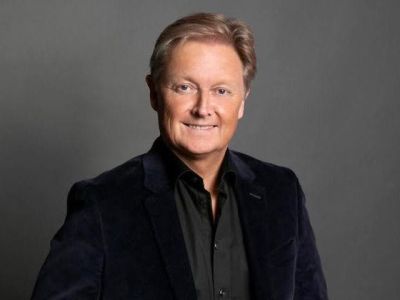

Henrik Fisker_400.jpg

Henrik Fisker, the Founder and CEO of Fisker Inc.


Most of the EV startups may not survive


Automotive is an industry which has to move much in the digital transformation trend. “So in five years, we are going to see a totally different mix from what we see today. You probably will see traditional car industry to shrink quite a lot, maybe with a few brands disappearing and some new brands coming up,” commented Henrik Fisker.


According to him, the new brands will emerge from two sides, one will be the EV startups and it will be a few of those.


“In my view, 90% of the EV startups will not make it because most people who go in underestimate how difficult it is to enter this industry and what needs to be done to manufacture vehicles in high volume,” he explained.


The other side is technology brands that today are now associating with vehicles. Henrik Fisker believes that these technology brands will end up manufacturing vehicles or collaborating with EV startups or automakers to manufacture vehicles.


“I don't know whether technology brands will necessarily make their own branded cars because once they do that, it is a whole different game. But I could see EV startups joining up with technology companies and get access to these technologies and introduce new technologies,” he continued.


Not all cars to be fully autonomous in short future


Regarding the bottlenecks in engineering for the future, Henrik Fisker considers software as the biggest bottleneck.  


“The biggest risk in car making in the future is clearly software. It is the biggest bottleneck, it is where you have to spend most work, it is also sometimes the easiest to fix,” he said.


When asked about how autonomous vehicles will play an important part, Henrik Fisker commented that not all cars will be fully autonomous in 20 years from now. He expects that there will be a mix of vehicles in the next 25 years, with some form of mobility being autonomous in three or four years.


“You may see certain conditions where I believe you can go fully autonomous, (like) when there are no kids running in the freeway, so we should be able to take a little bit of risk. So we see different technologies to deploy in different times, and that is also why the idea of having sort of autonomous shuttle is really cool,” he explained.


“The problem is we do have children running around the city, and that is the issue when somebody jumps in front of a shuttle where there is no driver and get killed. I don’t think we want to see that. That’s why I see the issue. These are the things we have to figure out,” he emphasized.
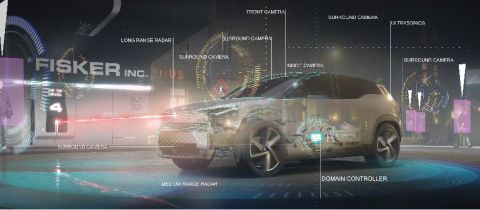

Fisker_Pilot_web.jpg

Fisker Inc. will partner with Magna to develop the intelligent FI-Pilot, the next generation of driver assistance.


New entrants the major influential factor


Meanwhile, in the closing keynote presentations, Martin, O'Brien, Senior Vice President Integrated Electrical Systems, Siemens Digital Industries Software, discussed the major factors that drive the future automotive industry, which include the new entrants that “grab EV headlines”.


Tesla, one of the world’s most valuable automakers, was cited as an example by Martin, O'Brien. He pointed out that Tesla has some great engineering but also focused on a vision people buy into and on building a life-style brand: innovates in order to accelerate the world’s transition to clean, sustainable energy.


In addition, Tesla completes the important targets by themselves. The automaker tears products and systems apart, and then builds them up in a smarter and more efficient way. It developed novel batteries, optimized battery electronics, established charging infrastructure, as well as designed its own chips for autonomous driving.


Tesla is not the only new entrant. According to Martin, O'Brien, there are 421 companies developing EV and light trucks, and there are 188 companies having autonomous driving programs announced. He also shared the same view that many of these companies will fail, but emphasized that some will make it.
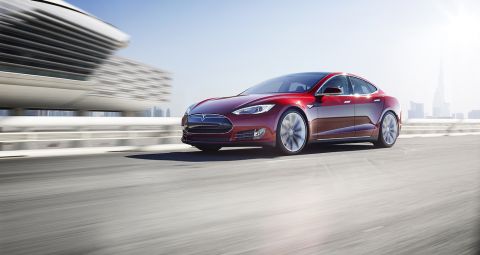

red-tesla-model-s_web.jpg

Tesla has become one of the world’s most valuable automakers.


Survivors to fulfil new C.A.S.E. requirements


Notably, Martin, O'Brien also pinpointed that that digitalization changes everything. The survivors have to respond to C.A.S.E. (Connected, Autonomous, Shared and Electric) requirements and focus on electronics and software.


“New entrants do not have to play the game the same way. They can choose their targeting key technologies and differentiate their offerings,” he explained. “However, established players must deal with parallel challenges. It means they need to sustain its business in the present via more efficient production, and proactively engage to drive the future via changing the mindset to think of new business models at the same time.”


Martin, O'Brien described digitalization as the “biggest transition in 100 years”. This transition will demand exceptional change management, and companies have to change from “quality manufacturer” to “innovator”.


He mentioned that GM is changing its direction to a new vision targets: zero crashes, zero emissions and zero congestion and it is expected that GM will achieve through the creation of C.A.S.E. mobility services.


An accelerating shift to software defined vehicle


The approach of “focus on E/E (Electrical/Electronic) systems development” should be adopted to support the digitalization transition, by employing BMSD (Business Modeling and Software Design) paradigms and software defined vehicle. The shift to software defined vehicle is accelerating, said Martin, O'Brien.


He also explained the technical challenges of implementing E/E systems development approach in detail. He emphasized that E/E systems development needs coherency across domains and E/E architecture drives detailed systems design. On the other hand, system digitalization supports capture of need across all vehicle models, and facilitates virtual validation against that need.
 Like 丨  {{details_info.likes_count}}
Automotive
 Tangshan Zhonghao Chemical Co., Ltd      
 TAIZHOU TUOFANG PLASTIC MOULD CO.,LTD      
 Guang Dong Veryone Technology Co.,Ltd.      
 NINGBO YUFINE PRECISION INDUSTRY CO., LTD.      
 SHANGHAI WEIPU TESTING INTERNATIONAL GROUP CO., LTD.      
 Chongqing Woerfu Chemical Co.,Ltd      
 HUIZHOU LITUO ADVANCED MATERIALS CO.,LTD.      
 SUZHOU UNIKING NEW MATERIAL CO., LTD      
 Beijing Chemical Industry Group CO.,LTD      
 SUZHOU GELEFU M&E TECHNOLOGY CO., LTD.      
 GUANGDONG HTASO NEW MATERIALS TECHNOLOGY CO.,LTD      
 JIASHAN ITAFLON FLUORO TECHNOLOGY CO.,LTD.      
 CHUZHOU SEP MATERIAL CO,LTD.      
 BRUECKNER MASCHINENBAU GMBH      

The content you're trying to view is for members only. If you are currently a member, Please login to access this content.   Login

Source:Adsale Plastics Network Date :2021-01-13 Editor :VC

In the closing keynote presentations at IESF Automotive 2020 held recently, Henrik Fisker, the Founder and CEO of Fisker Inc. and an iconic automotive designer, shared his views on the topic “Driving Electric Vehicles Technology and Adoption, The Final Part of the Journey”.


IESF is a global conference program for automotive design engineers, managers, and executives. In its 20th year, the event was held virtually for the first time.


Lithium ion battery to be used for a long time


Henrik Fisker remarked that the transition into full electric vehicle (EV) will have huge impact on vehicle design because almost all next generation of vehicles will have battery in the floor, which will change the structure proportion.


“We can’t make super low sedans any more like in the past, so it will fundamentally change the proportion of vehicle when we move forward,” he said.


He also unveiled that Fisker Inc. has done a lot of research on battery, and discovered that there would be no solid state battery storage coming around the corner as it is too difficult to scale up. Therefore, he expects that lithium ion battery will be used in EVs for a long time, though Fisker is open to use different battery technologies.


Henrik Fisker_400.jpg

Henrik Fisker, the Founder and CEO of Fisker Inc.


Most of the EV startups may not survive


Automotive is an industry which has to move much in the digital transformation trend. “So in five years, we are going to see a totally different mix from what we see today. You probably will see traditional car industry to shrink quite a lot, maybe with a few brands disappearing and some new brands coming up,” commented Henrik Fisker.


According to him, the new brands will emerge from two sides, one will be the EV startups and it will be a few of those.


“In my view, 90% of the EV startups will not make it because most people who go in underestimate how difficult it is to enter this industry and what needs to be done to manufacture vehicles in high volume,” he explained.


The other side is technology brands that today are now associating with vehicles. Henrik Fisker believes that these technology brands will end up manufacturing vehicles or collaborating with EV startups or automakers to manufacture vehicles.


“I don't know whether technology brands will necessarily make their own branded cars because once they do that, it is a whole different game. But I could see EV startups joining up with technology companies and get access to these technologies and introduce new technologies,” he continued.


Not all cars to be fully autonomous in short future


Regarding the bottlenecks in engineering for the future, Henrik Fisker considers software as the biggest bottleneck.  


“The biggest risk in car making in the future is clearly software. It is the biggest bottleneck, it is where you have to spend most work, it is also sometimes the easiest to fix,” he said.


When asked about how autonomous vehicles will play an important part, Henrik Fisker commented that not all cars will be fully autonomous in 20 years from now. He expects that there will be a mix of vehicles in the next 25 years, with some form of mobility being autonomous in three or four years.


“You may see certain conditions where I believe you can go fully autonomous, (like) when there are no kids running in the freeway, so we should be able to take a little bit of risk. So we see different technologies to deploy in different times, and that is also why the idea of having sort of autonomous shuttle is really cool,” he explained.


“The problem is we do have children running around the city, and that is the issue when somebody jumps in front of a shuttle where there is no driver and get killed. I don’t think we want to see that. That’s why I see the issue. These are the things we have to figure out,” he emphasized.


Fisker_Pilot_web.jpg

Fisker Inc. will partner with Magna to develop the intelligent FI-Pilot, the next generation of driver assistance.


New entrants the major influential factor


Meanwhile, in the closing keynote presentations, Martin, O'Brien, Senior Vice President Integrated Electrical Systems, Siemens Digital Industries Software, discussed the major factors that drive the future automotive industry, which include the new entrants that “grab EV headlines”.


Tesla, one of the world’s most valuable automakers, was cited as an example by Martin, O'Brien. He pointed out that Tesla has some great engineering but also focused on a vision people buy into and on building a life-style brand: innovates in order to accelerate the world’s transition to clean, sustainable energy.


In addition, Tesla completes the important targets by themselves. The automaker tears products and systems apart, and then builds them up in a smarter and more efficient way. It developed novel batteries, optimized battery electronics, established charging infrastructure, as well as designed its own chips for autonomous driving.


Tesla is not the only new entrant. According to Martin, O'Brien, there are 421 companies developing EV and light trucks, and there are 188 companies having autonomous driving programs announced. He also shared the same view that many of these companies will fail, but emphasized that some will make it.


red-tesla-model-s_web.jpg

Tesla has become one of the world’s most valuable automakers.


Survivors to fulfil new C.A.S.E. requirements


Notably, Martin, O'Brien also pinpointed that that digitalization changes everything. The survivors have to respond to C.A.S.E. (Connected, Autonomous, Shared and Electric) requirements and focus on electronics and software.


“New entrants do not have to play the game the same way. They can choose their targeting key technologies and differentiate their offerings,” he explained. “However, established players must deal with parallel challenges. It means they need to sustain its business in the present via more efficient production, and proactively engage to drive the future via changing the mindset to think of new business models at the same time.”


Martin, O'Brien described digitalization as the “biggest transition in 100 years”. This transition will demand exceptional change management, and companies have to change from “quality manufacturer” to “innovator”.


He mentioned that GM is changing its direction to a new vision targets: zero crashes, zero emissions and zero congestion and it is expected that GM will achieve through the creation of C.A.S.E. mobility services.


An accelerating shift to software defined vehicle


The approach of “focus on E/E (Electrical/Electronic) systems development” should be adopted to support the digitalization transition, by employing BMSD (Business Modeling and Software Design) paradigms and software defined vehicle. The shift to software defined vehicle is accelerating, said Martin, O'Brien.


He also explained the technical challenges of implementing E/E systems development approach in detail. He emphasized that E/E systems development needs coherency across domains and E/E architecture drives detailed systems design. On the other hand, system digitalization supports capture of need across all vehicle models, and facilitates virtual validation against that need.


全文内容需要订阅后才能阅读哦~
立即订阅

Recommended Articles

Automotive
ENGEL’s high-performance automotive solutions at CHINAPLAS 2026
 2026-04-14
Automotive
KRAIBURG TPE’s solution with high recycled content for automotive sealing systems
 2026-04-10
Automotive
New materials powering the sustainable future of mobility
 2026-04-06
Automotive
Vianode and Ateios Systems to jointly develop next generation graphite electrodes
 2026-03-23
Automotive
Covestro expands Specialty Films Technical Competence Center in Shanghai for smart surface innovation
 2026-03-18
Automotive
People Mover: Fully autonomous, electric minibus with Covestro sustainable materials
 2026-02-26

You May Be Interested In

Change

  • People
  • Company
loading... No Content
{{[item.truename,item.truename_english][lang]}} {{[item.company_name,item.company_name_english][lang]}} {{[item.job_name,item.name_english][lang]}}
{{[item.company_name,item.company_name_english][lang]}} Company Name    {{[item.display_name,item.display_name_english][lang]}}  

Polyurethane Investment Medical Carbon neutral Reduce cost and increase efficiency CHINAPLAS Financial reports rPET INEOS Styrolution Evonik Borouge Polystyrene (PS) mono-material Sustainability Circular economy BASF SABIC Multi-component injection molding machine All-electric injection molding machine Thermoforming machine

Iconic automotive designer shares insights on the EV roadmap

识别右侧二维码,进入阅读全文
下载
x 关闭
订阅
亲爱的用户,请填写一下信息
I have read and agree to the 《Terms of Use》 and 《Privacy Policy》
立即订阅
Top
Feedback
Chat
News
Market News
Applications
Products
Video
In Pictures
Specials
Activities
eBook
Front Line
Plastics Applications
Chemicals and Raw Material
Processing Technologies
Products
Injection
Extrusion
Auxiliary
Blow Molding
Mold
Hot Runner
Screw
Applications
Packaging
Automotive
Medical
Recycling
E&E
LED
Construction
Others
Events
Conference
Webinar
CHINAPLAS
CPS+ eMarketplace
Official Publications
CPS eNews
Media Kit
Social Media
Facebook
Linkedin