


















Easy 3D printing technique to make plastics with customized flexibility

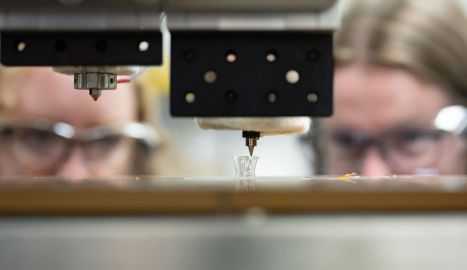
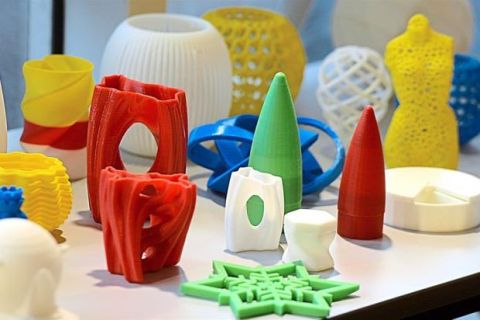
Princeton engineers have developed an easily scalable 3D printing technique to manufacture soft plastics with programmed stretchiness and flexibility that are also recyclable and inexpensive.
The team led by Emily Davidson, an assistant professor of chemical and biological engineering, used widely available thermoplastic elastomers to create soft 3D-printed structures with tunable stiffness.
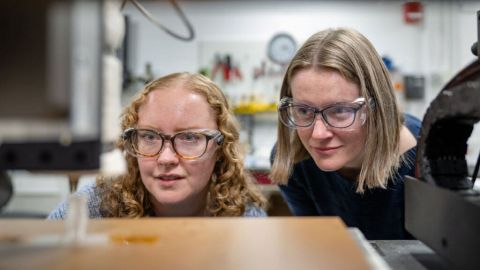
Alice Fergerson (left), a graduate student and lead author of the research article, and Emily Davidson, assistant professor of chemical and biological engineering. (Source: Princeton Engineering)
Engineers can design the print path used by the 3D printer to program the plastic’s physical properties so that the resulting material can stretch and flex repeatedly in one direction while remaining rigid in another.
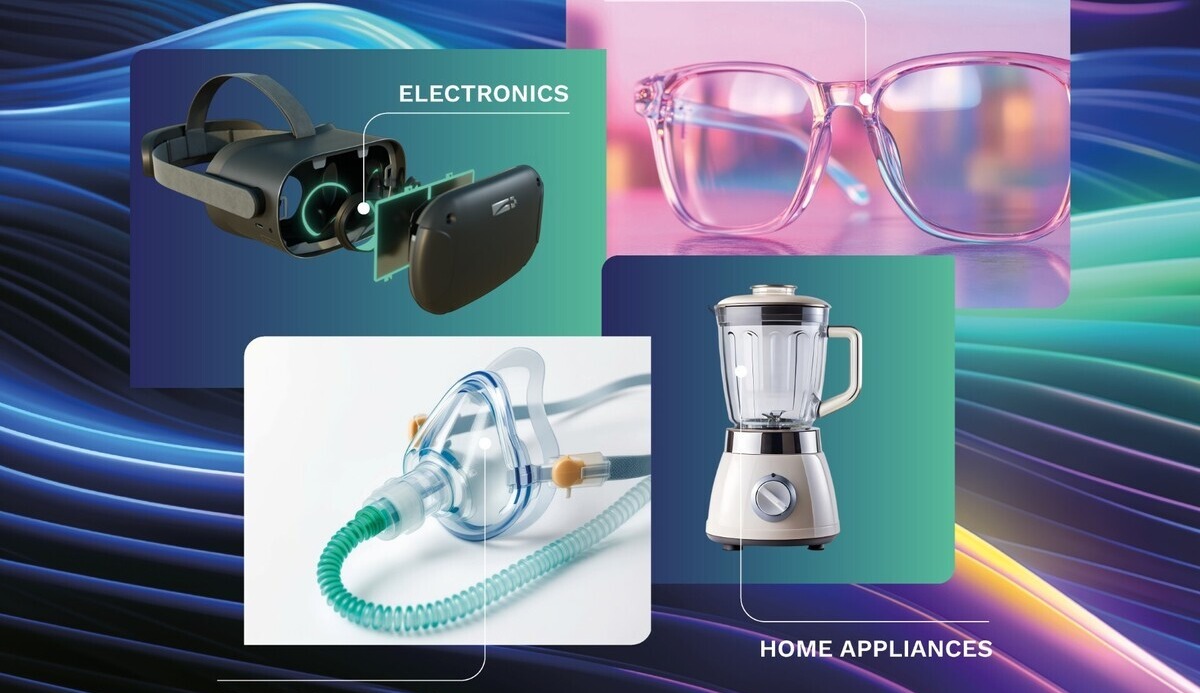
This approach to engineering soft architected materials could have many uses, such as soft robots, medical devices and prosthetics, strong lightweight helmets, and custom high-performance shoe soles.
How to achieve hard and soft in one object?
The key to the material’s performance is its internal structure at the tiniest level. The team used a type of block copolymer which forms stiff cylindrical structures that are 5-7 nanometers thick (for comparison, human hair measures about 90,000 nanometers) inside a stretchy polymer matrix.
By using 3D printing to orient these nanoscale cylinders, the 3D printed material that is hard in one direction but soft and stretchy in nearly all others.
Designers can orient these cylinders in different directions throughout a single object, leading to soft architectures which exhibit stiffness and stretchiness in different regions of an object.
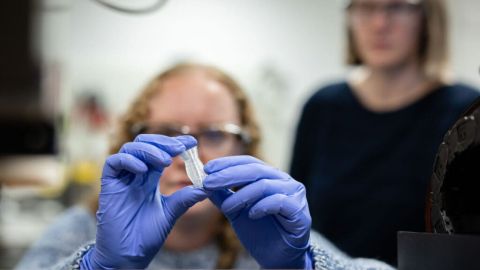
Engineers can program the material for stiffness and flexibility in different directions. (Source: Princeton Engineering)
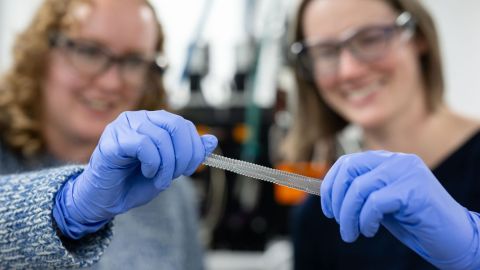
The stretchable material can be carefully structured for different properties. (Source: Princeton Engineering)
Choosing the right polymer
The researchers chose a thermoplastic elastomer, which is a block copolymer that can be heated and processed as a polymer melt, and solidifies into an elastic material when it cools.
Block copolymers are made of different homopolymers connected to each other. These different regions of a block copolymer chain separate instead of mixing, like oil and water. With such property, material with stiff cylinders within a stretchy matrix can be achieved.
Developing the 3D printing technique
Based on how the block copolymer nanostructures form and how they respond to flow, the researchers develop a 3D printing technique that effectively induces alignment of these stiff nanostructures.
They found that printing rate and controlled under-extrusion could be used to control the physical properties of the printed material.
One of the keys is thermal annealing, which the controlled heating and cooling of a material, to increase the perfection of the order of internal nanostructures.
Annealing also enables self-healing properties of the material. As part of the work, the researchers can cut a flexible sample of the printed plastic and reattached it by annealing the material. The repaired material demonstrated the same characteristics as the original sample.
As a next step, the research team expects to begin exploring new 3D printable architectures that will be compatible with applications such as wearable electronics and biomedical devices.
Research article published
The article titled “Reprocessable and Mechanically Tailored Soft Architectures Through 3D Printing of Elastomeric Block Copolymers” was published Sept 24, 2024 in the journal Advanced Functional Materials.
Support for the project was provided in part by the National Science Foundation through Princeton PCCM SEED funds from the Princeton Center for Complex Materials, and Princeton Project X Innovation Funds.