



















Arkema team awarded for non-PFAs innovation in batteries

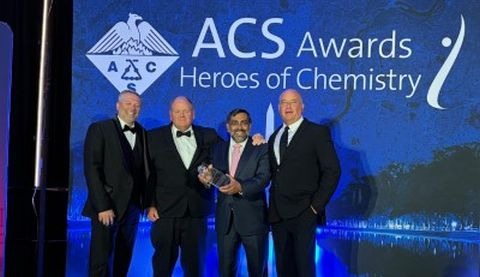
Arkema’s team of scientists and engineers was recognized with the prestigious Heroes of Chemistry Award by the American Chemical Society (ACS) for their groundbreaking work on Kynar HSV 900 PVDF manufactured without the use of fluorosurfactant for battery applications.
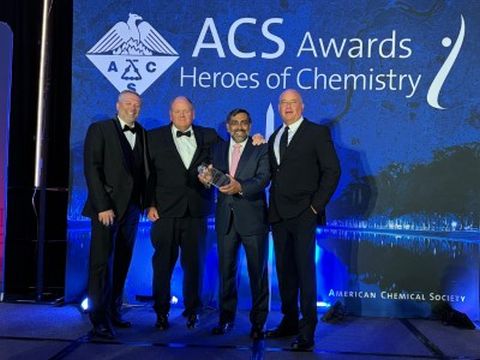
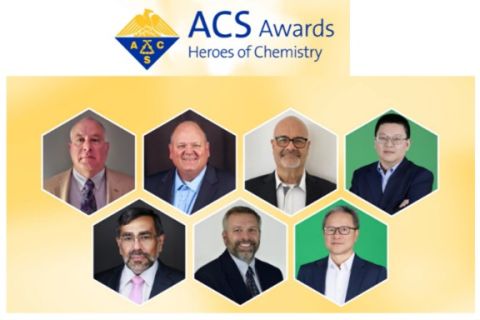
(From top to bottom, left to right) Barry Oakley, Carl Stewart, Medhi Durali, Lining (Michael) Zhu, Ramin Amin-Sanayei, Steve Erhardt, and Sun Jia-Yue.
Ramin Amin-Sanayei, Medhi Durali, Steve Erhardt, Carl Stewart, Barry Oakley, Lining (Michael) Zhu, and Sun Jia-Yue were recognized for their contributions to the development of the Kynar HSV 900 PVDF material, first introduced in 2005.
To move away from fluorinated surfactants, the team pioneered the development of commercially PVDF binders produced without fluorosurfactant, while maintaining critical material properties required for high battery performance.
Supporting EV and new energy system
Kynar HSV 900 PVDF has demonstrated exceptional versatility, gaining widespread commercial adoption alongside a broad range of cathode active materials, especially lithium iron phosphate (LFP), and has since become a legacy market reference in the battery industry.
Kynar HSV 900 plays a critical role in improving the performance, safety and longevity of lithium-ion batteries, key components in EV and energy systems. To date, Kynar HSV 900 PVDF has already enabled the production of batteries powering over 10 million electric vehicles.
The adoption underscores the critical role of Kynar HSV 900 has played in enabling the rise of LFP technology, an increasingly preferred solution for EV batteries due to its safety, cost-efficiency and long cycle life. In 2024, the rapid growth of LFP-powered electric vehicles continued, with over 850 GWh of batteries produced.