












K 2025 Live: World premiere of tie-bar-less ENGEL victory electric machine

ENGEL is unveiling a groundbreaking innovation at the K 2025 fairgrounds: the victory electric injection molding machine. This addition expands ENGEL’s tie-bar-less machine portfolio with a powerful electric variant, excelling in precision, energy efficiency, and flexibility.
The completely redesigned clamping unit integrates the proven benefits of tie-bar-less technology with the dynamic capabilities of electric drive systems, enabling enhanced productivity within the same footprint.
With over 85,000 tie-bar-less machines installed worldwide, ENGEL has demonstrated the advantages of this design, which offers increased space in the mold area, faster mold changes, and easier automation.
The ENGEL victory electric elevates these benefits by incorporating the advantages of electric machine design in the clamping force range above 1,300 kN, addressing a gap in the market where many processors are actively seeking such solutions.
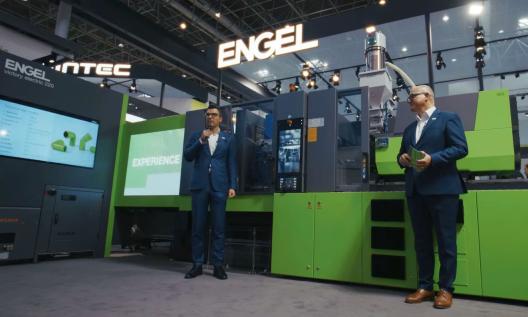
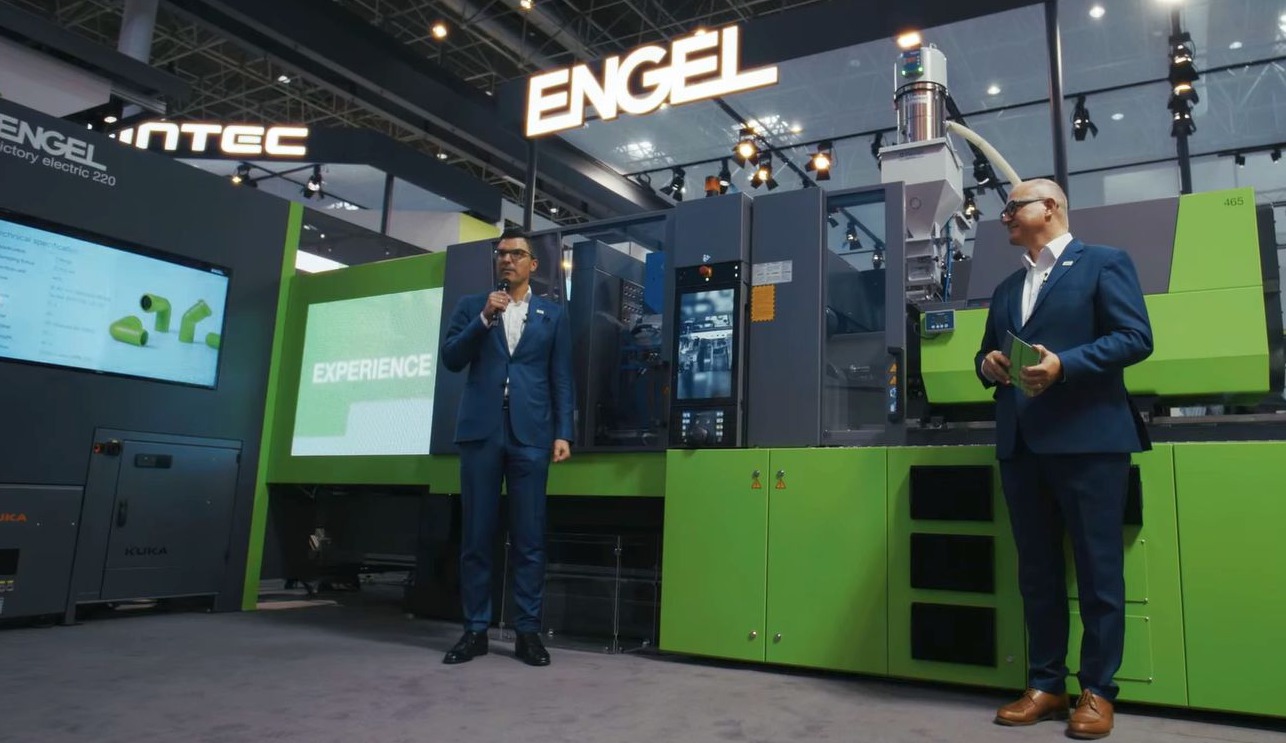
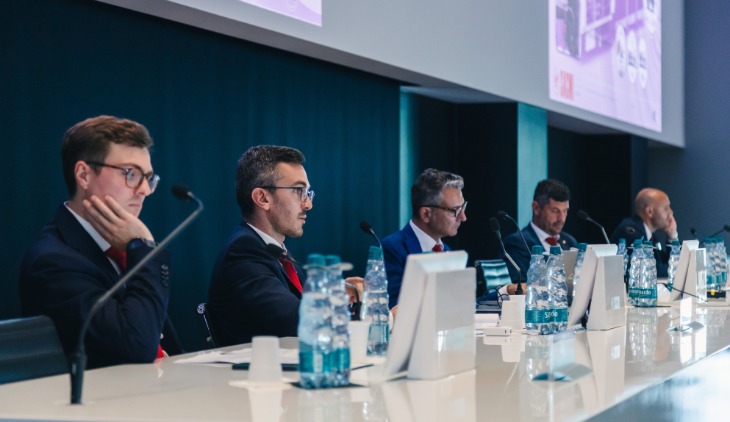
CEO Stefan Engleder (left) and CTO Gerhard Dimmler officially unveiled the new tie-bar-less victory electric at the ENGEL booth. (Photo: Facebook-ENGEL)
The new machine impresses not only with its technical precision but also with clear economic advantages. Its compact design reduces the overall machine length by approximately 200 mm, allowing for optimized production layouts.
At the same time, the tie-bar-less design enables the use of significantly larger molds compared to conventional machines in the same clamping force class. For instance, a mold that typically requires around 3,200 kN can be operated on the victory electric 220 with just 2,200 kN of clamping force.
At the heart of the machine lies a newly developed clamping unit featuring two vertically arranged pressure bars. These replace the traditional toggle mechanism used to build clamping force and ensure exceptionally uniform force distribution across the entire mold mounting platen.
An integrated deformation compensation system maintains stable and precise platen parallelism, even with complex or large-area mold geometries. The newly designed moving platen performs key functions such as centering and force transmission, significantly contributing to the machine’s compact design.
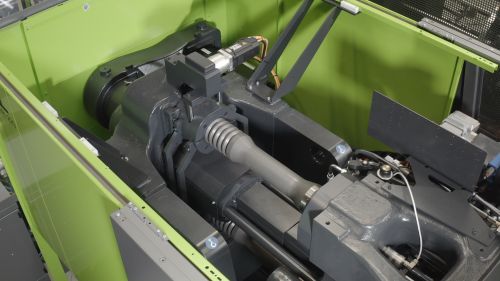
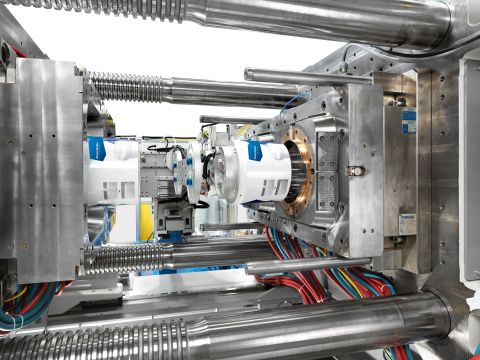
The new clamping system with pressure pad and ball screw ensures precise mold centering and shorter cycle times. (Photo: ENGEL)
All main movements are powered electrically by a servo motor with a ball screw—a drive system that has demonstrated its reliability in ENGEL machines for many years. A particularly efficient feature is the integrated recovery of braking energy, which not only reduces overall energy consumption but also improves the carbon footprint of the production process.
The standard integration of a hydraulic unit adds extra flexibility by facilitating the use of hydraulic core pulls. Components such as the ejector and position transducers are taken from the proven ENGEL duo series, ensuring maximum stability and process reliability.
In addition to the servo-hydraulic victory and the hybrid e-victory, an electric solution is now available in the medium clamping force range—ideal for processors seeking to combine energy efficiency, precision, and maximum mold space. This makes the machine perfectly suited not only for standard injection molding applications but also for high-performance requirements.