



















No more waste! Turning spoiled milk into 3D printing material

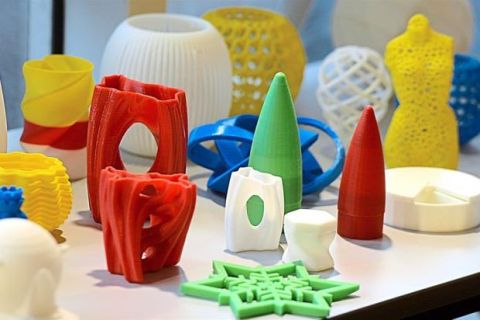
Two professors from University of Wisconsin-Plateville have found a way to transform dairy waste into a sustainable, biodegradable material for 3D printing.
The approved patent, titled “Development of Bio-Composite Materials for 3D Printing Using Milk Proteins”, has opened the opportunity for spoiled milk to reduce environmental footprint of 3D printing materials.
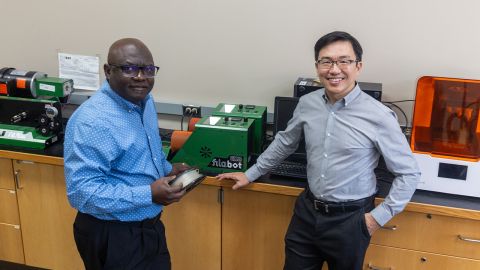
Dr John Obielodan (left) and Dr Joseph Wu (right) in the lab following the announcement of their US patent. (Source: University of Wisconsin-Plateville)
This novel method repurposes proteins from dairy waste, such as casein and whey, into useful products. This reduces dependency on petroleum-derived polymers. Moreover, this could provide a new revenue stream for dairy farmers.
“Who would have thought 3D printing and dairy protein could be combined to create a new material? My hope is that it will help both the 3D printing industry and dairy farmers in Wisconsin,” explained Dr Joseph Wu, associate professor of chemistry, one of the researchers in the project.
Finding the right kind and form of protein
The biggest challenge was determining what kind of protein, and in what form, would yield the optimum result.
The research team started by creating their own proteins, then tested some commercially available ones before finding the one that gave the best results. These proteins were used with existing 3D printing materials.
It is also important to have the right mix of ingredients for the polymer as the amounts used affect how strong and flexible it turns out. This meant some adjustments had to be made to get the best results.
Next step towards sustainability
The next step would involve further development of the technology and the transfer of intellectual property to industry partners for commercialization.
“Looking ahead, a variety of products could be made using proteins derived from milk. From 3D printing filaments to other engineered materials, the possibilities are wide-ranging,” concluded Dr John Obielodan, professor and chair of the Department of Mechanical and Industrial Engineering, another researcher in the project.