















Changzhou Rongdian Chemical to showcase new processing additives at CHINAPLAS 2026

Changzhou Rongdian Chemical Co., Ltd. has confirmed its participation in CHINAPLAS 2026, where it will present a range of newly developed rubber and plastic processing additives at Booth 6.2G109. These products cover multiple application areas including matte finishing and processing lubrication, aiming to solve critical processing problems.
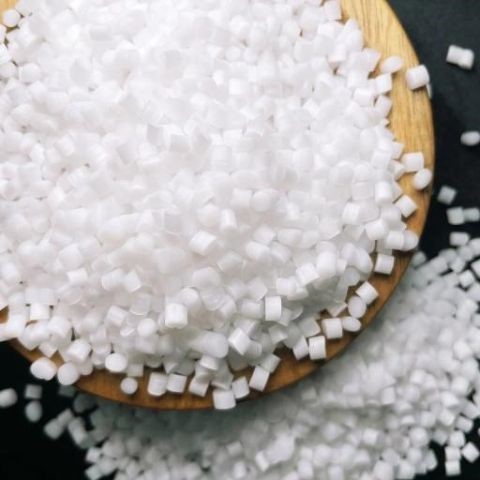
Source: Changzhou Rongdian Chemical Co., Ltd.
TPU(thermoplastic polyurethane) is a commonly used material for cable protection sleeves. Such products typically require a matte finish to enhance texture and visual comfort, and achieve anti-slip and abrasion-resistant properties while reducing glare.
Currently, the conventional approach to achieving this effect involves adding substances with low compatibility, significant differences in melt flow index, or different plasticization temperatures to the polymer, while strictly controlling processing conditions. Common additives include grafted rubber, PS, and inorganic materials. However, these matting agents often require extremely low processing temperatures, which can compromise the abrasion and scratch resistance of cables. Additionally, improper process control or prolonged processing can lead to inconsistent matte effects.
To address these industry challenges, Changzhou Rongdian Chemical has developed a new series of matting agents — the abrasion-resistant matte masterbatch series. This includes the RDMB-2219 model for polyether-based TPU and the RDMB-3219 model for both polyester-based and polyether-based TPU.
Unlike existing products on the market:
This masterbatch series delivers a matte effect and surface texture through crosslinked elastic microspheres. Supported by the stable crosslinked structure, it can consistently form a matte finish or texture at high, medium and low processing temperatures, broadening the processing window.
It also significantly improves the abrasion and scratch resistance of the material. All products in this series are developed based on Changzhou Rongdian Chemical’s proprietary technology.
In addition to the abrasion-resistant matte masterbatch, Changzhou Rongdian Chemical will showcase several new processing additives.
Among them, the new fluorine-free silicone-based processing aid PPA-Si achieves more uniform dispersion in the melt and delivers superior external lubricating performance compared with conventional silicones.
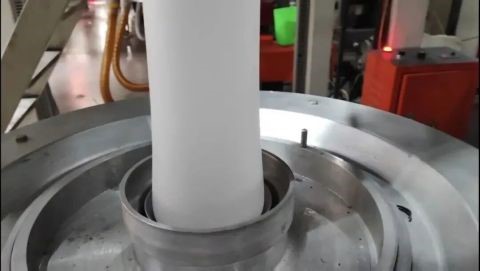
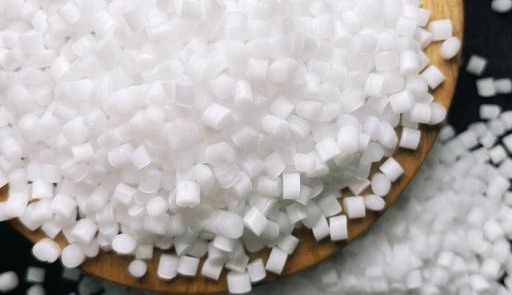
New fluorine-free organic silicon-based processing additive PPA-Si (Source: Changzhou Rongdian Chemical Co., Ltd.)
In blown film and pipe extrusion processes, it reaches a stable lubrication state in just 2 to 8 minutes, significantly extending the time required for die deposit formation while softening existing deposits and reducing cleaning frequency. It also lowers screw torque and equipment current, allows for higher proportions of recycled and filled materials, and improves the surface smoothness of finished products.
The silicone rubber alloy products adopt dynamic vulcanization crosslinking technology, which uniformly disperses vulcanized silicone rubber microparticles in the continuous phase of thermoplastic materials, forming a stable polymer alloy with a sea-island structure.
Compared with materials containing conventional silicone masterbatch or wax-based slip agents, this silicone rubber alloy does not suffer from oil or wax migration, blooming, surface tackiness, or screw slippage. It is compatible with extrusion, injection molding, and cast film processes, facilitates secondary processing, and helps reduce usage costs for manufacturers while imparting a fine, soft, and smooth tactile feel to elastomeric materials.
The company will also present its new modified self-lubricating silicone resin RD-1125. This lubricant additive, independently developed by Changzhou Rongdian Chemical, can be used for both internal and external lubrication of polymer materials. Compared with conventional silicone masterbatch and siloxane-based additives, RD-1125 delivers significant improvements in several key performance aspects.