


















CHINAPLAS 2026: Sun Chemical leads the way in pigment innovation and compliance

Every challenge presents an opportunity. The plastics and pigment industry, despite facing relatively low market growth in Western countries, increasing regulatory requirements, changing market environments, and overcapacity in certain areas, is poised to enforce higher efficiencies and cost consciousness.
At the same time, stricter environmental laws and consumer concerns are driving markets towards green solutions such as reuse and recycling, high-purity pigments, heavy metal-free options, low-VOC alternatives, and biodegradable materials.
Industries like automotive, packaging, and electronics are demanding improvements in weather, chemical, and heat resistance, color strength, and advanced functions like near-infrared (NIR) properties. These needs are accelerating the development of high-performance pigments, which in turn drive growth and structural breakthroughs.
Against this backdrop, Dr. Christof Kujat, Sun Chemical's Global Head of Industry Segment Plastics, summarizes his view of the market in 2026: “The plastics and pigment industry is in a transformation and restructuring phase; sustainability is no longer optional; it is essential for survival.”
He anticipates that the industry will undergo more mergers and acquisitions, while supply chains will increasingly focus on regional markets such as North America, the EU, and Asia to avoid tariffs and improve service.

Dr. Christof Kujat, Global Head of Industry Segment Plastics, Sun Chemical.
Sustainability and innovation: Twin engines propelling growth
According to Dr. Kujat, multiple factors are driving the industry forward. Firstly, the surging demand for high-performance pigments in downstream sectors such as packaging, automotive, and electronics is expected to boost revenue growth. Traditional sectors like automotive, packaging, construction, textiles, and footwear continue to expand, while the rise of new energy vehicles is creating fresh demand for lightweight, durable materials.
In addition to end-use demand, three major trends are reshaping the industry: circular economy practices, high-performance material innovation, and sustainability mandates, all pushing it toward higher-end, greener production.
He points out that as the circular economy develops, technologies such as plastics recycling (including packaging designed for recyclability and an increasing content of recyclates), biodegradable materials, and high-purity products are critical for addressing environmental pressures and meeting global sustainability goals.
Regarding material substitution and performance upgrades, he notes that plastics are replacing metals and glass in countless applications due to their lightweight properties, corrosion resistance, and cost-effectiveness. Innovations like microfiber materials are also rising to meet consumer demand for comfort in sportswear, footwear, and outdoor gear.
Finally, a significant boost comes from technological innovation, including smart manufacturing and advanced material R&D, coupled with global expansion. A notable example is that Chinese plastic and rubber products, enhanced by high-performance materials and refined processes, are gaining traction in international markets. “What's clear is this: the industry is not just growing—it is evolving," he states.
Strategies to enhance competitiveness
Faced with these challenges and opportunities, Sun Chemical is building a competitive edge by focusing on sustainable pigments, functional solutions, and digitalization.
Dr. Kujat reveals that sustainability has become the industry's top priority for product innovation, leading to the development of a multi-tiered environmental solution portfolio.
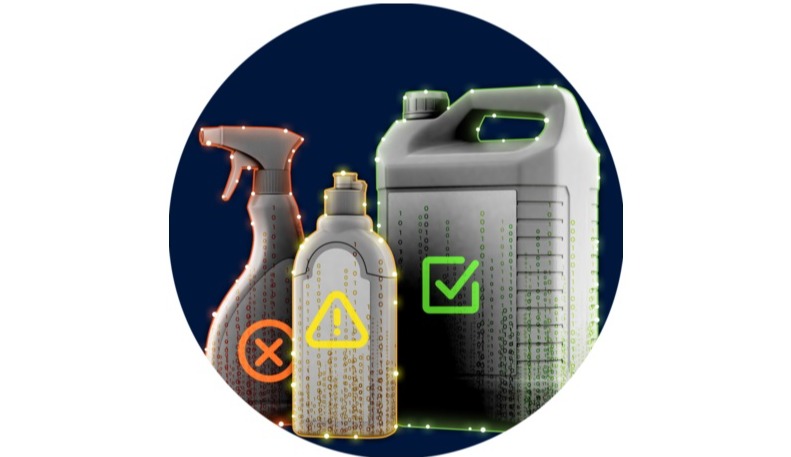
At the foundational level, Sun Chemical has been offering risk-assessed and food-contact compliant pigments since 2014, a full 12 years ahead of the market. These high-purity products minimize non-intentionally added substances (NIAS) and align with global food safety and environmental regulations. For compostable packaging, its EN 13432-certified biodegradable pigments meet the strictest degradability standards.
In the context of the circular economy, the company's Sicopal Black K 0098 stands out due to its thermal stability, allowing it to withstand repeated processing even in engineering plastics. This product replaces traditional carbon black in dark plastic recycling while meeting global food-contact standards, including China's GB 9685, effectively addressing the critical polymer-sorting challenge for recycled materials.
Sun Chemical's innovative functional pigments can transform traditional pigments from simple colorants into "functional carriers" that add tangible value to plastic parts. For e-mobility, a wide selection of pigments and dyes in the orange color spectrum is available for efficiently coloring high-voltage components of electric vehicles (EVs).
Other innovations include NIR light management pigments that enable light detection and ranging (LiDAR) sensors and laser welding, as well as Benda-Lutz® Compal K aluminum pigments for automotive design, which deliver metallic finishes—from silky to high-shine—without the use of carbon black. These pigments employ flake crystal orientation to enhance the aesthetics of lightweight components.
Additionally, Intelligent control systems and big data analysis have become industry standards. The concept of "digital pigments" is now in practice. The company's digital tools, PigmentFinder/PigmentViewer, automatically recommend pigment formulations and processing parameters based on customer specifications, integrating hardware and software.
Products that exceed standards
At CHINAPLAS 2026, Sun Chemical showcases pigments designed for sensitive applications, emphasizing high purity and global compliance, as well as high-temperature/high-dispersion solutions and functional pigments that drive next-generation applications.
Highlights include fiber applications featuring Filter Pressure Value (FPV) specified, OEKO-TEX® and ZDHC Level 3 compliant pigments, which provide one-stop solutions for clean, vibrant fiber coloring. The company's newly launched FASTOGEN® PINK K 4430 FP is a quinacridone Pigment Red 122, with a built-in specification of FPV at 5μm, making it ideal for fine fiber production and low-warpage injection molding.

FASTOGEN® PINK K 4430 FP is well-suited for fine fiber production and low-warpage injection molding.
For food-contact materials, Sun Chemical's high-purity pigments meet the strictest standards, including EU Article 3 compliance, the latest EU regulation 10/2011 (19th amendment), and NIAS levels well below industry benchmarks. "This is not just about regulation—it is our commitment to securing end-consumer health," Dr. Kujat emphasizes.
Booth: 8.2F37