















Report: Chinese companies strengthening global production network

In 2025, in response to the restructuring of global supply chains, shifting trade environments, and growing demand in regional markets, leading Chinese plastics and rubber companies have speeded up their establishment of overseas production capacity. They are expanding their presence in the global market with a focus on high value-added products, leveraging a cohesive multi-regional framework.
Modified plastics and materials producers
In recent years, Kingfa Sci.&Tech., a leading producer in modified plastics, has been actively expanding its global operations. In April 2025, Kingfa officially broke ground on its project in San Luis Potosí, Mexico. This project covers an area of 150,000 square meters and is designed to have an annual capacity of 300,000 tons of high-performance modified plastics, serving high-growth sectors such as automotive, home appliances, and electronics.
Additionally, the company’s factories in Vietnam and Spain have successfully commenced operations, and the Indonesian factory is set to start operations soon, enhancing its global capacity network across Europe, America, and Southeast Asia, with rapid growth in overseas business.
Polymer and composite materials producer Shanghai PRET Composites Materials has also made remarkable strides in establishing overseas production capacity, with its Mexican factory achieving successful trial production in June 2025. Located in the core industrial area in northern Mexico, the factory benefits from favorable regulations under the US-Mexico-Canada Agreement (USMCA), allowing efficient product delivery to North American customers, particularly in the automotive and electronics sectors.
Meanwhile, the company’s Thai factory has officially commenced production, focusing on high-performance modified materials to meet the growing demand for lightweight automotive and premium consumer products in Southeast Asia.
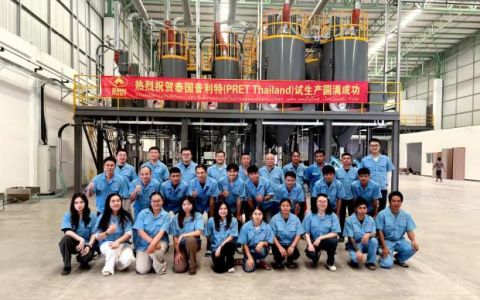
PRET completed trial production at its factory in Mexico.
Another modified plastics producer, Orinko Advanced Plastics, has set its sights on the European market, announcing in December 2025 its intention to acquire a 70% stake in Italian firm OMIKRON. This acquisition is aimed at accelerating the company’s expansion into the high-end European market.
Companies such as Dawn Polymer and KUMHO-SUNNY are also actively advancing their overseas capacity plans. Dawn Polymer, which is a national high-tech company specializes in high-performance thermoplastic elastomers and modified plastics, has established a joint venture in Russia, focusing on the R&D, production, and sales of modified plastics to support Chinese customers in the region and gain overseas operational experience. In December 2025, the company further established a wholly-owned subsidiary in Singapore to leverage opportunities in Southeast Asia.
In Thailand's Rayong Industrial Zone, KUMHO-SUNNY’s phase one production line successfully commenced operations in mid-2025, focusing on the production of its spray-free aesthetic materials and other modified plastics, providing localized supply services to the automotive parts and home appliance markets in Southeast Asia.
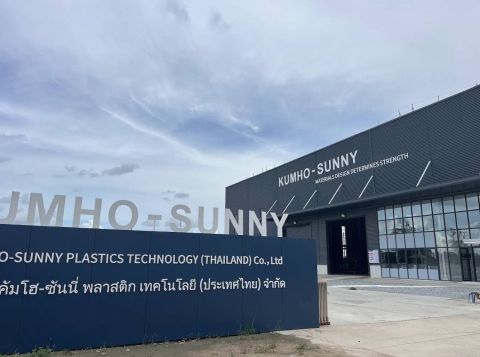
The Thai factory of KUMHO-SUNNY.
Plastics processing machinery manufacturers
Chinese plastics machinery manufacturers are also accelerating their overseas production capacity expansion and service upgrade, with leading companies in the injection molding and extrusion industries becoming key players in this effort.
In the injection molding industry, Haitian International has been particularly active, with various overseas production initiatives launched for 2025. Its factory in Niigata, Japan, began operations in August, focusing on high-end injection molding machines targeting the premium markets in Japan and East Asia.
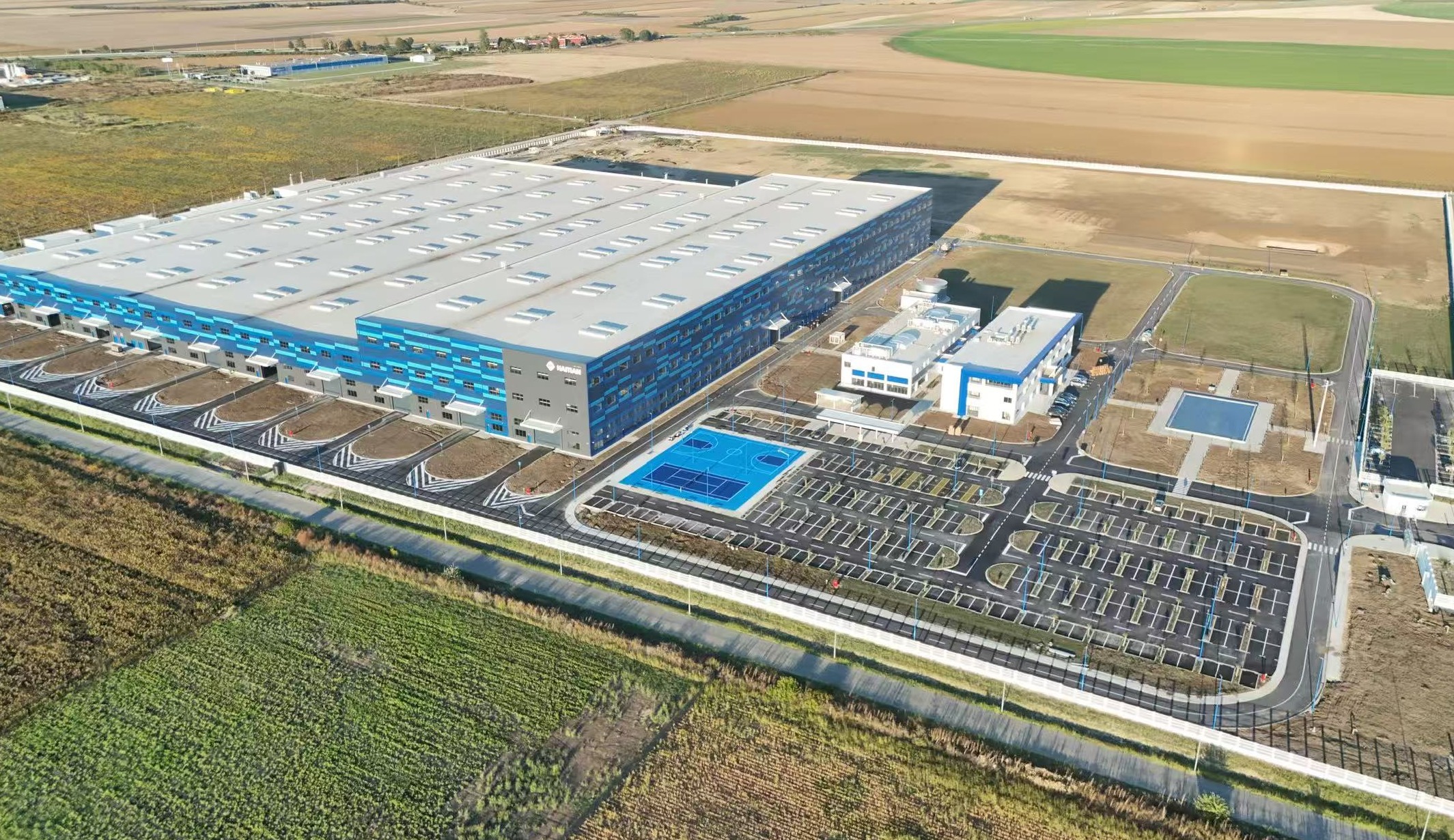
Additionally, Haitian’s production base in Ruma, Serbia, was officially commence production in December 2025, with a €100 million investment aimed at producing 160 injection molding machines per year. This move enhances the company’s domestic supply capabilities and strengthens its adaptability in the face of rising international shipping costs and logistics challenges. The company's second manufacturing facility in India, located in Chennai over an area of 80,000 square meters, also began production in December.
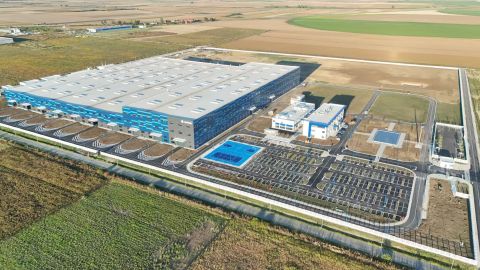
Haitian's new production facility in Serbia features its first plant, which spans approximately 60,000 square meters of production space.
Meanwhile, Yizumi is advancing its global footprint by developing multiple regional bases. Its new factory project in León, Mexico, is currently in the design phase and will serve as the company’s key manufacturing hub for North and Latin America.
Yizumi’s new facility in Turkey began operations in 2025, establishing a localized service network in Europe to enhance regional after-sales and technical support. According to Yizumi, it has positioned its Turkish subsidiary as a hub to serve the Eurasian and African markets as part of its overseas development strategy.
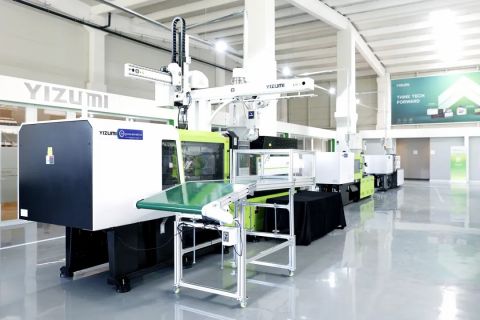
Yizumi showcased advanced machines during the Open House event at its technical center in Turkey.
Tederic Machinery has established subsidiaries in Portugal, South Korea, Mexico, Brazil, Germany, and the United States, with plans for a production base in Portugal underway. The company has also already set up a research and development center in Munich, Germany, where a localized team is focused on innovations in injection molding technology.
In the extrusion equipment sector, Chinese companies are taking a more gradual approach to overseas market expansion. Jwell Machinery has made significant strides in overseas development, having acquired the Bonn factory of German blow molding solutions provider Kautex, while its base in Bangkok, Thailand, continues to operate steadily. In March 2025, Jwell officially opened its office in Brazil, further enhancing its localized service capabilities in the South American market.
Overall, the overseas expansion strategies of Chinese plastics and rubber companies demonstrate characteristics such as localization of production, tailored service offerings, and collaborative networking. By getting closer to end markets, these companies aim to optimize costs and mitigate risks. Looking ahead, more Chinese companies are expected to progressively bring their overseas projects into operation.